Some links on this page are affiliate links. If you buy through them we may earn a commission at no extra cost to you. This guide leans on Harding, Franks and Wisden’s 2019 review of sleep and temperature in Frontiers in Neuroscience, the Cleveland Clinic’s sleep-temperature guidance from sleep psychologist Michelle Drerup, PsyD, the Sleep Foundation’s hot-weather sleep guide (medically reviewed, updated July 2025), and our own cooling coverage, including two-plus years on an all-foam mattress in a 67°F bedroom.
You fell asleep fine. Around 3am you are awake, damp, and pushing the duvet off one leg, and by the time you cool down enough to sleep again it is 3:40. The next night it happens again, at roughly the same time, which is the clue. A random hot night is weather. A hot wake-up at the same hour, most nights, is a system: the bed you sleep on, the stage of sleep you are in, and the temperature of the room, lining up at the worst possible hour.
This guide explains why that hour is 3am and not 11pm, then walks the fixes in the order that matches cost to effect: the air in the room first (free to about $150), the layer touching your skin second ($90 to $330), and the mattress last, because it is the most expensive change and, for a lot of people, the one that does not need making. Along the way we name the two popular fixes that do not survive the first hour.
Why 3am, Specifically
The bed has finished warming up
A mattress is not warm when you get in. Four hours later it is, because a dense foam absorbs body heat and holds it; the Sleep Foundation’s hot-weather guide makes the same point about thick foams generally. A “cooling” gel layer changes the first half hour, not the fourth hour. In the owner data behind our Linenspa topper review (59,518 Amazon ratings on the listing as of September 7, 2026), the gel feels cool to the touch for the first 15 to 30 minutes and then warms to body temperature and stays there. The same pattern shows up for gel-layer pillows, which our cooling pillow roundup puts at 20 to 30 minutes of relief. By 3am, everything under you and around you has been at 98°F for hours.
Your body stops fixing it
Sleep is not one state. The deep, slow-wave stages cluster in the first half of the night, and REM sleep, the dreaming stage, gets longer and more frequent toward morning. The part that matters here comes from Harding, Franks and Wisden’s 2019 review in Frontiers in Neuroscience: during REM, the body’s thermoregulatory responses, the sweating and shivering that work fine while you are awake and in the lighter stages, are largely switched off. So the same heat that your body would have dumped at midnight sits there at 3am with no one on duty. Dr. Michelle Drerup, a sleep psychologist at the Cleveland Clinic, puts the practical consequence in five words: heat is a huge disruptor for REM. You wake up because waking up is the only cooling move left.
The room drifted
Your core temperature drops in the evening as part of falling asleep (the Sleep Foundation guide covers the mechanism), and the room is supposed to help. Most rooms do not. A bedroom that was 68°F at 11pm with the window cracked is 72°F by 3am once the heating cycles or the afternoon’s solar gain finishes radiating out of the walls. The Cleveland Clinic’s guidance is 60 to 67°F; the Sleep Foundation’s is 65 to 68°F. Above 70°F, per Drerup, the room is too hot, and that is the number a lot of apartments pass in the small hours without anyone noticing.
Put the three together and 3am stops being mysterious. Warm bed, warm room, body off duty. Fix any one of the three and the wake-up usually softens; fix the first two and it usually stops.
Who This Guide Is For
The renter with no control over the thermostat, or no AC at all, whose bedroom bakes all afternoon and never fully recovers by bedtime. The all-foam mattress owner who reads that foam sleeps hot, wonders if the bed is the problem, and is one bad night from spending $1,900 on a hybrid. And the person who runs hot next to a partner who runs cold, where every fix has to work on one side of the bed only. Each gets a different first move below, and none of them starts with a new mattress.
Fix the Air First (Free to About $150)
Air is the lever. Everything else is a multiplier on it. Set the thermostat to the low end of the window for the sleep hours if you can; 65°F is the number the Sleep Foundation calls out, and the Cleveland Clinic is comfortable down to 60. If the thermostat is not yours, the bedroom window cracked one to two inches in cool months drops the room 5 to 10°F below the rest of the apartment, and the fresh air is its own small sleep improvement. Our bedroom temperature guide covers the full winter-and-summer playbook.
In warm months, two cheap moves do most of the work. A fan aimed at the bed, not the ceiling, moves air across skin, which is what sweat evaporation needs; the Sleep Foundation recommends one even in rooms that have AC. And blackout curtains, drawn all day, stop the afternoon sun from turning the bedroom into a heat battery that discharges at 3am. Our blackout curtain picks for renters are the tension-rod and no-drill kind. If none of that gets the room under 70°F, a 5,000 BTU window unit is the next step and, at about $150, still cheaper than every mattress on this page.
Two behavior fixes from the same Sleep Foundation guide that cost nothing: skip the hard workout in the last couple of hours before bed (it spikes body temperature at the wrong time), and take a warm bath or shower an hour or so before bed rather than right before. The bath sounds backwards. It works because your body dumps heat as it adjusts to the cooler air afterward, which is the drop you want heading into sleep.
Then the Layer on Your Skin ($90 to $330)
Once the room is right, the layer between you and the mattress decides how much heat gets trapped against your body. Three pieces, in order of effect.
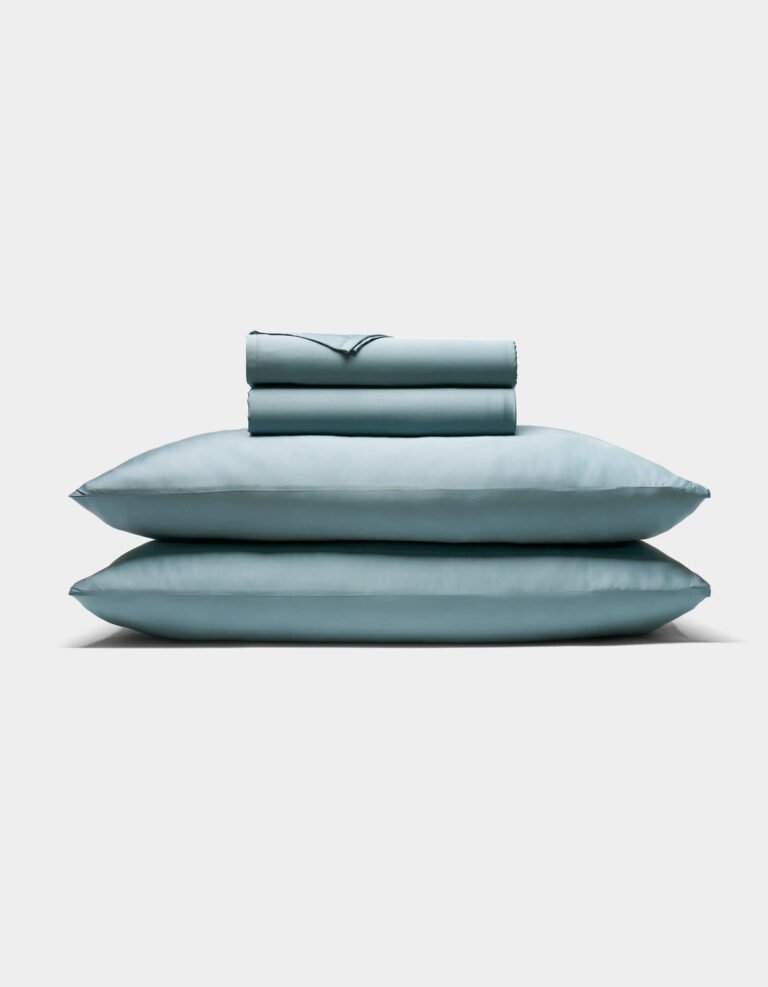
Sheets. Fiber matters more than thread count, and past about 400 threads sheets tend to sleep warmer, not cooler. Bamboo viscose and Tencel lyocell breathe and wick; cotton sateen holds heat; cotton percale sits in between. The set our bedding for hot sleepers page puts first is the Cozy Earth bamboo set, $328 on Amazon on September 7, 2026, 4.0 stars across 413 ratings, with a 10-year warranty. The owner reports our review pulled from converge on one sentence, “I stopped waking up hot the first week,” and one complaint: the fabric is slick enough that a top sheet can slide off the bed. If you run cool to neutral and just like a crisp hotel sheet, the Brooklinen Luxe is the better buy and the wrong one for a 3am problem.
Check the Cozy Earth bamboo sheet set on Amazon →
The comforter. Fill weight matters more than the shell. A lofted comforter built for cool sleepers is exactly wrong here; our Buffy Cloud review says so plainly and points hot sleepers at the lighter Buffy Breeze instead. A summer-weight fill or a single bamboo top sheet in warm months is the cheapest change on this page.
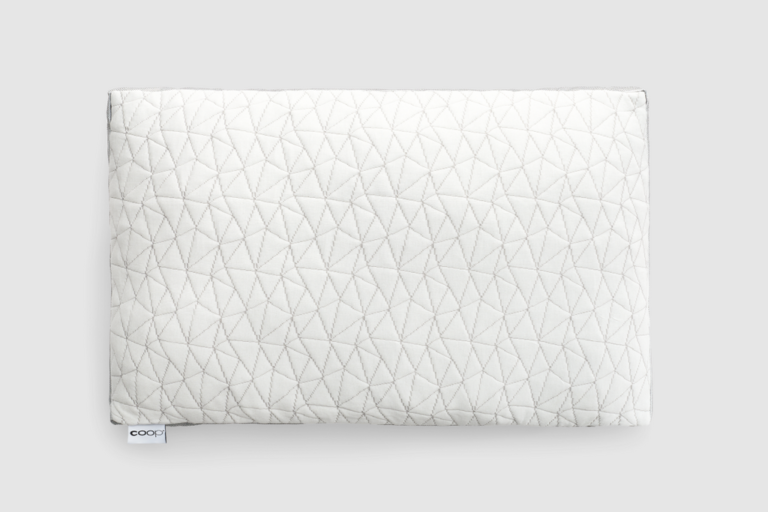
The pillow. Your head is where you feel heat first. Solid memory foam with a gel layer cools for 20 to 30 minutes and holds heat the rest of the night. Shredded foam vents, because air moves between the pieces; latex stays cool by structure. The pillow we point most hot sleepers to first is the Coop Eden, and its Cool version was $101.15 for a king on September 7, 4.4 stars across 15,123 ratings, with a cover that unzips so you can pull fill out until the loft fits your shoulder. The latex step up, the Saatva Latex Pillow at $165, is the coolest fill by physics, and we will also tell you it sat at 3.3 stars across 212 ratings the same day, which is a caution we are not going to paper over. Loft first, fill second: our pillow-by-sleep-position guide covers the loft half.
Check the Coop Eden Cool pillow on Amazon →
The Mattress, Last
Foam holds heat. That is true and it is the reason a lot of people reading this are about to spend more than they need to, so here is the counterweight from our own bed. Our Nectar is 12 inches of memory foam, and in two-plus years of nightly use it has never once woken us up hot. Not in summer, not in winter. The bedroom stays at about 67°F, the sheets are cotton, and there is a duvet piled on. Owners who keep bedrooms above 72°F report the same mattress feels warm, and we believe them. The mattress did not change between those two groups. The room did.
So before replacing the mattress, run the two sections above for two weeks. If the 3am wake-up is still there with the room at 66°F and bamboo on the bed, the mattress is the last variable, and the way to shop it is by mechanism rather than by the word “cooling” on the box. Our cooling mattress guide sorts the market into three tiers: gel infusion (worth a few degrees at most), airflow structure (coils, a polymer grid, or latex, which move air through the bed), and active systems that cool on demand. A hybrid with coils is the usual right answer for a foam owner who has ruled out the room; our Nectar vs Saatva Classic comparison is that exact decision with receipts. Active cooling, the Eight Sleep Pod 4 or the Chilipad Cube, is the one that solves the two-people-one-bed problem, because each side gets its own temperature; it is also $799 to $2,295 and the wrong order of operations before a $150 window unit.
A note on toppers, since a $90 topper is the tempting middle path. The Linenspa 3-inch gel topper ($89.99 on September 7, 4.4 stars, 59,518 ratings) is the topper we recommend for a too-firm mattress, and it is a comfort purchase, not a cooling one. The gel cools the hand in the store and the shoulder for the first half hour, and then it is three more inches of foam holding heat. If heat is the complaint, a topper adds to the problem. A latex topper is the exception, at three times the price.
Check the Linenspa topper on Amazon (for comfort, not cooling) →
What We Would Skip
Gel toppers bought for heat, for the reason above. Gel-layer pillows sold as cooling, same reason, 20 to 30 minutes and done. Any solid memory foam pillow with “cooling” in the name and no breathable cover; the cooling does not survive the first hour. A freezer-cold pillowcase is a fun trick the Sleep Foundation mentions and it buys you the first 20 minutes, which is not the problem. And an active cooling system before the room is fixed: a $2,295 cover working against a 76°F bedroom is an expensive way to lose an argument with the thermostat.
When It Is Not the Bedroom
Sometimes the bed and the room are fine and the sweating is the body. If the wake-ups are drenching rather than damp, if they came with a new medication, a fever, or weight you did not try to lose, or if two weeks at 65°F on bamboo sheets changed nothing, that is a conversation with a doctor rather than with a bedding page. The Cleveland Clinic’s own advice is the same: if sleep problems persist at a regulated temperature, see your primary doctor, who can refer you on. We can tell you what fixes a hot bed. We cannot tell you what is going on inside a particular person at 3am, and we would rather say that than sell you sheets for a problem sheets will not fix.
The Order, in One Paragraph
Cool the air to 65 to 68°F for the sleep hours, with a window, a fan aimed at the bed, blackout curtains against the afternoon, and a window unit if the first three fail. Then change what touches your skin: bamboo or Tencel sheets, a lighter comforter, a shredded-foam or latex pillow. Give that two weeks. Only then look at the mattress, by mechanism, and expect a coil hybrid to be the answer more often than a foam with a cooling label. The whole list up to the mattress costs less than $600 at the top end and under $200 if you start with the fan and the pillow. That is the order we would run, and the order that keeps the most people from buying a mattress they did not need.