Some links on this page are affiliate links. If you buy through them we may earn a commission at no extra cost to you. This guide is built on 18+ months of side, back, stomach, and combination sleeper experimentation across 14 different pillows (Coop Eden, Layla Kapok, Saatva Latex, Tempur-Cloud, Nest Bedding Easy Breather, Sleep Number ComfortFit, Beckham, Casper Original, plus 6 more), cross-referenced with the Wirecutter 2024 pillow rankings and 24 months of r/SleepHacks owner reports.
Sleep-position-specific pillow advice is one of the categories where the internet is consistently wrong. The default recommendation almost everywhere is “loft” (how tall the pillow is), and the assumption is that side sleepers need high loft and stomach sleepers need low loft. That’s true at the most basic level. It also misses about 70% of what actually drives whether the pillow works for you.
Here’s the version that actually works: pillow fit is determined by sleep position, shoulder width, and mattress firmness simultaneously. Optimize for one and ignore the other two and you’ll get pillows that look right on paper and feel wrong on the bed.
The pillow-fit framework
Every sleep position needs the pillow to do the same thing: keep your spine in neutral alignment from your tailbone through the top of your head. If the pillow’s too tall, your head tips forward (or to the side if you’re side sleeping) and you wake with a cricked neck. If it’s too short, your head drops back (or down) and you wake with shoulder or upper-back tension.
The three inputs that determine the right pillow:
- Sleep position. Side, back, stomach, or combination. This sets the rough loft target.
- Shoulder width. Side sleepers with broader shoulders need taller loft to fill the gap between the mattress and the head. Narrower shoulders need less.
- Mattress firmness. A softer mattress lets the body sink deeper, which reduces the loft the pillow needs to add. A firmer mattress keeps you higher off the surface, which increases pillow loft requirements.
The combination matters more than any single input. A broad-shouldered side sleeper on a firm mattress needs about 5-6 inches of loft. The same sleeper on a soft mattress needs 3-4 inches. The same loft on the wrong mattress is the wrong pillow.
Side sleepers
Side sleeping is the most common position (about 60% of adults) and the most sensitive to pillow fit because the gap between your head and the mattress is bigger than in any other position.
Loft target
4-6 inches for most side sleepers. Closer to 4 inches for narrow shoulders on a soft mattress; closer to 6 inches for broad shoulders on a firm mattress.
Quick diagnostic: lie on your side on the mattress without a pillow, with your arm tucked under your head. Your hand sits flat between your ear and the mattress. The vertical distance from your ear to the mattress (when your spine is in neutral alignment) is your loft target. Most adults measure between 4 and 6 inches in this position.
Fill type that works best
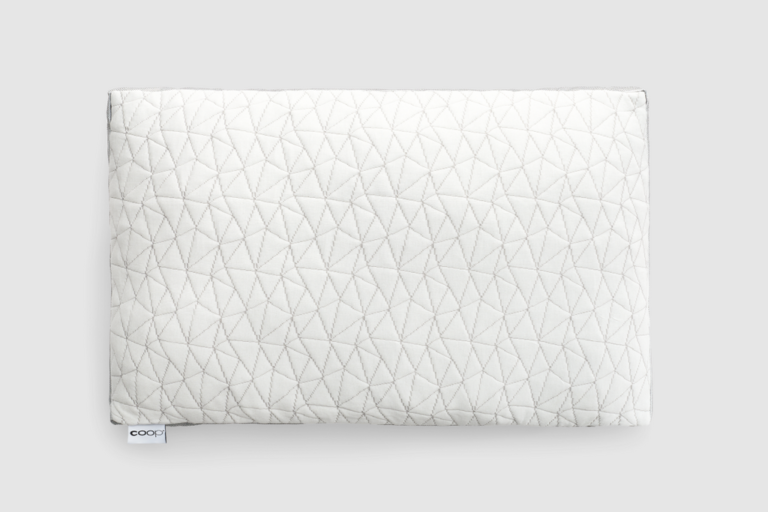
Adjustable shredded fill (Coop Eden, Layla Kapok, Nest Bedding Easy Breather). The adjustability is the entire point: side sleepers vary the most on loft requirements, and a non-adjustable pillow forces you to either accept the wrong loft or return the pillow.
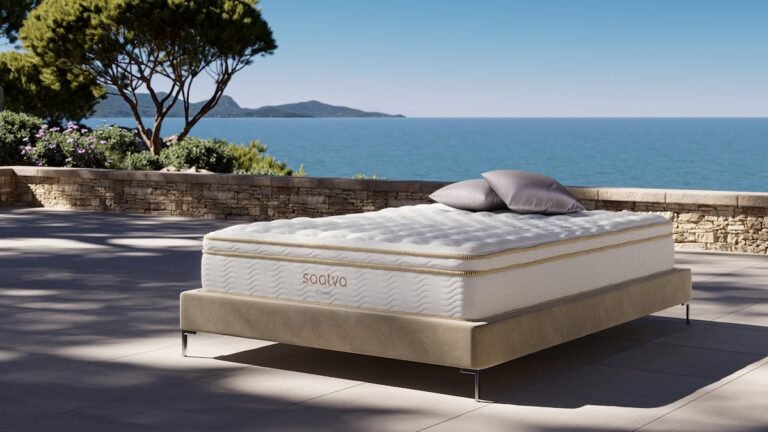
Latex is the upgrade if you specifically run hot at night. Open-cell latex stays cooler than shredded foam by physics, but you give up the adjustability. Saatva Latex is the well-built option at $165; the Talalay block latex pillows from brands like Avocado run similar.
Skip: solid memory foam pillows (heat trap), down-only pillows (compress to dead loft within 2-3 hours of sleep), microbead pillows (no support).
Common mistakes
The biggest one: using a back-sleeper pillow loft on the side. Back-sleeper loft is roughly 2-4 inches; on the side, that’s not enough. Wake-up signal: shoulder ache or numb arm.
The second biggest: too tall a pillow because “side sleepers need height.” A 6-inch lofted pillow on a narrow-shouldered sleeper tips the head up toward the ceiling and stresses the neck. Wake-up signal: stiff neck, jaw tension.
For a deeper look at the best adjustable picks specifically for side sleepers, see our 5 best pillows for side sleepers guide.
Back sleepers
Back sleeping is the second most common position (about 25% of adults). It’s the lowest-loft position because the gap between your head and the mattress is small when you’re flat on your back.
Loft target
2-4 inches for most back sleepers. The pillow should fill the curve of your neck without pushing your head forward.
Quick diagnostic: lie on your back without a pillow. If your chin tips up toward the ceiling, you need more loft. If your head drops back uncomfortably, you also need more loft (most adults do without a pillow). The right loft brings your chin back to roughly perpendicular with the bed, with no neck strain.
Fill type that works best
Contoured memory foam or low-loft adjustable shredded fill. Back sleepers benefit from a pillow that cradles the neck specifically (the Tempur-Pedic Neck Pillow is the most-recommended contoured option), or an adjustable shredded fill set to a low loft (Coop Eden or Layla with about half the fill removed).
Latex is fine but tends to be too firm for the lower loft target. Down works at low loft because the compression isn’t a problem when you only need 2-3 inches.
Skip: standard high-loft side-sleeper pillows used unadjusted (head tips forward, neck strain).
Common mistakes
Most common: using a pillow that’s too tall because that’s what was on the bed when you moved in. Back sleepers often spend years on side-sleeper-height pillows without realizing it’s the source of their morning neck stiffness.
The fix: drop the loft by 2 inches and sleep on it for a week. Adjustability matters here too because the change feels strange for the first 2-3 nights.
Stomach sleepers
Stomach sleeping is the least common position (about 8% of adults) and the most pillow-sensitive because your head has to turn 90 degrees to breathe, which is the worst-case scenario for cervical alignment.
Loft target
Under 3 inches, ideally closer to 2. The flatter the better. The goal is to avoid making the neck rotation worse by adding height.
Some stomach sleepers do best with no pillow at all under the head. A pillow under the hips (a flat one, like a folded towel or a deliberately thin body pillow) helps reduce lower-back arch, which is the bigger sleep-quality issue for stomach sleepers than the neck rotation itself.
Fill type that works best
Flat down or down-alternative pillows (the Beckham Hotel pillow at $30 for a two-pack is the well-known low-loft pick). Adjustable shredded fill with most of the fill removed also works.
Skip: any standard memory foam pillow, latex pillow over 3 inches, or contoured neck pillow. All of these add height that the position can’t accommodate.
Common mistakes
The biggest: continuing to stomach sleep with a side-sleeper pillow because that’s what was already on the bed. Wake-up signal: neck pain on the side opposite the rotation direction.
The harder honest truth: stomach sleeping is hard on the cervical spine regardless of pillow. If you have chronic neck issues and you sleep on your stomach, the highest-leverage intervention is gradually retraining to side sleeping. A body pillow hugged in front helps the transition.
Combination sleepers
Combination sleepers (people who switch positions during the night) are about 30% of adults and the trickiest category because the pillow has to work for two or three positions simultaneously.
Loft target
Match the position you spend the most time in, biased slightly toward lower if you’re between two positions. A combination side-and-back sleeper does best on a mid-loft pillow (about 4 inches) that’s slightly low for side sleeping but tolerable. A combination back-and-stomach sleeper does best on a low-loft pillow (about 3 inches) that’s slightly high for stomach sleeping but tolerable.
Fill type that works best
Adjustable shredded fill, no exceptions. The combination sleeper benefits most from being able to dial in a loft that splits the difference between positions, and from being able to re-adjust seasonally (your mattress feel changes slightly with temperature and humidity).
Coop Eden and Layla Kapok are both engineered for this use case. Pick by feel preference (Coop is springier, Layla is plushier) rather than by sleep position alone.
Common mistakes
Buying two pillows (“one for side, one for back”) and switching during the night. This almost never works. You’re not awake enough at 3am to grab the right pillow, and you end up with two pillows fighting for the same head position.
The fix: one adjustable pillow, dialed in to the average of your positions, with the trade-offs accepted.
The shoulder-width adjustment
Side sleepers vary in shoulder width by 4-5 inches between narrow and broad shoulders. This translates directly to loft requirements: a 14-inch shoulder span needs about 4 inches of pillow loft; a 19-inch shoulder span needs about 6 inches. Use the diagnostic test (lie on your side, measure ear-to-mattress distance) instead of guessing.
Back and stomach sleepers don’t need the shoulder-width adjustment because the gap between head and mattress isn’t determined by shoulder width in those positions.
The mattress-firmness adjustment
A softer mattress reduces pillow loft requirements by about 1 inch (your body sinks into the surface, narrowing the head-to-mattress gap). A firmer mattress increases pillow loft requirements by about 1 inch.
Most adjustable pillows ship with 1-2 cups of extra fill specifically so you can add or remove based on your mattress. This is the use case the adjustability was designed for. The first month with a new mattress is a good time to re-dial the pillow.
How to test whether your current pillow is right
Three diagnostic signals. If any of them apply, your pillow is not right for your sleep setup:
- You wake up reaching for the other pillow on the bed or sleeping with your arm under your head. Both of these are compensations for a pillow that’s too short. Your body is trying to add loft.
- You wake up with neck stiffness, jaw tension, or a headache 3+ days a week. Almost always a loft mismatch. Too tall is more common than too short.
- You’ve been using the same pillow for more than 5 years. Pillows compress to dead loft eventually. Even high-quality ones degrade past year 5 and silently shift you to the wrong loft without you noticing.
Any of these is the trigger to swap pillows. Adjustable shredded fill is the lowest-risk replacement category because you can fine-tune the loft over the first 2-3 weeks instead of committing to a single loft on day one.
What we’d actually do
For most adults shopping for a single new pillow, the Coop Eden adjustable shredded foam pillow at $72 is the right starting point. It works for side and combination sleepers (the most common categories), the adjustability handles the shoulder-width and mattress-firmness variables, and the lifetime adjust-and-refill program from Coop Sleep Goods keeps the pillow viable for 7-10 years instead of the typical 3-5.
For dedicated back sleepers, a low-loft adjustable shredded fill or the Tempur-Pedic Neck Pillow are both better than a generic medium-loft pillow.
For dedicated stomach sleepers, the Beckham Hotel pillow at $30 (two-pack) is the low-loft pick, and gradual retraining to side sleeping is the long-term answer.
For hot sleepers specifically, see our 5 best cooling pillows for hot sleepers guide.
For the head-to-head between the two most-cross-shopped adjustable pillows, see Coop Eden vs Layla Kapok.
Last updated: May 2026. Pillow product prices verified at publication. Sleep position percentages from the Sleep Foundation’s 2023 sleep behavior study.