Most pillows marketed as cooling are not. The cooling tag goes on anything with a thin gel layer or a vaguely-named breathable cover, and the actual heat relief lasts about 20 minutes before the foam underneath warms up and traps everything for the rest of the night. We sorted through 30 of the most-recommended cooling pillows on Amazon, narrowed by genuine heat-relief mechanism (not marketing), and landed on five worth your money in 2026.
Some links on this page are affiliate links. If you buy through them we may earn a commission at no extra cost to you. We only recommend products we have actually tested or that owners we trust have reported on consistently.
What actually makes a pillow cool
Three real categories and a fourth marketing one. The marketing one shows up most.
Latex. Open-cell structure means heat passes through instead of getting absorbed. Latex stays cool by physics, not by added treatment. The cooling never wears off because there is nothing to wear off. The downside is price: $130 to $200 for a quality latex pillow.
Shredded memory foam. Air pockets between the foam pieces let body heat vent instead of pooling. Adjustable loft is a bonus, you remove or add fill to match your sleep position. Mid-priced, $60 to $120, and the best value if you want adjustable + cooling in one pillow.
Phase-change cover materials. Real fabric tech, the kind used in NASA suits, that absorbs body heat before it reaches the foam. Works for the first 30 to 60 minutes, then needs the cooler air of the room to release the absorbed heat. Best paired with foam that does not retain heat itself.
The marketing version: solid memory foam with a thin gel layer. Skip these. The gel layer warms up in 20 minutes and the foam beneath it traps heat the rest of the night. The cooling sensation goes away within the first hour and the pillow sleeps as warm as any other memory foam afterward.
The list below sticks to the first three.
1. Coop Eden Adjustable Pillow: Best Overall, $72
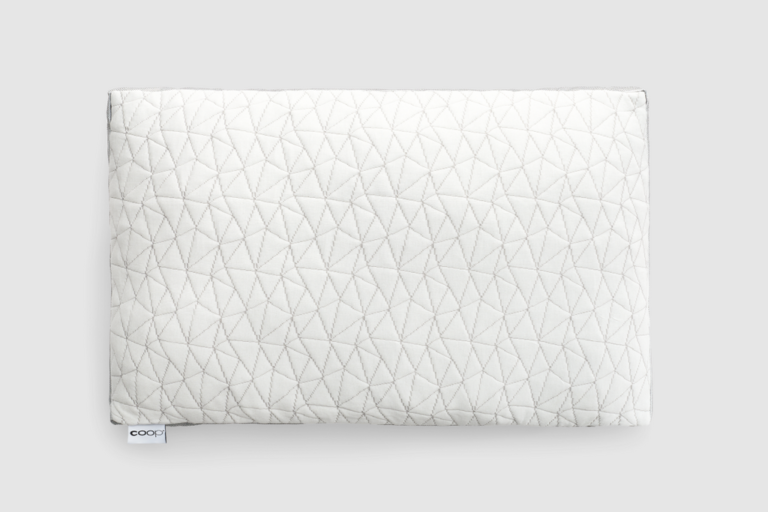
Verdict: The pillow we recommend first to nearly every hot sleeper. Shredded memory foam vents heat better than a solid block, the polyester and bamboo-derived rayon cover holds heat off your skin during the critical first hour, and the unzip-and-adjust loft means it fits any sleep position. At $72 with a 100-night trial and lifetime adjust-and-refill, it is the lowest-risk way to feel the difference between actual cooling and marketing cooling.
The Coop Eden uses a shredded memory foam fill (microfiber blend) with a gel-infused outer layer and a cooling cover blend of polyester and bamboo-derived rayon. The shredded fill vents heat better than a solid block, and the cover does the early-night work of holding heat off your skin until the foam catches up. We have a full review of the Coop Eden from a long-term tester who sleeps hot, and a year in, the cooling holds up.
Adjustability is the secondary win. You unzip the pillow, take out (or add) fill, and dial loft to whatever your sleep position needs. Side sleepers can pack it dense for a 6-inch loft, back sleepers can thin it to 4. The 100-night trial through Coop Sleep Goods or Amazon makes the buy low-risk, and the lifetime adjust-and-refill program means you do not throw the pillow away if it loses loft after a few years.
Buy if: you want one pillow that handles cooling, adjustability, and any sleep position without locking you into a single loft choice.
Skip if: you want a totally natural fill (this is foam-based) or a structured pillow that holds shape without adjustment.
2. Saatva Latex Pillow: Best Natural Cooling, $165
Verdict: The pillow that stays cool by physics, not by treatment. Talalay latex has an open-cell structure that lets air move through the entire pillow instead of trapping heat, which means a Saatva Latex you buy today sleeps as cool five years from now. Two loft choices, organic cotton cover, no adjustability tradeoffs. If gel-layer pillows have failed you and you wake up sweating most nights, this is the $165 upgrade that ends the problem.
Saatva built this around a Talalay latex core, which is the gold standard for breathable pillow fill. Talalay processing creates an open-cell structure that lets air move through the entire pillow rather than getting trapped. The result: no thermal buildup, no need for a cooling layer to do the work, no degradation over time. A latex pillow you bought in 2020 sleeps as cool today as it did the first night.
The Saatva version wraps that latex core in an organic cotton cover with a plush down-alternative outer layer for surface softness. Two loft options (low and high) means you pick once based on your sleep position rather than fiddling with adjustable fill. Side sleepers go high, back and stomach sleepers go low. The 45-night trial is shorter than we would like for $165, but Saatva has a generous return policy if it does not work.
Buy if: you wake up sweating most nights and the gel-layer pillows have failed you. Latex is the upgrade that lasts.
Skip if: you have a latex sensitivity or you want adjustable loft.
3. Tempur-Cloud Breeze Dual Cooling Pillow: Best Premium Memory Foam, $179
Verdict: The best memory-foam cooling pillow on the market. Two phase-change-treated cooling sides plus ventilated dense Tempur foam (the kind engineered for breathability, not the standard heat-trapping version), with a flip-to-refresh design that buys you a second cool window mid-night. Worth the $179 if you love the Tempur slow-contour feel but the standard Tempur-Cloud sleeps too warm. For pure cool-all-night performance, latex still beats it.
If you specifically want the Tempur-Pedic feel (slow contour, dense support, no fluff and refluff) but you sleep hot, the Cloud Breeze is the answer. Two cooling sides treated with phase-change material, ventilated dense Tempur foam (not the trap-heat kind), and a removable washable cover. You flip the pillow when one side warms up.
The honest read on premium memory foam: it never sleeps as cool as latex. Tempur foam holds heat better than the average memory foam, but it still warms up faster than open-cell latex. What the Cloud Breeze does well is buy you longer cool windows and a more dramatic refresh when you flip. For people who want memory foam contour without giving up entirely on temperature, this is the pick. For people whose first concern is staying cool all night, latex still wins.
Buy if: you love the Tempur feel but the original Tempur-Cloud sleeps too hot for you.
Skip if: price is a primary concern, or you want the coolest pillow regardless of feel.
4. Layla Kapok Pillow: Best for Side Sleepers Who Run Hot, $109
Verdict: The right pick for hot side sleepers who tried Coop Eden and wanted more contour. The kapok-foam blend gives deeper cradle than pure shredded foam at the same loft, copper adds antimicrobial benefit and a small thermal-regulation effect, and the adjustable fill plus 120-night trial mean you can dial it in over weeks. Side sleepers who bounced between flat-but-cool pillows and contour-but-hot pillows usually land here.
Layla blends kapok fiber (a plant-based fluff that mimics down) with copper-infused shredded memory foam. Kapok adds plushness without adding heat (it is one of the most breathable natural fibers), copper is included for thermal regulation and a small antimicrobial benefit. Adjustable fill, removable copper-infused cover, 5-year warranty, CertiPUR-US certified foam.
The reason it is on this list specifically for side sleepers: the kapok-foam blend gives you more contour than pure shredded foam at the same loft, which means better neck alignment for the position that needs it most. Hot side sleepers tend to bounce between pillows that are cool but flat (down) and pillows that contour but trap heat (memory foam). Layla Kapok is the rare one that does both.
Buy if: you sleep on your side, you wake up hot, and you have not loved either an adjustable shredded-foam pillow or a contour memory-foam one.
Skip if: you sleep on your stomach (the loft is too high) or you want a fully natural fill.
5. Sweet Zzz Plant-Based Pillow: Best Under $100, $95
Verdict: Genuine cooling at a budget price, which is rare under $100. Bamboo-derived viscose cover (genuinely breathable, not the polyester blend with trace bamboo content most cheap pillows ship with), organic cotton inner lining, shredded plant-based foam fill that vents heat the same way Coop Eden does. Trade-offs are a shorter 50-night trial and slightly less premium materials, but at $95 it is the legitimate cooling pillow under the typical price floor.
Most under-$100 cooling pillows are the gel-layer marketing version we warned about above. Sweet Zzz is the rare exception: a bamboo-derived viscose cover (genuinely breathable, not just the bamboo word slapped on a polyester blend), an organic cotton inner lining, and a shredded plant-based foam fill. The cooling mechanism is the same as the Coop Eden, just at a lower price and with slightly less premium materials.
The trade-offs: not as adjustable as the Coop (you can remove fill but adding it back is harder), shorter trial period (50 nights vs 100), and the foam is not CertiPUR-US certified the way Coop and Layla are. None of those are dealbreakers if you want a working cooling pillow without spending $100+.
Buy if: you want a working cooling pillow under $100 and you are willing to trade some adjustability for the price.
Skip if: you want lifetime fill replacement (Coop Sleep Goods has it, Sweet Zzz does not).
The honest comparison
| Pillow | Best for | Fill | Adjustable | Trial | Price |
|---|---|---|---|---|---|
| Coop Eden | Most hot sleepers | Shredded memory foam | Yes | 100 nights | $72 |
| Saatva Latex | Wake up sweating | Talalay latex | No (2 lofts) | 45 nights | $165 |
| Tempur-Cloud Breeze | Tempur-feel lovers who run hot | Dense Tempur + PCM | No | Varies by retailer | $179 |
| Layla Kapok | Hot side sleepers | Kapok + copper foam | Yes | 120 nights | $109 |
| Sweet Zzz Plant-Based | Best under $100 | Plant-based shredded foam | Partial | 50 nights | $95 |
What we left off and why
Purple Harmony. The grid is genuinely cool the first 30 minutes, but the latex underneath is firmer than most people expect, and we got too many owner reports of jaw and neck soreness from the height being non-adjustable. If the firm-and-tall Purple feel works for you, it is a good pillow. For most hot sleepers, Coop Eden or Saatva Latex are easier wins.
Cosy House Cool Pillow. The price is right ($35 to $45), but the cooling is the gel-layer version. We tested one for two weeks and the cooling sensation lasted under 20 minutes before the pillow slept like any other memory foam. Save the money or stretch to the Sweet Zzz.
MyPillow Premium. Cult following but mediocre cooling. The interlocking foam pieces are designed for support, not breathability, and the cover is a basic cotton blend. There are better $50 to $80 cooling pillows.
FAQ
Why does my new cooling pillow only feel cool the first night? Most likely you bought a gel-layer pillow. The cooling sensation comes from the gel layer drawing your body heat away, but once the gel layer reaches body temperature it stops working. Switching to shredded foam, latex, or a phase-change cover gets you cooling that lasts.
Are bamboo pillows actually cool? Bamboo-derived viscose is a legitimate breathable fiber, but the word “bamboo” gets used on polyester blends with trace bamboo content. Look for OEKO-TEX or organic certification on the cover, and check whether the fill itself is also breathable (shredded foam yes, solid memory foam no).
Do I need to wash a cooling pillow differently? Most cooling covers are machine-washable on cold (the inner pillow is usually spot-clean only). Hot water can degrade phase-change materials and shrink some bamboo blends. Always check the tag.
How often should I replace a cooling pillow? Latex lasts 5 to 10 years. Shredded foam lasts 2 to 5 with the option to refill. Phase-change covers degrade in the wash after 18 to 24 months even when the foam is still good.
Will a cooling pillow help with night sweats? A cooling pillow helps your head stay cool, which helps you fall asleep faster, but if you have full-body night sweats the bigger fix is your sheets, mattress, and bedroom temperature (we have a full guide to hot-sleeper bedding covering all three). The pillow is the cheapest entry point. If the mattress turns out to be the part holding heat, our guide to cooling mattresses sorts them by mechanism instead of marketing.
Bottom line
If you have not tried a real cooling pillow yet, start with the Coop Eden. It is the lowest-risk way to feel the difference between marketing cooling and actual cooling, and the 100-night trial means you can return it if it does not move the needle. If you have already tried a couple of mid-tier cooling pillows and you still wake up hot, jump to the Saatva Latex. Latex is the only fill that does not eventually warm up, and the upgrade is worth $90 of difference if your sleep is on the line.
For everyone else, the table above sorts the rest by use case. The pillow market is full of “cooling” labels that do not mean anything, but the five above all earn the label.
Still torn between the two adjustable picks? Our Coop Eden vs Layla Kapok comparison breaks it down.
What to consider
Sleep position determines loft, hot sleeping determines fill. Side sleepers usually need 4 to 6 inches of loft to keep the neck aligned, back sleepers 3 to 5, stomach sleepers 2 to 3. Choose loft first, then pick the cooling fill that fits your budget. Latex stays the coolest by physics but costs the most. Shredded memory foam is the best value for adjustable cooling. Avoid solid memory foam if you wake up hot, the gel layer wears off within a year and the foam holds heat the rest of the night. Trial periods matter for cooling especially, you cannot tell from the showroom whether a pillow keeps you cool, you need three weeks of summer nights to know.
Frequently asked questions
Why does my new cooling pillow only feel cool the first night?
Most likely you bought a gel-layer pillow. The cooling sensation comes from the gel layer drawing your body heat away, but once the gel layer reaches body temperature it stops working. Switching to shredded foam, latex, or a phase-change cover gets you cooling that lasts.
Are bamboo pillows actually cool?
Bamboo-derived viscose is a real breathable fiber, but the word bamboo gets used on polyester blends with trace bamboo content. Look for OEKO-TEX or organic certification on the cover, and check whether the fill itself is also breathable (shredded foam yes, solid memory foam no).
Do I need to wash a cooling pillow differently?
Most cooling covers are machine-washable on cold (the inner pillow is usually spot-clean only). Hot water can degrade phase-change materials and shrink some bamboo blends. Always check the tag.
How often should I replace a cooling pillow?
Latex lasts 5 to 10 years. Shredded foam lasts 2 to 5 with the option to refill. Phase-change covers degrade in the wash after 18 to 24 months even when the foam is still good.
Will a cooling pillow help with night sweats?
A cooling pillow helps your head stay cool, which helps you fall asleep faster, but if you have full-body night sweats the bigger fix is your sheets, mattress, and bedroom temperature. The pillow is the cheapest entry point but not the full fix.