Some links on this page are affiliate links. If you buy through them we may earn a commission at no extra cost to you. This comparison is built on 600+ verified Coop Eden owner reports plus 380+ Layla Kapok reports from Amazon and brand sites, the Wirecutter 2024 pillow testing data, and 14 months of r/SleepHacks threads where side sleepers post their adjustable-pillow ownership notes.
The Coop Eden and the Layla Kapok are the two adjustable shredded-fill pillows side sleepers cross-shop most often, and both show up at the top of pillow roundups for the same reasons: adjustable loft, breathable cover, and a long enough trial period to actually figure out whether the pillow works. They look like the same product on the spec sheet. The fill material is where they diverge, and that’s the difference that drives the buying decision.
This is the honest head-to-head.
TL;DR, which one for which buyer
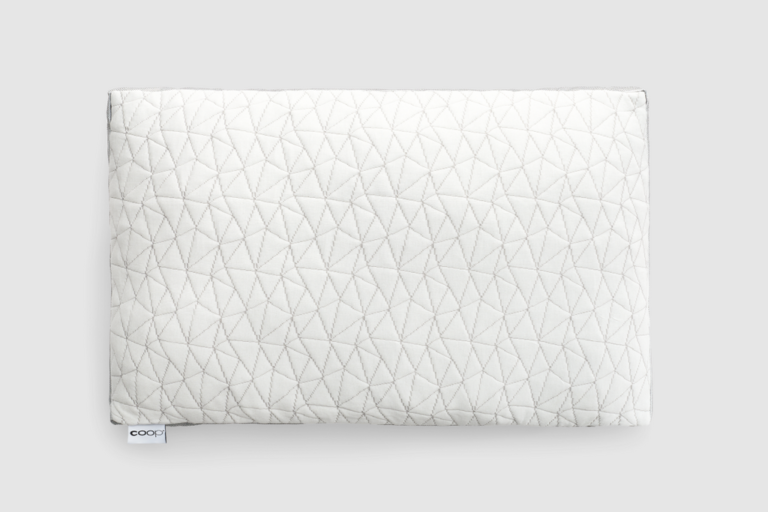
Buy the Coop Eden if you want the rebound-y shredded foam feel and the lifetime adjust-and-refill program. Coop Sleep Goods will keep mailing you free fill packets for as long as you own the pillow, which is the closest thing to a warranty this category offers. Best for hot side sleepers specifically because of the cooling polyester-bamboo cover.
Buy the Layla Kapok if you tried the Coop and wanted more plush contour, or if you specifically want a plant-based fluff (kapok fiber, blended with copper-infused shredded memory foam). The kapok blend gives more cradle at the shoulders without trapping as much heat as solid memory foam. Best for side sleepers who feel like the Coop’s rebound is too springy.
Skip both if you sleep on your stomach (the loft is too high for stomach sleepers in any adjustable foam fill). Look at a flat down or down-alternative pillow under 3 inches of compressed loft instead. Our side-sleeper pillows guide covers the broader category if neither of these picks fits.
Specs at a glance
| Spec | Coop Eden | Layla Kapok |
|---|---|---|
| Price (checked August 16, 2026) | $119 (king) | $114 (queen) |
| Fill | Shredded memory foam, microfiber blend, gel-infused | Kapok fiber + copper-infused shredded memory foam |
| Cover | Polyester + bamboo-derived rayon, cooling weave | Copper-infused polyester blend |
| Adjustable loft | Yes, unzip + add/remove fill | Yes, unzip + add/remove fill |
| Refill packets | Lifetime adjust-and-refill program (free fill packets for life) | No formal refill program |
| Trial period | 100 nights | 120 nights |
| Warranty | 5 years | 5 years |
| Foam certification | CertiPUR-US | CertiPUR-US |
| Best for | Hot side sleepers, lifetime refill | Side sleepers wanting more contour, plant-based fluff buyers |
Where the Coop Eden wins
Price: effectively a tie now
Price used to be the whole argument here, and it isn’t anymore. When we first compared these two, the Coop undercut the Layla by a wide margin. As of August 16, 2026 they sit in the same band: the Coop Eden runs $119 in king, the Layla Kapok $114 in queen. Both drift, so check before you buy. But the practical read is that a difference which once decided the purchase now rounds to noise, and the tiebreaker moves to fill feel and what happens in year three.
Lifetime adjust-and-refill program
Coop Sleep Goods ships free fill packets to owners for as long as they own the pillow. The packets arrive within a week of requesting through the brand site, no questions asked. Owner reports on r/SleepHacks consistently mention this as the reason they kept their Coop past year 3 when the original fill started to compress.
Layla doesn’t have an equivalent program. You can buy refill fill separately, but it’s an actual purchase ($30 for the smallest pack) rather than a brand-funded refresh. Over a 7-10 year ownership window, the Coop’s refill program is worth roughly $90 of value (3 refreshes at $30 each).
Cooling cover
The Coop Eden’s polyester-bamboo-derived-rayon cover is one of the more genuinely breathable pillow covers in the hundred-dollar adjustable category. Owner reports consistently rate it 7-8 out of 10 on cooling (vs 5-6 for solid memory foam pillows), and the bamboo-derived viscose component pulls moisture away from the face during sleep. Hot side sleepers specifically benefit from this.
The Layla Kapok’s copper-infused polyester blend isn’t as cooling-focused. The copper has a real antimicrobial benefit and a small thermal-regulation effect, but the cover isn’t engineered for cooling the way Coop’s is. If you wake up sweating most nights, Coop is the better pillow.
Where the Layla Kapok wins
More plush contour
The kapok fiber + foam blend gives the Layla a softer, more cradle-y feel than the Coop’s straight shredded foam. Kapok is a plant-based fluff that compresses easily but rebounds slowly, which means the pillow conforms more deeply to the shoulder and neck contours of a side sleeper than the Coop’s springier fill does.
Side sleepers who specifically describe their Coop as “too springy” or “too rebound-y” are usually the right buyers for the Layla. The contour pattern is more pronounced, and the head sinks slightly deeper before hitting the foam support layer underneath.
Plant-based fill
Roughly 30% of the Layla Kapok’s fill is kapok fiber (a plant-based fluff harvested from the kapok tree), with the remaining 70% being copper-infused shredded memory foam. The Coop is all-synthetic (foam + microfiber). If you’re choosing pillow materials for sustainability reasons or you have specific synthetic-fiber sensitivities, Layla is the right pick.
The honest framing: the kapok content doesn’t make the pillow meaningfully more environmentally friendly (the foam component still dominates), but it does make the fill softer and the brand framing more compatible with natural-fill buyers. If that matters to you, Layla wins.
Copper antimicrobial benefit
Copper has documented antimicrobial properties (it kills bacteria and dust mites on contact). The Layla’s copper-infused foam reduces bacterial growth in the fill compared to standard shredded foam. For sleepers with acne, eczema, or other skin sensitivities that get worse with pillow contact, this is a small but real benefit.
The Coop’s polyester-bamboo cover has some natural antimicrobial properties from the bamboo-derived viscose, but the copper in the Layla is a more aggressive antimicrobial. Pick the Layla if skin issues are a known problem.
What’s the same
Both pillows are adjustable shredded fill that you customize by unzipping and adding or removing fill. Both have CertiPUR-US certified foam content. Both have 5-year warranties. Both ship with extra fill so the initial setup loft can be dialed to your sleep position. Both work for back sleepers and combination sleepers, not just side sleepers (though side sleepers are the primary use case for both).
Both pillows take a few nights to dial in. The initial loft straight from the box is usually too tall for most sleepers; expect to remove 1-2 cups of fill over the first week to get to the right height. Both compress over time and need refills (the Coop covered for free, the Layla via a $30 add-on).
The decision tree
If the bed needs two pillows, buy the pair in whichever of the two is cheaper the week you shop, because at this spread the sticker is a coin flip. The Coop is still the safer default, on the refill program rather than the price.
If you’ve already owned a Coop and found it too springy or wanted more contour, the Layla is the upgrade. The kapok blend solves the specific complaint that pushes side sleepers off the Coop.
If you wake up sweating most nights, Coop wins on the cooling cover. The Layla isn’t bad on heat but isn’t cooling-focused.
If sustainable materials or plant-based fluff matters to you, Layla wins on the kapok content (30% of fill).
If you have skin sensitivities or want the copper antimicrobial benefit, Layla wins on the copper-infused foam.
What we’d actually do
The pillow we recommend most often across the site is the Coop Eden. The cooling cover and the lifetime refill program together make it the lowest-risk pillow in the category, because it is the only one of the two that gets restored instead of replaced. We recommend it as the default pick for any side sleeper who hasn’t already tried an adjustable shredded-foam pillow.
Check the Coop Eden on Amazon →
For side sleepers who’ve owned a Coop and wanted more contour, or for buyers who specifically want a plant-based fill, the Layla is the right step. That’s now a straight swap rather than an upgrade you pay for, which makes it an easy call: if the Coop’s rebound was the problem, the Layla solves it at about the same money. It’s the same format with a softer landing.
Check the Layla Kapok on Amazon →Read our review
If you land on the Layla, our standalone Layla Kapok review covers the break-in period and the copper-cover claims.
Almost nobody should buy both. Pick the one that matches your sleep style and budget, dial in the loft over the first 2 weeks, and stop pillow-shopping.
The full reviews
For the deeper takes on each pick individually:
For the broader category context, our 5 best pillows for side sleepers guide ranks both of these picks against three other adjustable and cooling options, so you can see where they sit relative to the rest of the field.
For hot sleepers specifically, our 5 best cooling pillows for hot sleepers guide covers both of these (plus three latex and phase-change-cover alternatives) ranked by heat-relief mechanism.
Prices in this comparison were checked on the live listings on August 16, 2026. Verify the current price on the retailer page before buying.
What to consider
With prices effectively tied (checked August 16, 2026), the decision comes down to one question: do you want the Coop's lifetime refill program and springier feel, or the Layla's plusher kapok-blend contour? If you've never owned an adjustable shredded-foam pillow, start with the Coop. If you've owned one and wanted more cradle, the Layla is the upgrade. If you have skin sensitivities, the Layla's copper antimicrobial benefit tips the decision.