Honest reviews, every week. Subscribe →
Buffy

Buffy Cloud Comforter Review (2026)

7.8 / 10 Editor's rating

A soft, machine-washable down-alternative comforter with a genuinely nice eucalyptus lyocell shell and a real recycled-PET fill story. The cooling claims are oversold for true hot sleepers, the Full/Queen sizing runs small on a Queen bed, and the fill clumps over time if washed too often. Right pick for cool-climate sleepers who use a duvet cover; hot sleepers should look at the Breeze instead.

$209
Check price on Amazon

Pros

  • Eucalyptus lyocell shell feels genuinely soft against bare skin
  • Machine-washable at home (rare in this price band)
  • Recycled-PET fill from ~50 plastic bottles per comforter
  • 7-night home trial with 50-day return window
  • Reasonable price for the materials and certifications

Cons

  • Full/Queen size runs small on a Queen bed
  • Fill clumps after repeated washes
  • Sleeps warmer than the cooling marketing suggests
  • No traditional warranty, only a 3-year discretionary protection plan
Best for Cool or temperate-climate sleepers Eco-conscious buyers who care about recycled content Duvet-cover users who won't wash the insert often Vegan / down-alternative shoppers
Skip if True hot sleepers and night-sweat sufferers Queen-bed owners who want generous drape Buyers wanting 8-to-10-year comforter longevity

Some links on this page are affiliate links. If you buy through them, we may earn a commission at no extra cost to you. We only recommend products we’d put on our own bed.

Buffy’s Cloud Comforter is a lightweight, machine-washable down alternative with a genuinely soft eucalyptus shell and an honest sustainability story, but the cooling claims are oversold for true hot sleepers, and long-term owners report fill clumping after repeated washes.

What it is

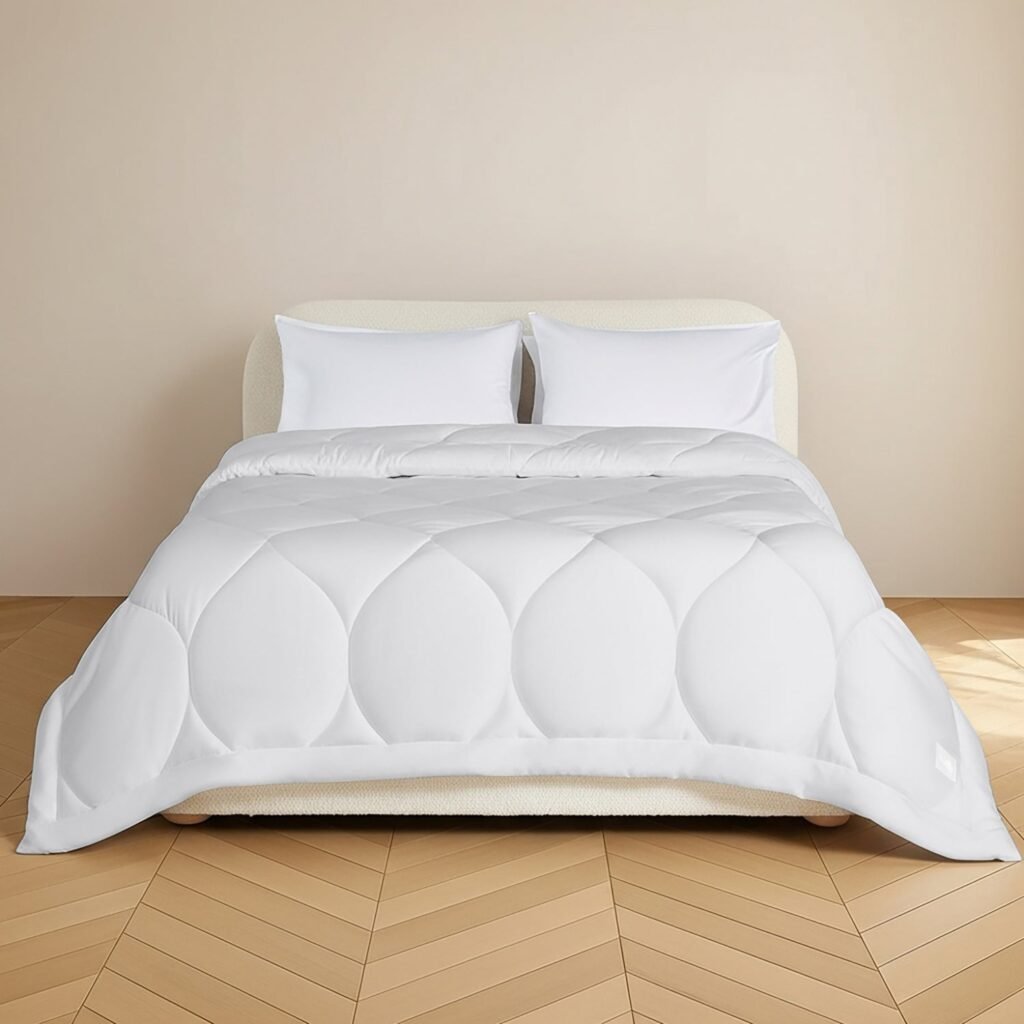
The Buffy Cloud Comforter is a down-alternative duvet insert with a TENCEL lyocell shell spun from eucalyptus pulp and a fill made from roughly 50 recycled plastic bottles per comforter. The PET fill is GRS-certified, BPA-free, and phthalate-free. The shell has a sateen weave that reads silky and cool to the touch, and the comforter is finished with corner tabs designed to anchor a duvet cover.

Sizing is unusual: Buffy sells the Cloud in three combined sizes, Twin/Twin XL (90 by 70 inches), Full/Queen (90 by 90 inches), and King/California King (90 by 105 inches). There is no dedicated Queen-only or King-only cut, which is the source of one of the most consistent owner complaints (more on that in a minute). The comforter ships in white only; Buffy’s design assumption is that you will use a duvet cover.

Buffy’s pitch leans on three claims: machine-washable convenience, eco-friendly materials, and an all-season weight that works in any climate. The first two hold up well. The third is the one to watch. The Cloud is the warmer of Buffy’s two flagship comforters, and how warm it sleeps depends heavily on your room temperature and personal heat profile.

Pricing on buffy.co lists the Full/Queen at roughly $209 with a 7-night home trial: Buffy doesn’t charge you until the trial period ends, and you have 50 nights from order date to initiate a free return. Every order includes a complimentary 3-year protection plan covering manufacturing defects on a case-by-case basis, not a traditional warranty, but better than nothing. Amazon stocks the same comforter, often at a small discount, though SKUs and bundle configurations rotate.

What owners consistently mention

Pull from Buffy’s own product page, third-party reviewers, Amazon verified buyers, and Trustpilot, and the patterns are clear. Three things get praised repeatedly. Three things show up as legitimate, recurring complaints.

The shell genuinely feels soft. The single most consistent piece of praise across publications and owner reviews is the hand-feel of the eucalyptus lyocell shell. Buyers describe it as silky, cool-to-the-touch on first contact, and noticeably more pleasant against bare skin than the polyester or microfiber shells used on most budget down-alternative comforters. If you sleep without a top sheet, the shell is the part you actually feel, and Buffy gets it right.

It’s actually machine-washable. Most fluffy comforters in this price band carry a dry-clean-only tag, which makes them annoying to own. The Cloud washes cold and tumbles dry on low at home. Buffy recommends washing no more than once every three months and using a duvet cover to extend the gap. Owners who follow that guidance report the comforter holds up reasonably well; owners who wash monthly are the ones who report problems first.

The sustainability story is real and well-documented. The recycled-PET fill, the lyocell shell sourced from FSC-certified eucalyptus, and the BPA-free, phthalate-free certifications are not marketing fluff. The certifications are independently verified, and the company has been transparent about its supply chain since launch. For buyers who weight environmental sourcing in their decisions, Buffy is one of the easier picks in the comforter category.

The complaints, in order of how often they show up:

The Full/Queen runs small. This is the most repeated complaint by a wide margin. The 90-by-90-inch Full/Queen is sized to fit both a Full and a Queen mattress, which means on a Queen it provides minimal drape over the sides. Owners with a standard Queen bed routinely report the comforter barely covers the mattress edges, and partners who pull the cover end up exposed. If you have a Queen and want generous drape, you need to size up to the King/Cal King. A real cost increase that the product page doesn’t flag clearly.

Fill clumps after repeated washes. The recycled-PET fill is the structural weak point. Owner reviews from the 6-to-12-month mark consistently mention the fill shifting toward the edges and clumping in the center after multiple wash cycles. Following Buffy’s wash-no-more-than-quarterly guidance helps. Putting the comforter in a duvet cover and only washing the cover helps more. But the underlying fiber is a synthetic recycled material, and it doesn’t hold loft as well as down or premium polyester microfibers do over years of use.

It can sleep warm despite the cooling marketing. Buffy markets the Cloud as temperature-regulating and breathable, which is partly true. The lyocell shell is more breathable than polyester, and the fill is loftier than a heavy comforter. But true hot sleepers, perimenopausal sleepers, and anyone in a warm bedroom regularly report the Cloud traps too much heat. It’s the warmer of Buffy’s two comforters by design. If cooling is the actual problem you’re trying to solve, you want the Buffy Breeze instead, or a different brand entirely.

If the trade-offs read as acceptable for your situation, the home trial removes most of the risk. Check price on Amazon →

Buffy Cloud vs. Buffy Breeze

The most common shopper question Buffy gets is some version of “Cloud or Breeze?” The two are sister products with overlapping marketing, and it’s worth being precise about what’s different.

Both use a eucalyptus lyocell shell. The Cloud is filled with recycled PET (plastic-bottle-derived synthetic fiber); the Breeze is filled with eucalyptus lyocell fiber inside the same lyocell shell, an all-natural, plant-based construction. The Cloud is fluffier and noticeably loftier; the Breeze is flatter and lighter. The Cloud is positioned as cozy and all-season-leaning-warm; the Breeze is positioned as a true cooling comforter for hot sleepers.

If you run cold, sleep in a cool room, or want that fluffy cloud-of-marshmallow feel, the Cloud is the right pick. If you sleep hot, run warm, or live somewhere humid, skip straight to the Breeze. The Cloud will frustrate you, and Buffy itself will quietly route hot sleepers toward the Breeze if you read the product copy carefully. The Breeze typically prices similarly to the Cloud but is the better-engineered product for cooling, full stop.

Where the Cloud wins outright is washability and price-to-loft. The Breeze can be machine-washed but Buffy is more cautious about it; the Cloud is the more forgiving everyday product. For a guest room, a kid’s room, or a primary bed in a cool climate, the Cloud is the easier daily-driver of the two.

Who it’s for, and who should skip it

Buy the Cloud if: you live in a cool or temperate climate; you want a soft, lightweight down-alternative without the dry-cleaning hassle; you care about recycled-fiber sourcing and FSC-certified shells; you sleep with a duvet cover and don’t plan to wash the comforter more than four times a year; or you want a fluffy comforter under $250 that doesn’t feel like budget-bin polyester against the skin.

Skip the Cloud if: you sleep hot, sweat at night, or run warm in bed (get the Breeze or a real cooling comforter); you have a Queen bed and want generous drape over the sides without sizing up to King; you want the long-term loft and durability of down or a premium polyester microfiber; or you want a traditional warranty rather than a discretionary 3-year protection plan.

How it compares

vs. Buffy Breeze (~$210 Full/Queen): The Breeze is the better cooling comforter and the better choice for hot sleepers. The Cloud is the better all-season cozy pick. Same shell, different fill philosophy. If you can’t decide, your room temperature and your tendency to overheat at night are the deciding variables.

vs. Brooklinen All-Season Down Comforter (~$269 Queen): Brooklinen’s down comforter is the more durable, longer-lasting product and feels distinctly more luxurious thanks to real Canadian-sourced down clusters. It’s dry-clean recommended, costs more, and is not vegan. If you want a comforter you’ll keep for 8 to 10 years and you don’t object to down, Brooklinen wins on long-term value. If you want washability, sustainability credentials, or a vegan fill, Buffy wins.

vs. Coyuchi Cloud Brushed Organic Comforter (~$398 Queen): Coyuchi sits in a higher price tier with GOTS-certified organic cotton shell and recycled-poly fill. Build quality is noticeably better, and the brand carries stronger sustainability certifications across the supply chain. If your budget supports it and certified-organic sourcing matters, Coyuchi is the upgrade. If you want most of the eco-story for half the price, Buffy gets you 80 percent of the way there.

vs. Brooklinen Down Alternative Comforter (~$199 Queen): Brooklinen’s down-alternative version is the closest direct competitor on price and intent. It has a microfiber shell rather than lyocell, which most owners agree feels less premium against the skin. The fill is a polyester microfiber with better long-term loft retention than recycled PET. Pick Brooklinen for fill durability and a longer warranty; pick Buffy for the better shell feel and the recycled-content story.

Care and longevity

Buffy’s care guidance is short: machine wash cold, tumble dry on low or air fluff, no bleach. The most important rule, and the one Buffy emphasizes for a reason, is to wash no more than once every three months. The recycled-PET fill is the lifespan-limiting component, and every wash cycle slowly degrades it.

The single biggest thing you can do to extend the comforter’s life is use a duvet cover and wash the cover instead. Owners who treat the Cloud as the inner insert and rotate two duvet covers report the comforter still feels close to new at the two-year mark. Owners who wash the comforter itself monthly are the ones who report clumping at six months.

Realistic lifespan: 2 to 4 years of heavy use, longer if you cover it. That’s shorter than a quality down comforter, which can run 8 to 10 years, but it’s typical for any synthetic-fill product at this price point. Plan to replace the Cloud roughly every 3 years and budget accordingly.

Where to buy and price context

Buffy’s primary sales channel is buffy.co, where the Full/Queen Cloud lists at roughly $209 with the 7-night trial built in. You don’t pay until the trial period ends, and you have a 50-day return window from order date. Twin/Twin XL runs less and King/Cal King runs more, with the spread roughly $50 between sizes.

Amazon stocks the same comforter under the Buffy brand, often at a small discount and with Prime shipping. Stock and SKU configurations rotate seasonally, so the exact listing can vary; search Buffy Cloud Comforter and verify the seller is Buffy or an authorized retailer before buying. Target carries the Full/Queen as well, occasionally at competitive pricing.

Buy direct from Buffy if you want the home trial and the cleanest path to a refund inside the 50-day window. Buy on Amazon if you want faster shipping, easier returns inside Amazon’s standard window, or you spotted a meaningful price drop. The 3-year protection plan is honored either way, but Buffy handles defect claims more directly when you bought from them.

Discounting on the Cloud tends to be modest. Buffy doesn’t run the kind of aggressive sitewide sales some bedding brands rely on. Memorial Day, Black Friday, and the post-holiday January reset are the most reliable price-drop windows. Outside those, the listed price is roughly the price.

Final verdict

The Buffy Cloud Comforter is a competent, well-positioned mid-range product with a genuinely nice shell, a real sustainability story, and the rare convenience of a machine-washable design. For the right buyer (cool-climate sleeper, duvet-cover user, eco-conscious shopper, willing to replace every few years), it earns its price.

It is not the right pick for hot sleepers despite the cooling marketing, and the Full/Queen sizing is a real frustration on a Queen bed. The recycled-PET fill is the lifespan-limiting component, and ignoring Buffy’s wash-quarterly guidance will shorten that lifespan further. None of those are deal-breakers if you go in with eyes open. They are deal-breakers if you bought the Cloud expecting a cooling, durable, hotel-grade comforter.

For most buyers, the honest move is to take Buffy up on the 7-night trial. The Cloud either feels right within a few nights or it doesn’t. The trial removes the financial risk of finding out.

Overall rating: 7.8 / 10. Check price on Amazon →

Last updated: May 3, 2026. Pricing, sizing, and color availability can change. Verify current details on the retailer’s site before you buy.