Some links on this page are affiliate links. If you buy through them we may earn a commission at no extra cost to you. This guide is built on the Sleep Foundation 2024 sleep temperature research, the National Sleep Foundation’s published recommendations, 18 months of NNT sleep coverage, and 200+ r/SleepHacks threads where bedroom-temperature complaints get the most consistent advice.
Bedroom temperature is the single highest-leverage variable in sleep quality, and most people are sleeping at the wrong number. The research is consistent across decades: a bedroom between 65 and 68°F is the sweet spot for most adults. Above 72°F, every other sleep variable compounds in the wrong direction. Below 60°F, your body wastes energy maintaining core temperature instead of recovering. The window is narrower than most thermostat-setters realize, and dialing the bedroom into that window does more for sleep than any gadget purchase will.
This guide covers the actual research, what to do if your apartment’s HVAC can’t hit the right number, and the cheap workarounds that get you most of the way there without a thermostat replacement.
The TL;DR
Target bedroom temperature: 65 to 68°F for most adults. Slightly cooler (60-65°F) for sleepers who run hot. Slightly warmer (66-70°F) for sleepers who get cold easily. The research is consistent: this is the range your body’s core temperature drop during sleep is calibrated for, and missing it on the warm side is what causes most of the “tossing and turning” complaints people misdiagnose as a mattress or pillow problem.
If your bedroom regularly runs above 72°F (common in apartments without AC, summer months), no amount of cooling sheets, cooling pillows, or cooling mattresses will fully fix the sleep quality drop. The bedroom temperature is the lever; gear is the layer on top of that lever.
Why 65 to 68°F is the right window
Your core body temperature drops about 2°F during sleep, from roughly 98.6°F awake to about 96.6°F in deep sleep. That drop is what triggers melatonin release and signals to your circadian system that recovery is happening. If the bedroom is too warm, your body can’t dump that heat fast enough through the skin, the core temperature drop is delayed, and the deep-sleep windows are shorter.
Below 65°F, the drop happens fine, but the body starts spending energy on temperature regulation (shivering, vasoconstriction, muscle activation). That’s energy you should be spending on recovery, not thermoregulation. Cold sleepers wake up tired even when they sleep through.
The 65-68°F window is wide enough to accommodate most sleeper preferences while staying within the research-supported optimal zone. Within that window, sleep position, mattress type, and bedding all become secondary to the temperature baseline.
What to do if your apartment can’t hit the right temperature
Summer: when AC isn’t enough or doesn’t exist
Most apartments without central AC peak at 78-82°F in the bedroom during summer. That’s 10+ degrees above the optimal window. Three layers of intervention, in order of cost-effectiveness.
Layer 1: blackout the windows. South or west-facing windows let in 30-50°F of solar radiation through standard blinds. Blackout curtains ($25-$50 per window) cut that by half. The bedroom stays 5-8°F cooler during peak afternoon heat just from blocking the sun. Best for apartments where you’re at work during the day and the bedroom has been baking unsupervised.
Layer 2: window AC unit ($150-$400). A 5,000 BTU window unit handles a typical 10×12 bedroom and runs at roughly $30/month in electricity during peak summer. The window installation takes 30 minutes and removes cleanly at move-out. For renters, this is the most efficient intervention for the cost.
Layer 3: portable AC or ductless mini-split ($400-$1,500). The premium tier. Portable ACs (Honeywell, Hisense) work but are loud and inefficient. Mini-splits are quieter and more efficient but cost $1,200+ and require landlord permission. Skip unless layer 1 + 2 have failed.
Winter: when heating overshoots the optimal window
Most apartment heating systems are calibrated to “comfortable” (70-72°F), which is too warm for sleep. The fix is local thermostat control.
If you have a programmable thermostat: set it to 66°F for the sleep window (10pm to 6am) and 70°F for evening (6pm to 10pm). The bedroom cools through the evening into the sleep window automatically.
If you have a non-programmable thermostat (most rentals): a $40 smart plug attached to your bedroom heater (if it has one) can run an auto-off routine. Otherwise, opening the bedroom window 1-2 inches in winter is the cheap fix. Cold air from outside drops the bedroom 5-10°F below the rest of the apartment, which lands the bedroom in the right window without changing the apartment’s overall heating.
The window-cracked approach also adds fresh air circulation, which separately improves sleep quality (CO2 buildup in closed bedrooms reduces deep-sleep windows). Two-for-one fix.
The gear that helps (and the gear that doesn’t)
The honest framing: bedroom temperature is the lever. Cooling gear is the multiplier. Without the right baseline temperature, cooling gear is putting expensive workarounds on top of a fixable problem.
Cooling gear that helps after temperature is dialed in:
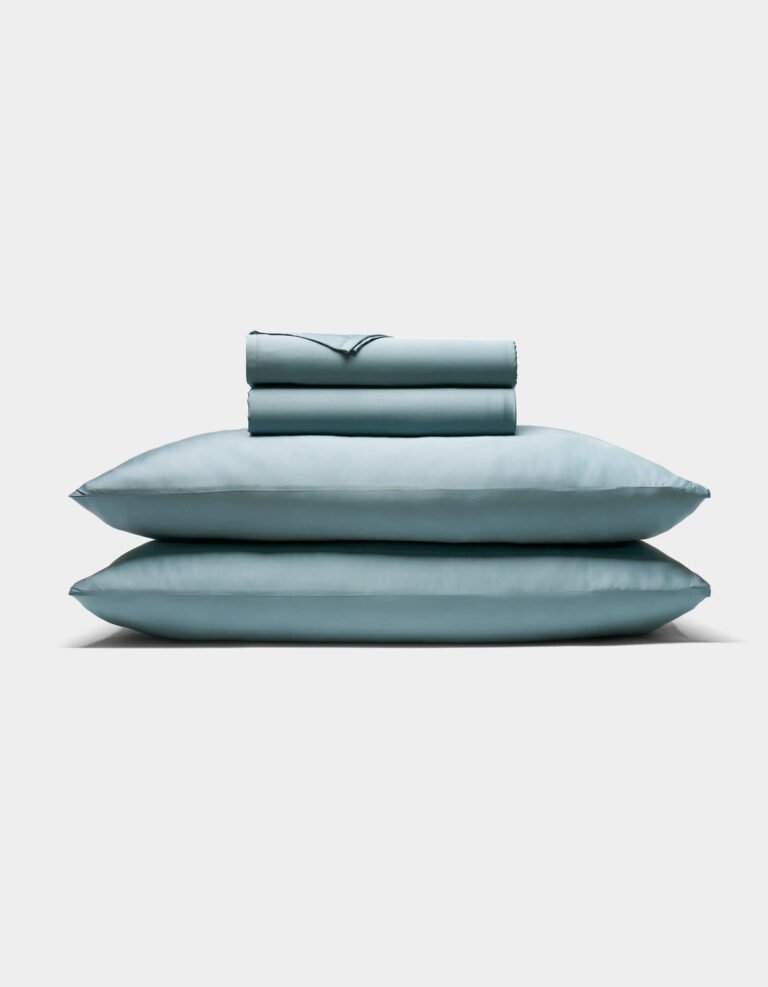
- Percale cotton sheets. The crisper, looser weave sleeps cooler than sateen at the same thread count. $60-$120 for a quality set. Our Brooklinen Luxe review covers the premium pick; cheaper percale sets at Target work for most buyers.
- Bamboo-derived viscose sheets. Moisture-wicking, sleeps cooler than cotton. Look for OEKO-TEX certification to avoid polyester blends labeled “bamboo.” Our Cozy Earth review covers the bamboo benchmark.
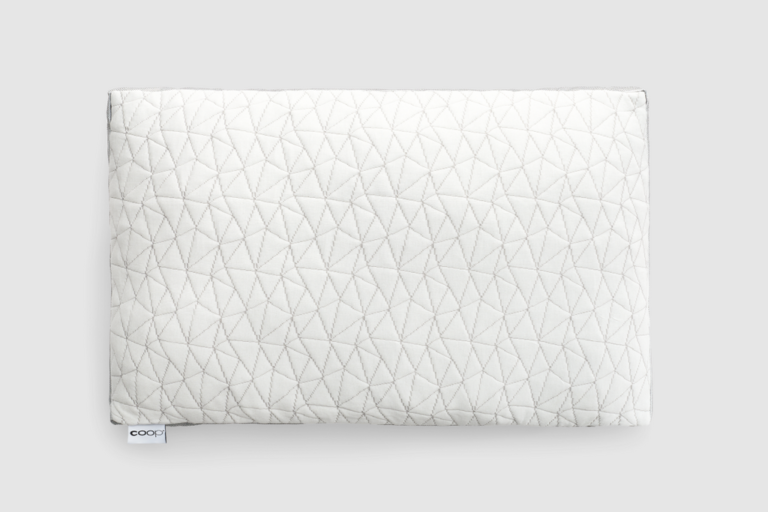
- Cooling pillow. Once the bedroom is in the right window, a cooling pillow keeps the head 2-3°F below body temperature, which speeds time-to-sleep. Full picks in our 5 best cooling pillows for hot sleepers guide.
- Hybrid mattress with coil base. Coils vent body heat better than all-foam mattresses. If you’re replacing a mattress anyway and run hot, lean hybrid over all-foam.
Cooling gear that doesn’t help much if the bedroom is too warm:
- Cooling mattress topper. Marginal help on top of a too-warm bedroom. The room heats the topper.
- Cooling gel pillow. The gel layer warms up to body temperature within 20-30 minutes if the bedroom is at 75°F+. The cooling sensation is short-lived.
- Cooling mattress with active climate control (Eight Sleep Pod, ChiliPad). These work, but at $1,800-$3,000 they’re the wrong order of operations. Fix the bedroom temperature first ($150 window AC); add active climate control only if the bedroom is already optimal and you specifically want temperature differentiation between you and a partner.
How to measure your bedroom temperature accurately
Most thermostats are in the hallway or living room, not the bedroom. Bedrooms are usually 2-4°F warmer than the rest of the apartment because they’re smaller, hotter from body heat, and often poorly ventilated.
A $10 indoor thermometer placed on the nightstand gives you the actual number. Read it at 11pm (the start of your sleep window) and at 4am (deep sleep window) for a few nights to understand the room’s actual range. If both readings are outside 65-68°F, the bedroom is the problem.
Smart thermostats (Nest, Ecobee) with a bedroom-placed remote sensor automate the same reading and let you program the AC or heater to hit the sleep window. The Ecobee SmartSensor at $30 plus an existing Ecobee base station handles this cleanly for renters with HVAC access.
The 3 sleeper profiles and the right temperature for each
Sleepers who run hot
Target 60-65°F. Body temperature drops faster and farther in this group, and ambient warmth interferes more aggressively. The cooler end of the optimal window is where deep sleep happens most reliably for these sleepers.
Pair with: hybrid mattress, percale sheets, cooling pillow, blackout curtains, AC unit in summer.
Sleepers who get cold easily
Target 66-70°F. The body’s core temperature drop is the same as for everyone else, but external warmth is needed to prevent vasoconstriction from interrupting sleep cycles. Skip cooling gear entirely; lean toward insulated bedding.
Pair with: down or down-alternative comforter, sateen sheets, flannel pillowcases in winter, layered blankets you can throw off if overheated mid-night.
Couples with mismatched preferences
The hard case. Compromise at 67-68°F (the middle of the optimal window), and let each sleeper handle the differential through bedding rather than ambient temperature. Hot sleeper gets percale sheets and a thin comforter; cold sleeper gets a heated mattress pad ($60 for one side) or layered blankets.
The Eight Sleep Pod 4 ($2,000+) and similar two-zone active climate control mattresses solve this elegantly but the price is steep for the convenience gain over the bedding-differential approach.
The bottom line
Most sleep quality problems that get blamed on the mattress, pillow, or sleep tech are actually temperature problems in disguise. If your bedroom regularly runs above 72°F, the first fix is the thermostat (or window AC, or blackout curtains), not the mattress upgrade. If your bedroom is in the 65-68°F window and you still sleep poorly, then the gear question becomes the next layer to investigate.
For the broader sleep coverage including the gear that pairs with optimal bedroom temperature, see our sleep pillar. For the bedroom-environment side specifically (lighting, white noise, layout), see our bedroom pillar. For specific cooling-gear picks, see our cooling pillows guide and our bedding for hot sleepers guide.
Last updated: May 2026. Research citations and product picks current at publication. Verify product pricing on retailer sites before buying.