Some links on this page are affiliate links. If you buy through them, we may earn a commission at no extra cost to you. We only recommend products we’d be comfortable putting in our own apartment.
The Short Version
If you rent, you’re playing a different game than the design blogs assume. You can’t drill into the wall without weighing it against the deposit. You can’t anchor a heavy shelf without picturing the patch job in 18 months. And every upgrade has to survive a move, ideally without a trip to the hardware store. The good news: the no-drill category has matured. There are serious products now that mount with adhesive, tension, weight, or a battery, not a stud finder.
If you only want three picks for an average renter bedroom, this is where we’d start: Command Picture Hanging Strips to actually decorate the walls without losing your deposit, Mr. Beams wireless LED lights for the corners no overhead fixture reaches, and the Govee LED Strip M1 for the warm-light ambient layer most rentals lack. Together that’s roughly $100 to $115, all of it portable to the next apartment, none of it requiring a single hole.
How We Chose
The picks below are synthesized from owner reports across Amazon, manufacturer specs, and the recurring themes that show up in renter-focused communities, r/Apartmentliving, r/InteriorDesign threads tagged “renter,” and the small-space corners of YouTube and TikTok. We weighed three things in roughly this order: deposit safety (will the landlord notice or charge for it), portability (does it survive a move and still work), and whether the product actually solves a problem renters specifically have, rather than a problem that only exists if you own the wall. We did not test every item personally; where a product appears in our review library, we link to the deeper write-up.
The Renter’s Deposit-Safe Rule
Before any upgrade, run it through a simple filter. Nothing that drills. No anchors, no studs, no toggle bolts. Nothing that pulls paint. That includes cheap painter’s tape over months, low-grade adhesive hooks, and any sticker-back product on a textured or freshly painted wall. Nothing your landlord can charge for at move-out. If removal leaves a mark larger than a thumbprint, assume it counts.
The products below pass that filter when used correctly. Some have failure modes worth knowing about. We’ve flagged each one in its section and again in the pitfalls section near the end.
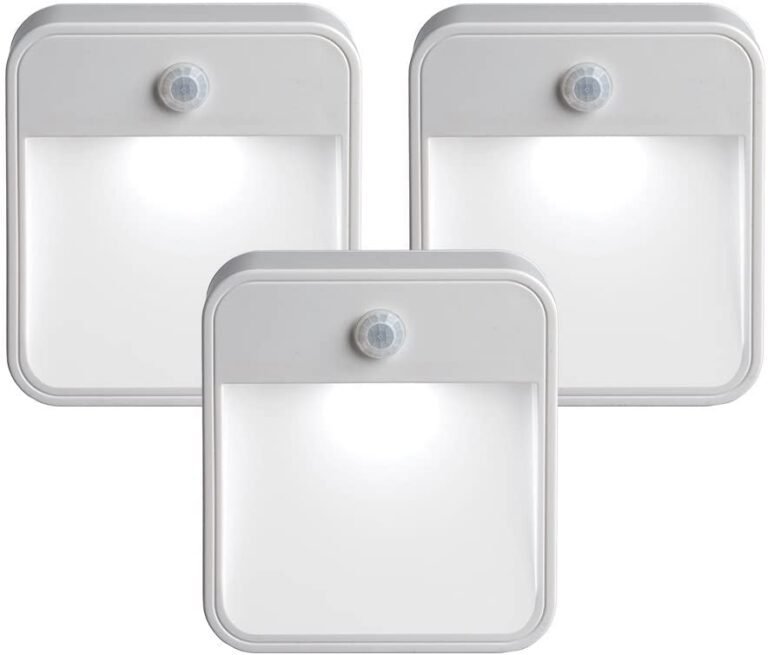
1. Mr. Beams Wireless LED Lights, Best No-Wire Lighting
Roughly $28 for a multi-pack. Battery-powered, motion-activated, peel-and-stick mounting.
Most rentals have one overhead fixture and a couple of unfortunate outlets. Mr. Beams wireless LEDs solve the dark-corner problem without a single new wire. They run on AA or D-cell batteries, mount with adhesive backing or a small magnetic plate, and most of the line is motion-activated, useful inside a closet, under a bed, or along a hallway between bedroom and bathroom for late-night trips. The LEDs throw enough light to navigate by without being so bright they wake you up.
Pros: True no-wire install. Motion sensor works as advertised. Battery life is genuinely long, owners report months on a fresh set, depending on traffic. Cheap enough to scatter several around the apartment.
Cons: Adhesive backing is the weak point. On textured walls or freshly painted surfaces it can let go after a few months. The light is functional, not decorative. Don’t expect a designed look. And on the brightest models, the motion timeout can feel short.
Best for: dark closets, under-bed paths, hallway runs to the bathroom, the inside of cabinets and cupboards. A solid first upgrade in any rental that’s lit by exactly one ceiling bulb.
Full review: Mr. Beams LED lights review →
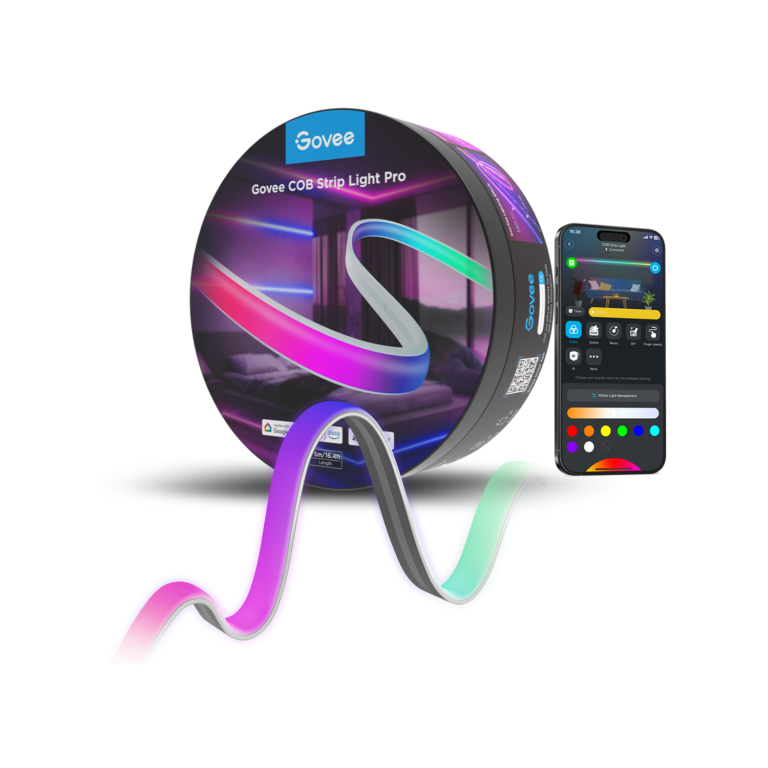
2. Govee LED Strip M1, Best Smart Ambient Lighting
Roughly $70. Adhesive-backed RGBIC LED strip, app and voice control, Matter-compatible.
If Mr. Beams is the utility pick, the Govee M1 is the mood pick. It’s an addressable RGBIC strip, meaning it can run multiple colors along its length at the same time, useful for behind-the-bed glow, behind a TV, around a desk, or up the back of a headboard. App control is the standard expected stuff (scenes, dimming, schedules), and the M1 supports Matter, which means it plays nicely with Apple Home, Google Home, and Alexa without a hub. The adhesive is 3M-grade and rated for indoor use; it sits well on smooth, room-temperature drywall.
Pros: Real RGBIC color (per-segment, not single-color). Genuinely good app. Matter support means it won’t be orphaned by ecosystem politics. Brightness scales low enough to be a sleep-friendly nightlight.
Cons: Adhesive is the renter risk. On textured paint, glossy enamel, or a wall that’s been painted in the last six months, it can pull paint when you remove it. Stick it to baseboards, the back of a desk, or behind a piece of furniture if you’re nervous. The control box is bulky and needs an outlet.
Best for: bedrooms that double as work-from-home space, anyone who already has a smart home ecosystem, sleepers who want a dim warm glow at night without reaching for a switch.
Full review: Govee LED Strip M1 review →
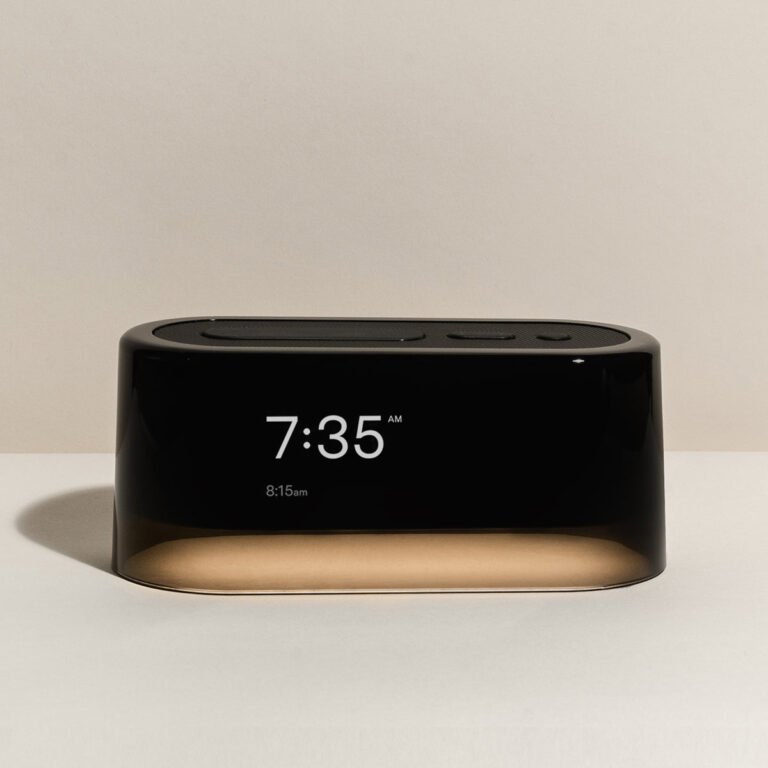
3. Loftie Clock, Best Bedside Smart Alarm
Roughly $170 to $200. Two-phase alarm, sound library, no app required to operate.
The Loftie isn’t a renter-specific product (it’s a bedside alarm clock), but it earns a spot here because of what it removes from the bedroom: your phone. For renters whose bedside surface is small (a stack of books, a slim no-drill caddy, anything that fits next to a low platform bed) and whose sleep is being eroded by a phone alarm that turns into doomscrolling, swapping in a dedicated clock is one of the higher-leverage small-space upgrades available. The two-phase alarm wakes you gently with a soft sound, then steps up; the sound library covers white noise, sleep meditations, and a small library of soundscapes. It runs from a single outlet. No second device needed.
Pros: Genuinely better wake experience than a phone alarm. Doubles as a white-noise machine, which matters in apartments with thin walls. Display dims dark enough not to bleed into the room at night.
Cons: Expensive for what is technically a clock. Some premium content is gated behind a subscription. Footprint is larger than a basic alarm clock, which matters when your bedside surface is small or shared with a phone, a glass of water, and a book.
Best for: renters trying to get the phone out of the bedroom, light sleepers in noisy buildings, anyone who’s been told they need a better wake-up routine and hasn’t found one that sticks.
Full review: Loftie Clock review →
4. Command Picture Hanging Strips, Best No-Drill Wall Decor Mount
Roughly $5 to $15 per pack. Velcro-style adhesive strips rated by frame weight.
This is the workhorse of the renter category. Command’s picture-hanging strips use a hook-and-loop system between two adhesive pads (one on the wall, one on the back of the frame), so the frame lifts cleanly off for adjustment. Used correctly on smooth painted drywall, they hold for years and remove without pulling paint by stretching the tab straight down. They are not the universal solution the packaging implies, but for hanging real art on a real rental wall, they’re the most reliable no-drill option available.
Pros: Genuinely deposit-safe when applied to smooth painted drywall and removed correctly. Frames stay level. Cheap enough to use across an entire gallery wall. Available in weight ratings up to 16 pounds per pair.
Cons: Fail mode is real. They do not work reliably on textured walls, freshly painted walls (wait at least 21 days after paint), wallpaper, or gloss enamel. Exceeding the rated weight is the most common cause of a 2 a.m. crash. And humid bathrooms eat the adhesive over time.
Best for: framed prints, lightweight canvas, mirrors under the rated weight, anything you’d otherwise nail to the wall.
Full review: Command Picture Hanging Strips review →
5. Umbra Cubist Wall Shelf, Best No-Drill Floating Shelf
Roughly $20 to $35. Adhesive-mounted geometric shelf, holds small decor and plants.
Umbra makes a category of small geometric wall shelves designed to mount with a Command-style adhesive plate rather than screws. The Cubist is the cleanest of the line (a small angular cube with one or two flat surfaces inside the geometry), and it’s sized for the kind of objects renters actually put on a shelf: a small plant, a candle, a couple of books, a single piece of art. Owner reports are consistent that the adhesive holds reliably under the rated weight (typically 5 pounds or so) on smooth drywall, and removes without paint damage when peeled slowly.
Pros: Genuinely no-drill. Doubles as decor. The shelf itself is the design element. Quick install, removable across moves. Multiple finishes pair with most palettes.
Cons: Same wall-prep rules as Command Strips, smooth, painted, fully cured drywall only. Weight rating is real; a heavy ceramic planter pushes it past spec. Not a replacement for a real bracket-mounted shelf if you need to store books.
Best for: a single decor moment in a small bedroom, a plant, a candle, a small framed print on top of the shelf rather than behind it.
6. Kenney Tension Curtain Rod, Best No-Hardware Window Solution
Roughly $12 to $25 depending on length. Spring-tension rod, no brackets, no holes.
Renter window treatments are a quiet nightmare. Most curtain rods need brackets, and brackets need screws, and screws need either anchors or a stud finder, and most rentals have window frames that are slightly out of square anyway. Kenney’s tension rods skip the entire problem. They’re spring-loaded steel rods that wedge inside a window frame using internal tension (no brackets, no holes, no hardware), and they hold lightweight curtains and sheers reliably for years. The same rod can move with you to the next apartment or the next window in five minutes.
Pros: True no-hardware install. Adjustable across a range of widths. Inexpensive. Lifts straight out when you move.
Cons: Weight capacity is the limiter. They’re built for sheers and lightweight curtains, not heavy blackout panels. On uneven or out-of-square window frames, the rod can slip slowly over weeks. And the look is utilitarian; the rod itself isn’t a design feature.
Best for: sheer curtains, light blackout liners, shower curtains in a renter bathroom, a temporary room divider in a studio.
DIY Pitfalls to Avoid
Most no-drill failures aren’t the product’s fault. They’re the wall’s. A few patterns worth knowing before you spend.
Command Strips on textured walls. Orange-peel, knockdown, popcorn, none of these surfaces give the adhesive enough flat contact area to hold long-term. The strip will look attached for a week and let go in month two, often at night. If your walls are textured, plan for tension-mounted alternatives or accept that wall decor isn’t part of your apartment’s design language.
Tension rods on uneven windows. Most rental window frames are slightly out of square, and the rod’s spring tension can creep over weeks, especially with heavier curtains. Check the rod monthly for the first two months, retighten if needed, and if it slips repeatedly, accept that your window needs a bracketed solution and ask the landlord about a small accommodation in writing.
LED adhesive in humid bathrooms. Govee strips, Mr. Beams pads, and most adhesive-backed lighting were designed for dry indoor use. A bathroom that fogs up after every shower will degrade the adhesive over months. If you want LED strips in a bathroom, run them around the mirror frame rather than directly on a tile or painted surface, and accept they may need to be re-stuck once a year.
Adhesive on freshly painted walls. Paint needs roughly 21 days to fully cure, regardless of what feels dry to the touch. Sticking anything to a freshly painted wall before then is the single fastest way to peel paint at move-out. If you’ve just moved in and the place was painted for the turnover, wait three weeks before you mount anything.
Quick Layout Tips for Tiny Bedrooms
A few low-cost moves that make a small bedroom feel meaningfully larger before you spend a dollar on accessories.
- Push the bed against the longest wall, not the corner. Symmetry around the bed reads as more space than asymmetry. If you have to corner it, leave at least 6 inches of clearance on the wall side for sheets and air.
- Light at three heights. Overhead, mid (a wall-mounted strip or a clip lamp), and floor or under-bed. The trick to making a small room feel airy is layered light, not brighter light.
- One large piece of art beats five small ones. A single 24-by-36-inch print above the bed makes the wall feel intentional. Five small frames make it feel cluttered.
- Use the back of the door. An over-the-door hook rack or shoe organizer is invisible storage in a room with no closet to spare. No drilling required.
Final Verdict
If you can only buy three things from this list, start with a pack of Command Strips, a Mr. Beams light or two, and the Govee LED Strip M1 for warm-light ambient. That’s roughly $100 to $115 for a measurable upgrade to the way the room functions, none of which leaves a mark when you move. Add the Loftie when you want to get the phone out of the bedroom, and reach for the Umbra shelf and the Kenney tension rod when the specific problem they solve shows up.
For more on the bedroom side of the equation, see our bedroom guides →. For the wider apartment-living context, our apartment-living guides → cover the spaces past the bedroom door.
Last researched: May 2026. Prices and SKUs shift; verify on the retailer listing before you buy.
What to consider
Run every upgrade through the renter's filter: nothing that drills, nothing that pulls paint, nothing your landlord can charge for at move-out. Wait 21 days after any fresh paint before mounting adhesives. Avoid Command-style products on textured walls, wallpaper, or gloss enamel. Tension rods slip on out-of-square window frames; check monthly for the first two months. LED adhesive degrades in humid bathrooms. Match weight ratings honestly. Exceeding spec is the most common cause of a 2 a.m. crash. When in doubt, mount to baseboards or behind furniture rather than on a primary wall.
Frequently asked questions
What's the single highest-leverage bedroom upgrade under $50?
Swap every overhead bulb in the bedroom to 2700K warm-white LED. The change in how the room feels at 9pm is larger than any single piece of furniture you could add at the same price. Total cost about $20 across a typical bedroom. Total install time about 5 minutes. Most landlord-installed bulbs are 4000K or 5000K daylight, which is the worst possible color temperature for a restful bedroom.
Can Command Strips hold real wall decor or just lightweight stuff?
Command picture hanging strips (the Velcro-style ones, not basic hooks) are rated up to 16 pounds per pair on smooth painted drywall. We've held a 12-pound framed mirror for 18 months with no damage at removal. The rules: wipe the wall with rubbing alcohol first, press 60 seconds, wait an hour before hanging, pull straight down to remove. Textured walls have a high failure rate.
Will a Govee LED strip damage my walls when I move out?
Not if you remove carefully. Warm the adhesive backing with a hair-dryer on warm setting (not hot), then peel slowly from one end. We've removed multiple lengths across rentals with zero paint damage. Test a small section before the final install if your paint is brittle or recently applied (wait the full 21-day cure window before mounting anything).
What's the cheapest fix for noisy neighbors in an apartment bedroom?
White noise. The neighbor's footsteps and the unit-above bass are mostly maskable with continuous broadband noise. A bedside clock with a built-in soundscape library (Loftie or Hatch Restore 2) handles it for $170. A dedicated white noise machine like the Yogasleep Dohm does it for $50. Earplugs are the under-$10 floor.