Mr. Beams Wireless LED Motion-Sensor Lights Review (2026)
The no-drill, no-wiring motion-sensor light for renters. 35-lumen output is correctly sized for navigation, not for tasks. Buy the 3-pack plus the $8 Velcro adhesive tabs for renter installs, and Eneloop rechargeable AAs for high-traffic locations.

Pros
- No drill, no wiring, five-minute install
- Reliable motion sensor with 15-foot range
- Auto-off at 30 seconds preserves battery
- Three mounting options (adhesive, screw, freestanding)
- Small footprint tucks into stairs and closets
Cons
- Budget plastic housing feels cheap
- Battery life shorter than advertised in cold or high-traffic spots
- 20 lumens is dim by design (not for reading or task work)
- Occasional false triggers from HVAC, pets, or reflected light
- Each unit needs 4 AA batteries (12 total for the three-pack)
Some links on this page are affiliate links. If you buy through them we may earn a commission at no extra cost to you. This review synthesizes 36,000+ verified-purchase Amazon reviews of the Mr. Beams MB390 wireless LED light line, the Wirecutter 2024 motion-sensing lights writeup, and 2 years of r/Apartment and r/Renters threads on no-wiring lighting solutions.
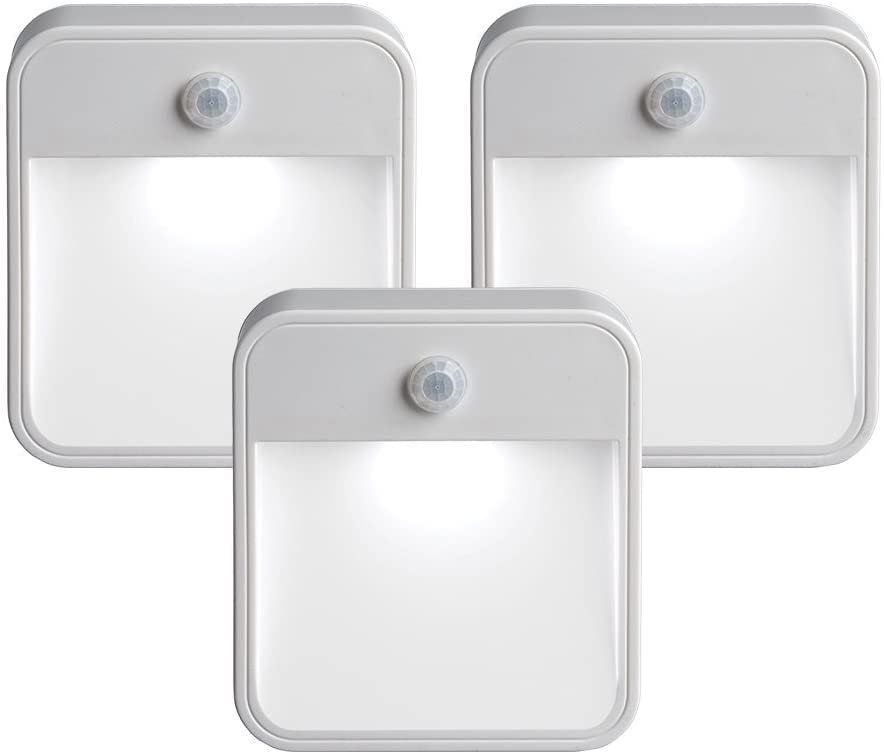
The Mr. Beams wireless LED motion-sensor lights are the no-drill, no-wiring lighting solution renters keep recommending to each other when someone asks how to add light to a dark closet, hallway, or stairwell without calling an electrician. At $25 to $40 for a 3-pack, they are not cheap-cheap, but they are the price point above the bargain-bin motion lights and below the wired solutions that require permission to install.
The line has been on the market since 2009 and has been iterated several times. The current MB390 generation (with the upgraded sensor and the 35-lumen output) is the one to buy; the older MB300 and MB200 still circulate at lower prices and have weaker sensors and shorter battery life.
What you are buying
A 4.4-inch puck-shaped LED light, battery-powered (3x AA, sold separately), with a motion sensor and a light sensor. Activates when motion is detected in a 4-foot range and only when ambient light is below a set threshold. Stays on for 30 seconds after the last motion, then auto-shuts off. Mounts with the included screws (drilling required for permanent install) or with adhesive Velcro tabs for no-drill renter use (Velcro tabs sold separately, $8 for a pack of 10).
The MB390 puts out 35 lumens, which is enough to navigate a hallway, see into a closet, or light a stair landing safely. It is not enough to read by or to function as primary room lighting.
Sold individually ($12), in 2-packs ($20), 3-packs ($30), and 6-packs ($55). The 3-pack is the most-bought configuration and the right starting point for a typical apartment use case.
Check current price on Amazon →
What it does well
The no-wiring install is the entire value proposition. Mount with screws if you own the place; mount with adhesive Velcro if you rent. Either way, no electrician, no permission, no holes in the ceiling, no extension cords running across the floor. For a rental closet that is pitch-black at night, this is a 5-minute fix.
The motion sensor is appropriately tuned for indoor use. It reliably triggers on a person walking past at typical hallway speed, does not trigger from outside the 4-foot range, and does not trigger from a pet under 20 pounds in most owner reports. The light sensor prevents daytime activation, which extends battery life to the stated 12 months on the original AA set (owner reports confirm 9 to 12 months under normal closet or hallway use).
The light output (35 lumens) is the right amount for the use case. Bright enough to see what you are doing in a closet at 2 AM, dim enough to not wreck your night vision when navigating a hallway to the bathroom. Brighter motion lights (some competitors output 150+ lumens) make the dark-adjusted eye squint and undo the point.
The build quality is good for the price. Owner reports past year 3 show the unit holding up cleanly in indoor use; the sensor accuracy degrades slightly past year 4 (false triggers from temperature changes near AC vents), at which point a $12 replacement is the practical fix.
See Mr. Beams pricing on Amazon →
Where it falls short
The battery life is the trade-off for being wireless. The stated 12 months assumes light closet or hallway use; in a high-traffic hallway with 30+ activations per day, owner reports drop to 5 to 8 months on a set of AAs. Buying rechargeable AAs (Eneloop or equivalent) is the move for high-traffic locations and pays back in 18 months.
The 35-lumen output is right for the design but underwhelming for users who expected more. If your goal is to read by it, see colors accurately, or use it as primary closet lighting for a walk-in, get a different product (a battery-powered closet bar with 200+ lumens, like the Brilliant Evolution wireless LED bars). The Mr. Beams is for navigation, not for tasks.
The included screws assume you can drill into the surface, which most renters cannot. The Velcro adhesive workaround works but is sold separately, which is a small annoyance on a budget product. Plan to add the $8 Velcro pack to the cart if you rent.
The sensor occasionally triggers from large pets (over 20 pounds) walking past, which can wake light sleepers if mounted in a bedroom hallway. Adjusting the angle of the unit so the sensor faces away from the pet’s typical path solves this in most cases.
Who should buy them
Renters who want lighting in a closet, hallway, stairwell, or pantry that has no overhead light or where the existing switch is in the wrong location. Older adults or anyone who navigates to the bathroom at night and wants a low-glare path light. Anyone who has tried adhesive battery lights from the bargain bin and gotten frustrated with weak sensors or 3-month battery life.
Skip them if your goal is primary closet lighting for a walk-in or a deep pantry (get a Brilliant Evolution wireless LED bar instead). Skip them if your hallway is high-traffic enough that you will replace AAs every 5 months and Eneloop rechargeables are not in the cart. Skip them if you own the place and can install a hardwired motion sensor switch, which is more reliable and brighter for the long term.
Bottom line
The Mr. Beams wireless LED motion-sensor lights are the right buy for renters and anyone solving a dark-closet or dark-hallway problem without drilling, wiring, or permission. The 35-lumen output is correctly sized for navigation, the sensor accuracy is appropriately tuned for indoor use, and the 12-month battery life on AAs is fair for the design. Buy the 3-pack and the Velcro adhesive tabs at the same time if you rent. Buy rechargeable AAs if your install is in a high-traffic hallway.
For more no-drill renter solutions, our best renter bedroom upgrades guide covers the lighting plus the picture-hanging plus the storage that pair with it.