Some links on this page are affiliate links. If you buy through them, we may earn a commission at no extra cost to you. We only recommend products we’d be comfortable using ourselves, and we flag the trade-offs honestly.
Most bedroom layout advice on the internet was written for someone redecorating a guest room in a 2,500 sq ft house. Move the dresser to the opposite wall. Add a reading nook. Float the bed. None of this translates to a 100 sq ft rental bedroom where the bed has to touch a wall, the only window faces an alley, and the lease specifies that any drilling is a billable damage. This guide is for the rest of us. We’ll cover where the bed actually goes when you don’t have options, what to do when there’s no room for a nightstand, how to layer light without calling an electrician, and how to handle the noise problem that comes with thin walls in older buildings.
The single highest-leverage decision: where the bed goes
Bed placement is the one decision that determines almost everything else about how the bedroom feels. Get it right and the rest of the layout falls into place. Get it wrong and you spend three years fighting the room.
The rules are simple. Don’t put the bed under a window if you can avoid it. Cold drafts in winter, light leak in the morning, condensation against the wall in older buildings. Don’t put the bed against the same wall as the door, especially if the door swings into the bedroom. Visual chaos, you can’t see who’s coming in, and the door arc eats two feet of usable floor. Don’t put the bed against the wall the bathroom shares. Plumbing noise at 6am will become your alarm whether you want it or not.
The ideal placement is the long wall opposite the door, with the headboard centered on the wall. From the bed you can see the door and the window without either being directly behind your head. If the room is narrow enough that the bed has to touch a side wall, pick the wall that’s quieter (interior wall over exterior, away from neighbors and away from elevators or stairwells in apartment buildings).
If you have one good wall but it has a radiator or a closet door, work around it. A folding closet door can stay folded back behind the headboard. A radiator can be partially blocked by the bed if it’s the kind that sits below window height. The constraint isn’t ideal, but a quiet wall with a radiator beats a loud wall every time.
The three zones every bedroom needs (even a tiny one)
Sleep researchers talk about the bedroom needing three functional zones, even when the room is too small to physically separate them. The point isn’t furniture, it’s mental separation. Your brain needs cues for what each part of the room is for.
- Sleep zone: the bed and a 12-inch perimeter around it. This is the calm zone. No work, no screens beyond a clock, no clutter. The bed and what it touches.
- Wind-down zone: a chair, a corner of the floor with a cushion, or even just the foot of the bed. This is where you read, stretch, journal, transition out of the day. It can be tiny.
- Storage zone: dresser, closet, or hanging organizer. The point is contained: open shelves of clutter visible from bed are sleep-quality killers.
In a studio where the bedroom is also the living room, the wind-down zone shifts. You wind down on the couch and then move to the bed for sleep, with the bed protected as the calm zone. Same principle, different layout.
The nightstand problem (and three solutions)
A real nightstand needs roughly 18 by 22 inches of floor space. In a small bedroom that often isn’t available without losing the only walking path to the closet. The good news: you don’t actually need a nightstand. You need a place to put a phone, a glass of water, a book, and an alarm. Three solutions work for almost every layout.
Solution 1: a slim under-mattress caddy. A no-drill bedside caddy that slips between your mattress and box spring gives you a phone slot, a book slot, and a glass slot, all without any floor footprint. About $25 to $40 on Amazon, no install required, comes off cleanly at move-out. The pattern is more important than the specific product. Search for “no-drill bedside caddy” or “under-mattress storage caddy” and pick one with a steel or hard-plastic frame and a non-slip backing.
Solution 2: a wall-mounted floating shelf. If your lease allows light damage and you can patch later, a single 16-inch floating shelf at bedside-height holds everything a nightstand would. The Umbra Cubist or any IKEA EKBY pair works. Install with two anchors, patch with spackle when you move.
Solution 3: a stool or stack of books. A simple stool (Ikea Frosta, $12) or a stack of three large hardcovers gets you a flat surface 18 inches off the floor. Less elegant than option 1 or 2, but it works in any rental and costs nothing if you already own books.
Layered lighting (the overhead fixture is the worst)
The single overhead fixture in most rental bedrooms is a sleep-quality killer. It’s bright, it’s centered, it’s color-temperature-cold, and it casts harsh shadows. The fix is to never use it after sunset and instead build a layered system from three or four small light sources at different heights and color temperatures.
The minimal apartment-friendly setup looks like this:
- Bedside warm light: a small lamp on your bedside caddy or shelf, with a 2700K bulb. Soft, warm, and dimmable if possible. About $30 for a lamp and bulb.
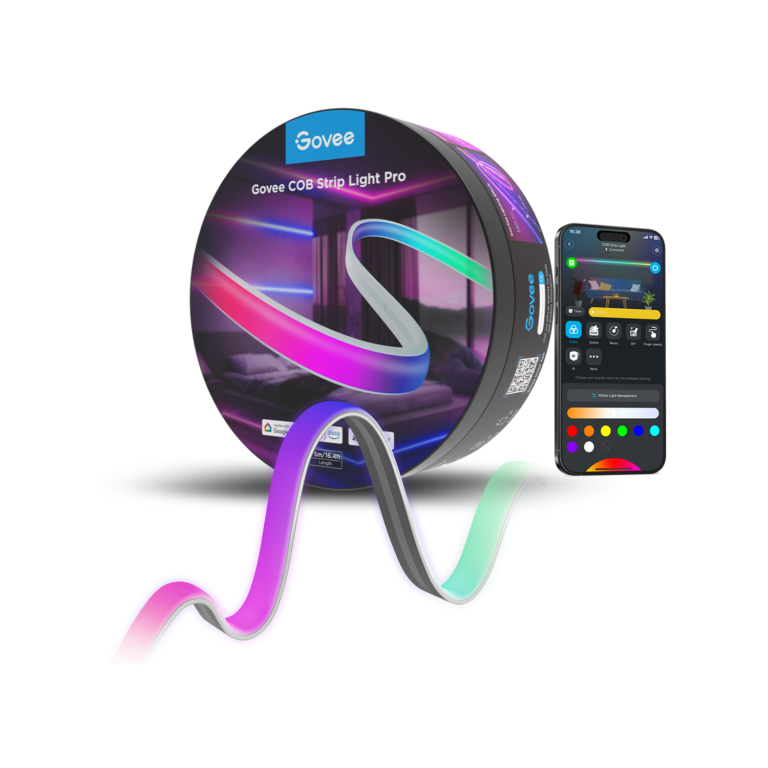
- Hidden ambient light: a Govee LED Strip M1 mounted under a shelf or behind the headboard. Smart-controllable, clean-removal adhesive, around $59. Set it to a slow dim-down through the evening to mimic sunset.
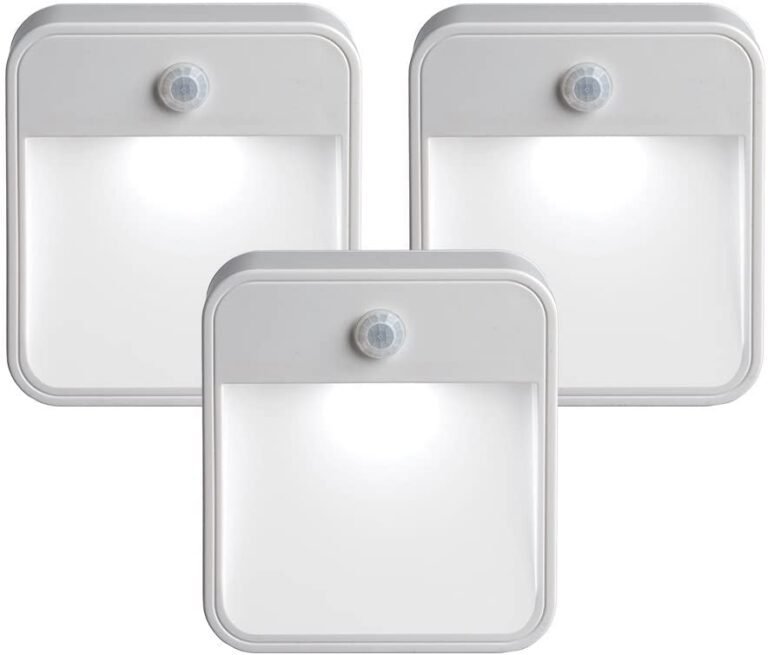
- Motion-activated path light: Mr. Beams Wireless LED Lights stuck to the wall along the path from bed to bathroom. Battery-powered, no wiring, around $25 for a 3-pack. They turn on dim when you walk past at 2am instead of you fumbling for a switch.
The total spend for this layered system is about $115, and the difference in how the bedroom feels at night is the largest single upgrade we’ve experienced from any rental change.
The phone-free bedroom rule (and how to actually do it)
Every sleep researcher agrees: phones in the bedroom are bad for sleep. The reasons are well-documented (blue light, late-night doomscrolling, anxiety priming, alert sounds). What nobody addresses is the practical problem: most people use their phone as their alarm clock, their white noise machine, their sleep tracker, their meditation app, and their bedtime reader. You can’t just remove the phone without replacing what it does.
The honest fix is to replace each phone function with a dedicated device. Our recommended starter set:
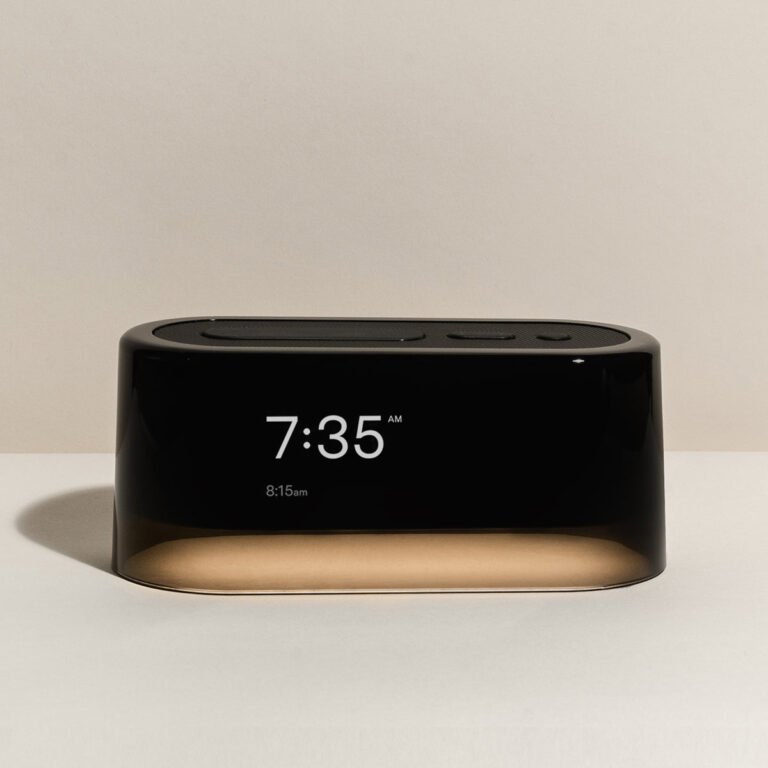
- Alarm + sound machine + bedtime stories: the Loftie Clock. About $170. Two-phase alarm, 100+ sounds free forever, no subscription required.
- Sleep tracking: the Oura Ring 4 if you want serious data, or skip tracking entirely if you don’t.
- Reader: a Kindle Paperwhite. Around $140. E-ink, no blue light, weeks of battery, holds a library.
- Charger: a USB-C wall charger plus a long cable that lets you plug your phone in across the room (in a closet, in a hallway, anywhere it’s not on your bedside).
The transition typically takes about two weeks. The first three nights are uncomfortable because your hand keeps reaching for a phone that isn’t there. Around day 10, you stop noticing. By day 14 you’d rather not have the phone in the room. The full picture is in our Best Sleep Tech for Renters and Tiny Bedrooms guide if you want help picking specific devices.
The noise problem (and why white noise wins)
Older apartment buildings have thin walls. New apartment buildings often have thinner walls (modern construction prioritizes cost and modularity over acoustic isolation). If you can hear your neighbor’s TV, their footsteps, their alarm at 5am, no amount of layout fixes the problem. The fix is masking with continuous low-frequency sound.
White noise machines work because the brain perceives a constant low-volume sound as silence after a few minutes, and intermittent louder sounds (footsteps, voices) get lost in the masking layer instead of registering as alerts. The classic recommendation is the Yogasleep Dohm Classic at around $50, a mechanical fan in a slotted housing. The sound is real moving air, not a digital loop, which means it doesn’t fatigue your ear over time. No app, no Wi-Fi, no firmware. Plug it in and turn the cap to adjust the pitch.
The Loftie Clock above also has a sound machine built in if you want one device instead of two, but the Yogasleep is genuinely better at the masking job. If thin walls are your specific problem, buy the Yogasleep regardless of what else is on your nightstand.
Layouts for studios specifically
A studio compounds every bedroom problem because the bedroom is also the living room and often the kitchen. Sleep hygiene research is clear that bedrooms should be for sleep and sex only, but in a 350 sq ft studio that’s not a real option. Here’s how to fake the separation.
- Use a room divider. A folding screen, a heavy curtain on a tension rod, or even a tall bookshelf creates visual separation between the bed and the rest of the room. Your brain treats the bed as the sleep zone again.
- Make the bed every morning, no exceptions. A made bed in a studio is the difference between feeling like you live in a bedroom and feeling like you live in a single chaos room.
- Don’t work from the bed. Even in a studio with no desk, work from the kitchen counter or floor before working from the bed. The bed needs to stay protected as the sleep zone.
- Light the rest of the room differently. If the wind-down zone (a couch, a chair) is lit with cool overhead light and the sleep zone (the bed) is lit with warm lamps, your brain reads the transition correctly even though the spaces share four walls.
What to skip
A few things that get recommended in small-bedroom roundups that we’d skip.
- Mirrored closet doors as space-expanders. They make the room feel bigger but the reflected light at night is a real sleep problem. If you already have them, a curtain across them at bedtime fixes it.
- Plants directly on the bedside. Most bedroom plants don’t actually purify air at meaningful rates and they invite pests. A plant elsewhere in the room is fine, on the bedside they get knocked over.
- Aromatherapy diffusers running all night. A short 30-minute pre-bed diffuser is fine; an all-night one disrupts sleep through the same mechanism that perfume in the bedroom does.
- Smart-everything. One smart light strip and one smart alarm clock is plenty. A bedroom full of always-listening devices is a privacy + power-bill problem without a clear sleep benefit.
Putting it together: a $300 starter setup
If you’re starting from a bare rental bedroom and want to build all of this without overspending, here’s the budget version that covers every recommendation above.
- Slim no-drill bedside caddy (~$25 to $40) for the no-nightstand fix
- Bedside lamp + 2700K LED bulb (~$30)
- Govee LED Strip M1 (~$59) for hidden ambient light behind the headboard
- Mr. Beams motion-activated path lights (~$25 for 3-pack)
- Yogasleep Dohm Classic (~$50) for thin-wall masking
- Loftie Clock (~$170) as the all-in-one phone replacement, OR a basic alarm + sound machine for ~$40 if budget is the priority
The Loftie path lands at about $366 total. The basic-alarm path lands at about $236. Both buy you a meaningfully better bedroom than the bare rental you started with, and every component comes off cleanly when you move.
For more detail on each pick, our Best No-Drill Bedroom Upgrades for Renters covers the full ranked list with tradeoffs.
Final word
Most of the bedroom-layout content on the internet assumes you can drill, paint, replace fixtures, and build a closet system. If you’re a renter, you can’t, and the advice doesn’t translate. The actual high-leverage moves in a small rental bedroom are simpler than the design blogs suggest: pick the right wall for the bed, build layered light without an electrician, solve the nightstand problem with a $32 caddy, and replace your phone with one or two dedicated devices. None of it requires a contractor. All of it comes off cleanly when you move. And the cumulative effect on how you sleep is meaningfully larger than any single mattress upgrade.
If you want to go further, our sleep pillar walks through wind-down and recovery from the ground up, and our apartment pillar covers the rest of the small-space living problems these picks intersect with.
Frequently asked questions
What's the most important thing to fix first in a small bedroom?
Bed placement. Where the bed sits in the room sets every other constraint. The ideal placement is the long wall opposite the door with the headboard centered, away from windows, away from bathroom-shared walls, and on an interior wall if there's a noisy neighbor or stairwell on one side. Get this right and the rest of the layout falls into place.
How do I have a bedside without a nightstand?
Three options work in any rental. The cheapest option is a slim under-mattress bedside caddy at around $25 to $40, which slips between mattress and box spring and gives you a phone, book, and water-glass slot with zero floor footprint. Option two is a single 16-inch wall-mounted floating shelf with two anchors (patches with spackle when you move). Option three is a stool or a stack of three large hardcovers.
Is the overhead light in my rental really that bad for sleep?
Yes. A single bright cool-temperature ceiling fixture is the worst possible bedroom light. The fix is to never use it after sunset and instead build a layered system from three small light sources at different heights and color temperatures. A bedside lamp with a 2700K bulb, a hidden ambient strip like the Govee LED M1 behind the headboard, and motion-activated path lights for nighttime trips to the bathroom together cost about $115 and meaningfully improve how the bedroom feels at night.
How do I reduce noise from thin apartment walls?
White noise masking is the only reliable answer. The Yogasleep Dohm Classic at around $50 is the category benchmark. It is a mechanical fan in a slotted housing, not a digital loop, so the sound never repeats and your ear never fatigues to it. The brain perceives a constant low-volume sound as silence after a few minutes, and intermittent louder sounds (footsteps, voices) get lost in the masking layer instead of registering as alerts.
How do I stop using my phone in the bedroom without losing the alarm and sleep tracker?
Replace each phone function with a dedicated device. The Loftie Clock at around $170 covers alarm + sound machine + bedtime stories with no subscription required. An Oura Ring 4 covers sleep tracking if you want it. A Kindle Paperwhite covers reading. A long charging cable lets you plug your phone in across the room or in a hallway, out of the bedroom entirely. The transition typically takes about two weeks.
Does bedroom layout actually matter in a studio apartment?
Yes, more than in a one-bedroom. In a studio the bed competes with the living and kitchen zones for your brain's attention. The fix is mental separation, not physical: a folding screen, a heavy curtain on a tension rod, or a tall bookshelf creates a visual divider. Always make the bed in a studio because a made bed is the line between living in a bedroom and living in a single chaos room. And do not work from the bed even when there is no desk option.
Are smart bedroom devices worth it in a rental?
One smart light strip and one smart alarm clock are plenty. The Govee LED Strip M1 (around $59) and the Loftie Clock (around $170) cover most of what smart bedroom tech actually delivers. A bedroom full of always-listening devices is a privacy and power-bill problem without a clear sleep benefit, and most of the high-end smart-bedroom gear is designed for owned homes where you are not concerned about leaving wiring or paint damage when you move.