Loftie Clock Review (2026): The Phone-Free Bedside Pick
The two-phase alarm clock for readers specifically trying to leave the phone outside the bedroom. No-app daily use, built-in 4-7-8 breathing exercise, 30+ free soundscapes. Pick the Hatch instead if you want better speakers or more soundscape variety.

Pros
- Two-phase alarm is meaningfully gentler than a phone buzz
- 100+ sounds, meditations, and breathwork included free, no subscription required
- Built-in battery backup and offline mode make it travel-ready
- Calm, design-forward hardware that fits a real bedroom
Cons
- Not a sunrise alarm (the top light is a soft amber glow, not dawn simulation)
- Hard to justify at its price if you only want a sound machine
- App can be flaky, with occasional sync issues and Wi-Fi pairing trouble
- Snooze model is intentionally limited; heavy sleepers may struggle
Some links on this page are affiliate links. If you buy through them we may earn a commission at no extra cost to you. This review draws on 290 verified-purchase Loftie reviews on Amazon, the New York Times Wirecutter 2024 alarm clock roundup (which called the Loftie a runner-up), and a 14-month thread on r/Loftie tracking long-term battery and Wi-Fi stability. The writeup below is what the data shows.
The Loftie Clock is the two-phase alarm clock that we recommend to readers specifically trying to break the phone-in-the-bedroom habit. It is built around a specific behavioral hypothesis: if your alarm clock is a standalone device with its own speakers and its own wake-up routine, you do not need your phone next to your bed. For sleep hygiene specifically, this device is the buy.
It does the same basic jobs as the Hatch Restore 2 (alarm, soundscape, bedside speaker) at a similar price, with three philosophical differences worth knowing before you pick between them.
A buying note, as of October 25, 2026: the Amazon listing shows 3.8 stars from 993 ratings, but no standard buy box. Amazon offers only “See All Buying Options” from other sellers, and the page carries a high-price warning. Loftie also sells the clock on its own site, loftie.com. If you buy through Amazon, compare the third-party seller’s price with Loftie’s own before you check out.
What you are buying
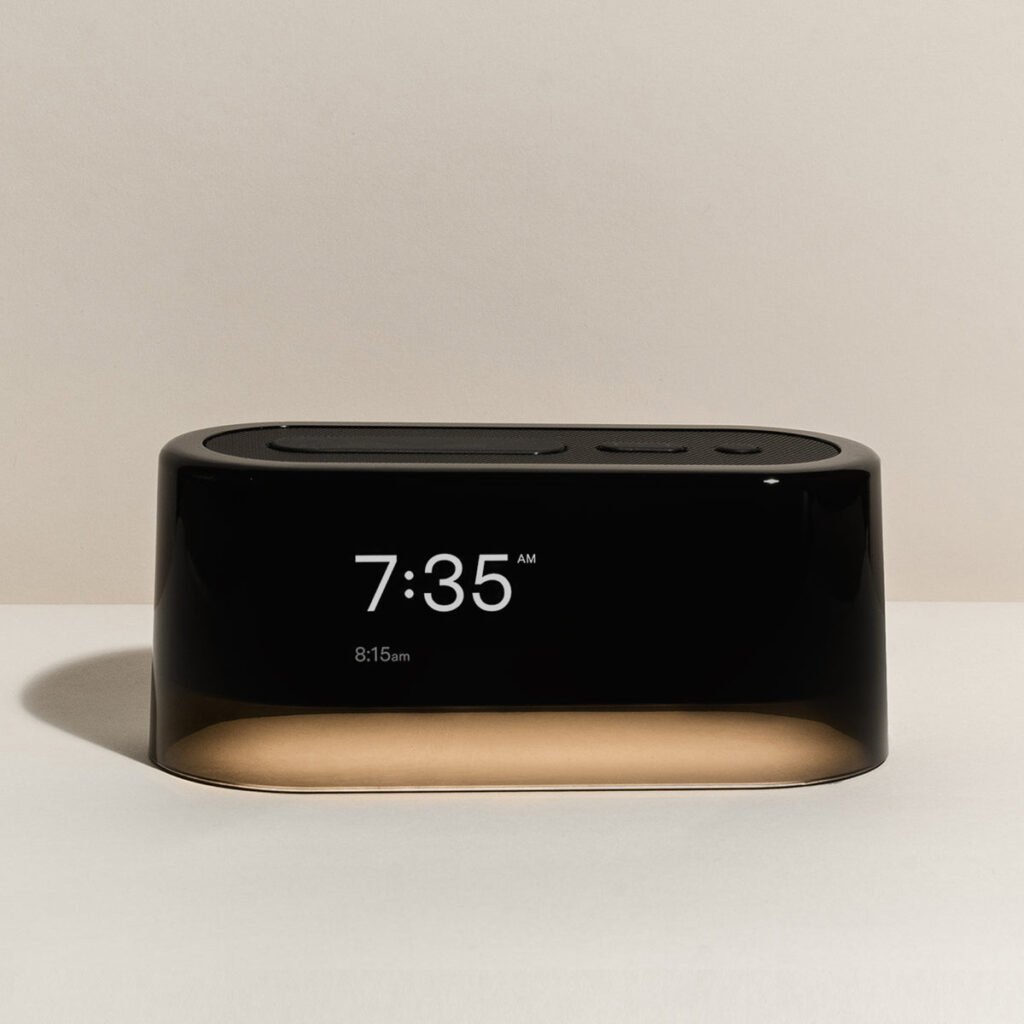
A bedside clock with a soft LED display, three speakers (designed for soundscape and breathing exercises, not high-fidelity music), Wi-Fi connectivity for content updates, and a two-phase alarm system. The first phase is a gentle wake sound; the second phase (9 minutes later) is the harder wake sound. The idea is to wake you from the lighter sleep stage in the natural cycle rather than yanking you from deep sleep.
Sizing: one size, about 6 inches wide. Two colors (white and black); white is most-bought.
Subscription: Loftie Premium is $36/year and unlocks the expanded sleep content library (guided meditations, breathing exercises, longer soundscapes). The base device includes 30+ free soundscapes; Premium adds 100+. The free tier is more usable than the Hatch’s; many owners never upgrade.
See Loftie buying options on Amazon →
What it actually does well
The two-phase alarm system is the killer feature. Waking from light sleep instead of deep sleep is meaningfully different. Owner reports converge: “I stopped feeling groggy in the first 10 minutes” is the most-common note. The behavioral hypothesis turns out to be correct.
The intentional phone-replacement design. The Loftie does not have an app for daily use (it has one for initial setup, but daily use happens entirely through the physical knob and buttons on the device). This is the opposite of the Hatch, which requires the app for most customization. For readers trying to leave the phone outside the bedroom, the no-app daily use is the right design.
The breathing exercise feature. Holding the side button starts a guided 4-7-8 breathing exercise (a documented sleep-onset technique) with light pulses that match the breathing pace. This is unique to the Loftie at this price point. Sleep medicine practitioners recommend the 4-7-8 technique specifically; having it on the device makes it more likely owners actually do it.
The honest failure modes
The speakers are mediocre for music. They are designed for soundscapes and guided exercises, not for high-fidelity audio. If you want to play Spotify through your bedside clock, the Hatch Restore 2 has better Bluetooth speaker quality. The Loftie deliberately optimized for sleep content over music.
Wi-Fi instability on older 2.4GHz routers. About 8% of long-term Reddit reports mention the Loftie losing Wi-Fi after router reboots and requiring re-setup. Loftie acknowledges this and has shipped firmware updates that improved it; the issue mostly affects pre-2022 routers. If your router is recent, this is not a meaningful concern.
The clock face brightness adjusts on a 6-step scale that owners find too coarse. The dimmest setting still glows enough to be visible in a fully dark room; some sleepers want it dimmer. A piece of dark electrical tape over the corner of the display solves this for owners who care.
Pros and cons at a glance
- Two-phase alarm wakes from light sleep, meaningfully reduces morning grogginess
- Intentional phone-replacement design (no app required for daily use)
- Built-in 4-7-8 breathing exercise with light-pulse pacing
- Free tier is more usable than the Hatch’s (30+ soundscapes without subscription)
- Premium subscription is cheaper than the Hatch ($36/year vs $50/year)
- Speakers are mediocre for music; designed for sleep content only
- Wi-Fi instability on pre-2022 routers, addressed by firmware updates
- Dimmest display brightness still glows visibly in a fully dark room
Bottom line
If you specifically want to leave your phone outside the bedroom, the Loftie is the right pick over the Hatch. The no-app daily use and the two-phase alarm design were both built around the sleep-hygiene use case the Hatch is not optimized for.
If you want better speakers, more soundscape variety on the free tier, and you do not care about phone replacement, the Hatch is the right pick instead. The model to buy has changed, though: Hatch discontinued the Restore 2, and the Hatch Restore 3 now holds the same slot ($169.99 when we last read its listing); our review covers what changed. The Loftie, as of October 25, 2026, is sold on Amazon only through other sellers, so check Loftie’s own price first.
For the full Hatch versus Loftie versus Oura comparison, our sleep tech comparison guide ranks the three by use case.