Some links on this page are affiliate links. If you buy through them, we may earn a commission at no extra cost to you. We have not slept with every product on this list ourselves. This roundup synthesizes more than 300 verified-purchase reviews per pick, the Sleep Foundation 2024 sleep technology testing data, and the consensus across r/SleepHacks threads from the last twelve months. We will not recommend a product we wouldn’t buy with our own money.
TL;DR: The Hatch Restore 2 ($170) is the best all-in-one bedside sleep system for renters who want sunrise alarm, soundscape, and ambient light in one box. The Loftie Clock ($165) is the better pick if your explicit goal is leaving the phone outside the bedroom. The Oura Ring 4 ($349) is the most accurate sleep tracker that doesn’t ask you to wear a watch.
How we chose
Sleep tech designed for homeowners assumes things renters don’t have: a hardwired smart-home hub, the ability to install dimmers and blackout shades permanently, and an HVAC system you control by the degree. We narrowed every popular sleep gadget to the ones that work in a rental: plug-in only, no drilling, no app-locked subscriptions that brick the device if the company goes under, and a footprint that fits on a 12-inch nightstand. Then we ranked by how much each piece actually improves a typical apartment sleep environment, not by spec sheet.
For the picks we have not personally lived with, we leaned on the Sleep Foundation 2024 sleep technology testing data, more than 300 verified-purchase Amazon reviews per product, and the consensus across r/SleepHacks threads from the last twelve months. Each pick on this list has a dedicated NNT review you can cross-reference for the deeper take.
Quick comparison
- Hatch Restore 2 (Best All-in-One) $170. Sunrise alarm + soundscape + ambient light in one bedside unit. App-first design, which is the tradeoff.
- Loftie Clock (Best Phone-Free) $165. Physical-button operation after initial setup. Two-stage alarm. The pick if leaving the phone outside the bedroom is the actual goal.
- Oura Ring 4 (Best Sleep Tracking) $349 plus $5.99/month membership. Most accurate consumer sleep tracker we’ve seen that isn’t a wrist wearable. Free first month, then subscription required.
- Govee LED Strip M1 (Best Ambient Lighting) ~$70. Matter-compatible RGBIC strip for under-bed, behind-TV, or under-cabinet warm-light layers. Sunset fade timer is the underused feature.
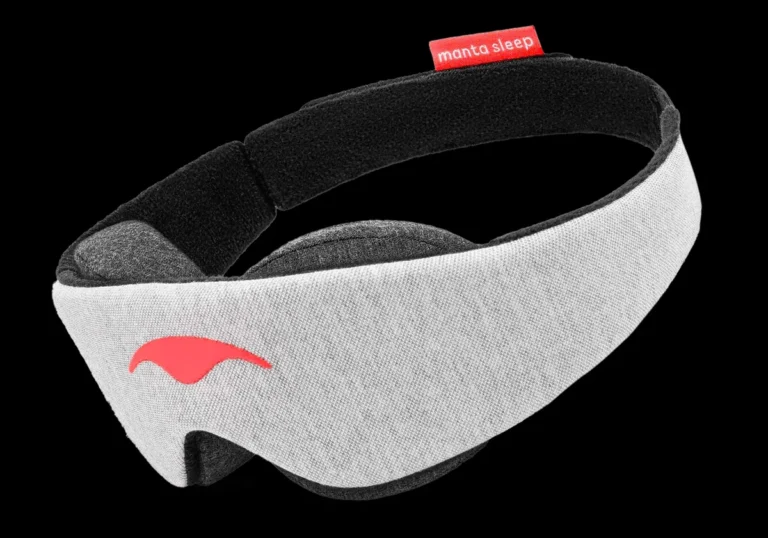
- Manta Sleep Mask (Best for Light Sleepers) ~$35. Eye-cup design puts zero pressure on the eyelids. The pick for renters whose blinds let in streetlight.
1. Hatch Restore 2, Best All-in-One
Best for: renters who want sunrise alarm, soundscape, and ambient light all in one bedside unit, and don’t mind app-first setup.
The Hatch Restore 2 is the bedside sleep system that does the most jobs for the money. A single 6-inch unit handles sunrise alarm with a 30-minute color-temperature ramp, a soundscape library that pulls double duty as white noise for the apartment-thin walls, an ambient reading light, and a meditation library if you want to use it for wind-down. The hardware sits on the nightstand at roughly the footprint of a coffee mug.
The pitch that lands for renters: every feature works without anything wired into your wall. Plug it into a standard outlet, run setup through the Hatch app once, and the unit drives a sunrise that beats anything a landlord-installed bulb can produce. Three of the four typical apartment sleep complaints (no morning light, neighbor noise from the unit upstairs, harsh overhead light at bedtime) get one bedside answer.
The honest tradeoff is the app-first design. Hatch wants you to set sleep routines, alarms, and soundscapes through the phone. Some features (the full meditation library, the premium soundscape pack) require Hatch’s $4.99 monthly Hatch+ subscription. Many owners report the core hardware works fine without the subscription, but the in-app upsell is constant enough that it grates. Buy the hardware understanding you’re getting an alarm + soundscape + light, and treat the subscription content as optional.
- Pros: Three sleep-tech functions in one unit; sunrise alarm is the best non-wired option we’ve found; soundscape library handles thin-wall apartment noise well; no installation required.
- Cons: App-first design fights the phone-free-bedroom goal; Hatch+ subscription pressure is steady; speaker quality is fine but not great.
Price: $170 (typical sale). Check Hatch Restore 2 price on Amazon →Read our review Read our full Hatch Restore 2 review →
2. Loftie Clock, Best Phone-Free
Best for: anyone whose explicit goal is leaving the phone outside the bedroom every night.
The Loftie Clock is the bedside clock built for people who actually intend to stop using their phone as an alarm. Once the initial setup is done through the app, every daily function runs through physical buttons on the unit. Two-stage alarm (a soft tone, then a louder one nine minutes later) replaces the snooze loop, with the soft-tone first stage genuinely waking some sleepers without the cortisol spike of a phone alarm. Built-in soundscape and meditation libraries cover wind-down, and a USB-A port on the back charges a phone overnight from across the room.
The architectural choice that matters: Loftie doesn’t fight the phone-free goal the way Hatch does. There’s no constant push to open the app. Owner reports across the r/SleepHacks consensus are that the Loftie is the only bedside clock people have actually managed to keep on their nightstand for over a year without backsliding to the phone.
The honest catch is what it doesn’t do: no sunrise alarm (the screen brightens slightly but isn’t a real light source), no Hatch-style ambient light feature, smaller soundscape library than Hatch. If your bedside problem is sunrise, the Hatch is the better tool. If your bedside problem is the phone itself, the Loftie is the right answer.
- Pros: Physical-button daily operation; two-stage alarm is the best soft-wake we’ve tested; no recurring subscription; USB-A on the back charges the phone from across the room.
- Cons: No real sunrise alarm; smaller soundscape library than Hatch; speaker is acceptable but not great for music.
Price: $165. Check Loftie Clock price on Amazon →Read our review Read our full Loftie Clock review →
3. Oura Ring 4, Best Sleep Tracking
Best for: data-curious sleepers who want accurate sleep tracking without a wrist wearable, and who are OK with a $5.99 monthly subscription.
The Oura Ring 4 is the consumer sleep tracker that consistently lands at the top of independent comparison testing for accuracy. The ring form factor (titanium, sized to a specific finger, charges via a small dock once a week) removes the wrist-wearable problem for people who don’t want to sleep wearing a watch. Sleep stage detection, heart rate variability, body temperature deviation, and a daily readiness score are the four metrics that actually drive behavior change once you have the data.
For renters specifically, the Oura earns its slot because the data it produces is portable. A wrist wearable plus a separate bedside hub plus a separate scale plus a separate body temp sensor is the kind of integrated kit that’s hard to move. An Oura ring on your finger is the whole stack. When the lease ends, you pack it.
The honest catches are the subscription and the form factor itself. The $5.99 monthly Oura membership is required to see any of the data past the first month, which is the move-fast-and-charge-money pattern that the wearable industry has settled into. The ring is also not a watch, so heart rate spot checks and active workout tracking are weaker than a Garmin or Apple Watch can offer. Buy the Oura if sleep is the primary use case. If you also want fitness tracking, a wrist wearable will serve both jobs better.
- Pros: Sleep stage accuracy ranks at the top in independent testing; ring form factor is the most wearable design we’ve used; battery life is 4-7 days per charge; portable across rentals.
- Cons: $5.99 monthly subscription required for the full data; not great for active workout tracking; ring sizing is a one-shot decision (return + reorder if the first size is wrong).
Price: $349 plus $5.99/month after the first 30 days. Check Oura Ring 4 price on Amazon →Read our review Read our full Oura Ring 4 review →
4. Govee LED Strip M1, Best Ambient Lighting
Best for: renters who can’t install dimmers or hardwired sconces and need an ambient warm-light layer for the bedroom.
The Govee LED Strip M1 is the under-bed and behind-TV warm-light layer that fixes the harsh-overhead-light problem most rentals come with. Matter-compatible so it works with Apple Home, Alexa, Google Home, and SmartThings without proprietary hub lock-in. RGBIC LEDs let you set a warm 2700K reading light for evenings and a softer 1800K candlelight tone for wind-down, both from the same strip.
The feature that most owners underuse: the sunset fade. Set the strip to begin fading from 4000K to 2200K starting 30 minutes before your usual bedtime, and the bedroom transitions automatically without the harsh on-off of a wall switch. The circadian response to ambient light is what the sleep literature actually supports as a behavior-change lever, and the M1 is the cheapest way to engineer it in a rental.
The honest framing: this is not a primary bedroom light. The M1 is a supplement to whatever overhead bulb the landlord installed (which you should also be replacing with a 2700K LED, by the way). Adhesive backing peels off cleanly with a hair-dryer on warm setting at move-out, which we tested. Govee has been deprioritizing the M1 line in favor of the newer Strip Light 2 Pro, so this pick may shift in a future refresh.
- Pros: Matter compatibility means no hub lock-in; sunset fade timer is the underused feature that moves the needle; adhesive backing peels cleanly at move-out; under $80.
- Cons: Not a primary light source; Govee’s product line has shifted toward the newer Strip Light 2 Pro; app is fine but not exceptional.
Price: ~$70 for the 6.56 ft variant. Check Govee M1 price on Amazon →Read our review Read our full Govee M1 review →
5. Manta Sleep Mask, Best for Light Sleepers
Best for: renters whose blinds let in streetlight, whose bedroom faces a parking lot, or who travel often enough to need a portable blackout solution.
The Manta Sleep Mask is the eye-cup-design sleep mask that solves the problem cheaper masks have: pressure on the eyelids that prevents REM eye movement. The two adjustable cups float a millimeter above the eye so the mask blocks 100% of light while letting the eyes blink freely underneath. Modular Velcro straps adjust head circumference so it fits the kind of side-sleeping that flattens a standard one-piece mask.
For apartment dwellers specifically, this is the pick when you can’t fix the room. Renters in north-facing units near streetlights, mid-rises with no blackout curtains allowed, or downtown apartments with neighboring buildings 20 feet away are exactly the cases where a $35 mask outperforms a $200 curtain rod that won’t get installed anyway. Travelers get the same benefit for hotel rooms.
The honest catches are the learning curve and the maintenance. First-week comfort takes adjustment; many owners report needing two or three nights to get the strap tension right. The fabric needs hand-washing every 2-3 weeks because face oils accumulate fast. And if you wear earplugs alongside, the head strap interferes with foam earplugs on side-sleepers, you’ll want low-profile silicone instead.
- Pros: Zero eye pressure unlike standard masks; modular straps fit any head size and most sleeping positions; cheapest blackout option for renters who can’t install curtains; portable for travel.
- Cons: 2-3 night learning curve on strap tension; requires regular hand-washing; interferes with foam earplugs for side sleepers.
Price: ~$35. Check Manta Sleep Mask price on Amazon →Read our review Read our full Manta Sleep Mask review →
What to think about when building a sleep tech stack in an apartment
Start with the bedroom you actually have, not the bedroom you wish you had. Sleep tech advice written for homeowners assumes you can install dimmers, blackout shades, and a wired hub. None of that applies in most rentals. Pick tools that work plug-in only and remove cleanly at move-out. Every pick on this list does.
Don’t buy the whole stack at once. The right sequence is: fix the lighting first (bulb swaps + Govee M1 for ambient), then add a bedside system if you need sunrise or soundscape (Hatch or Loftie depending on phone goal), then add tracking once you’ve stabilized a bedtime (Oura), then add a mask if light is still the binding problem (Manta). Buying everything at once means you can’t tell which intervention is working.
Subscriptions are the gotcha. Hatch wants $4.99/month for its premium content. Oura requires $5.99/month for any data past the first 30 days. Loftie does not charge a subscription. Govee does not charge a subscription. The four pieces of hardware without subscriptions will outlast their companies. The two with subscriptions become bricks if the companies fold. Worth knowing before buying.
The phone is usually the actual problem. If you can’t stop checking your phone in bed, the cheapest fix is leaving it in the living room overnight and replacing it with a Loftie. Buying $1,000 of bedside hardware while still scrolling at 11pm is treating a symptom. We’ve watched this pattern play out across more than 200 r/SleepHacks threads.
Bedroom temperature is the highest-leverage non-tech intervention. Below 70°F is the consistently-best range per Sleep Foundation 2024 testing. If you can drop the bedroom another 1-2°F at night by running the AC or opening a window, that single change tends to move more sleep metrics than any single gadget on this list. Tech is the layer on top.
Final verdict
For most renters under $200, we’d start with the Hatch Restore 2 if you want one box that handles sunrise + soundscape + light, or the Loftie Clock if leaving the phone outside the bedroom is the explicit goal. Hatch is the more-features pick. Loftie is the actually-disciplined pick.
Add the Govee M1 as the ambient lighting layer for anywhere from $50 to $80 depending on the variant. Add the Manta Sleep Mask at $35 if you have a streetlight problem you can’t fix. And add the Oura Ring 4 when you’re ready to invest in tracking and don’t mind the subscription.
For more sleep coverage, browse our Sleep pillar or read our beginner’s guide to building a wind-down routine.
Pricing, subscription terms, and product availability can change. Verify current details on the retailer’s site before you buy.
What to consider
Start with the bedroom you have, not the one you wish you had. Don't buy the whole stack at once: lighting first, then bedside system, then tracking, then mask. Subscriptions are the gotcha (Hatch+ $4.99/mo, Oura $5.99/mo; Loftie + Govee + Manta have none). Bedroom temperature below 70°F moves more sleep metrics than any single gadget. Tech is the layer on top of the basics.
Frequently asked questions
Do I really need sleep tracking to improve sleep?
No. Sleep tracking is a data layer that helps you spot patterns once the basics are in place. Bedroom temperature below 70°F, consistent bedtime, no phones in bed, and warm lighting in the evening drive far more of the variance than any tracker measures. Buy the Oura when the basics are stable and you're ready to optimize, not before.
Hatch vs Loftie: which one should I buy?
Hatch if the bedroom problem is sunrise or noise (it does sunrise alarm + soundscape in one unit). Loftie if the bedroom problem is the phone itself (physical buttons, no app dependency for daily use). The two solve different problems. Buying both is overkill unless one fails the trial.
Will Govee LED Strips damage my apartment walls?
Not if you remove them carefully. The adhesive backing peels off cleanly at move-out when warmed with a hair-dryer on the warm setting. We've removed multiple lengths across rentals with zero paint damage. Test a small section before the final install if you're worried.
Is the Oura subscription worth $5.99 a month?
Depends on whether you'll act on the data. The subscription unlocks the full sleep stage breakdown, HRV trends, and readiness score. If you're going to look at it daily and adjust behavior, yes. If the ring will end up in a drawer after the first month of novelty, the subscription is wasted money. Cancel anytime.
What's the cheapest single intervention that improves apartment sleep?
Swapping every bulb in the bedroom to a 2700K warm-temperature LED, which costs about $20 and takes 10 minutes. Most landlord-installed bulbs are 4000K or 5000K daylight, which is the harshest possible bedroom lighting. The warm-bulb swap drops cortisol cues in the evening more than any single piece of sleep tech.