Honest reviews, every week. Subscribe →
Loftie

Loftie Clock Review (2026): The Phone-Free Bedside Pick

8.0 / 10 Editor's rating

A calm, design-forward bedside device that delivers a complete phone-free routine without a required subscription. The two-phase alarm is genuinely gentler than a phone buzz and the 100+ included sounds cover most use cases. Two caveats: it isn't a sunrise alarm (despite frequent confusion), and at $170 it's hard to justify if you only need a sound machine.

$170
Check price on Amazon

Pros

  • Two-phase alarm is meaningfully gentler than a phone buzz
  • 100+ sounds, meditations, and breathwork included free, no subscription required
  • Built-in battery backup and offline mode make it travel-ready
  • Calm, design-forward hardware that fits a real bedroom

Cons

  • Not a sunrise alarm (the top light is a soft amber glow, not dawn simulation
  • $170 is hard to justify if you only want a sound machine
  • App can be flaky) occasional sync issues and Wi-Fi pairing trouble
  • Snooze model is intentionally limited; heavy sleepers may struggle
Best for People trying to get their phone off the nightstand Buyers who want a one-time purchase with no required subscription Frequent travelers who need a clock that survives power and Wi-Fi outages
Skip if Anyone shopping specifically for a sunrise wake-up light Heavy sleepers who need a loud, abrupt alarm Budget buyers who only need a basic sound machine

Some links on this page are affiliate links. If you buy through them, we may earn a commission at no extra cost to you. We only recommend products we’d be comfortable using ourselves, and we flag the trade-offs honestly.

The Loftie Clock is the bedside device you keep seeing on the nightstand of every “I quit my phone in the bedroom” article. It’s a sound machine, a two-phase alarm, a Bluetooth speaker, a soft nightlight, and a small library of meditations and bedtime stories, all in a squat, design-y package meant to replace your phone after lights out. This is a buyer’s guide for people deciding whether it’s worth $170 over a $30 sound machine and a sunrise alarm, and what the new Loftie+ subscription actually changes about the experience.

TL;DR verdict

The Loftie Clock does one thing very well: it gives you a calm, design-forward reason to stop charging your phone next to your head. The two-phase alarm is genuinely gentler than a phone buzz, the 100+ included sounds cover most use cases, and the core hardware works without a recurring fee. The two real friction points are price (around $170 puts it well above a basic sound machine) and one common misconception: this is not a sunrise alarm. The top of the clock has a soft amber nightlight, but if you want a wake-up that mimics dawn, you want the Loftie Lamp or a Hatch. If you’re buying for the phone-free routine and the calm aesthetic, Loftie earns its price. If you’re buying for a sunrise, look elsewhere.

What it is

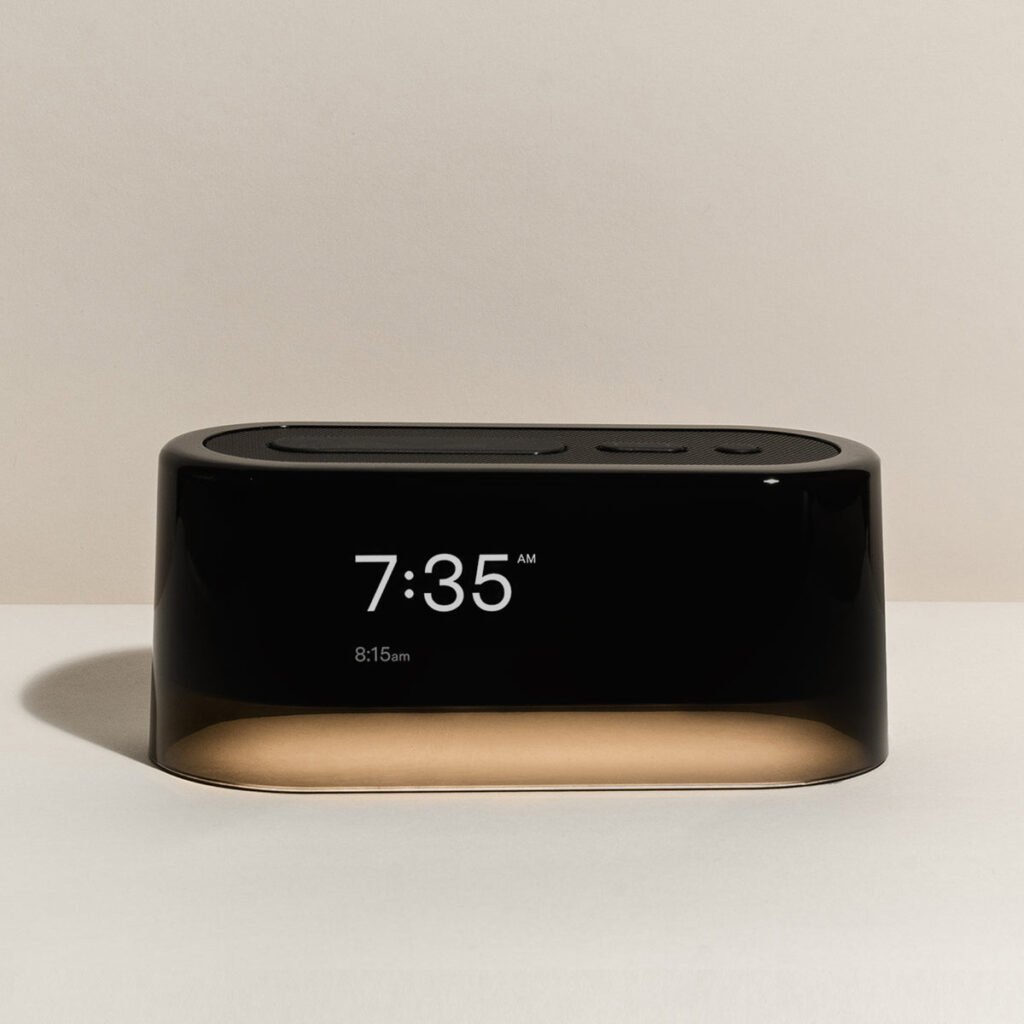
The Loftie Clock is a Wi-Fi connected bedside device with a small dimmable display, a soft amber nightlight on top, and a single full-range speaker for sound content. The hardware is intentionally minimal: a roughly cube-shaped puck with two physical buttons on top (one starts your wind-down, the other handles wake actions) and a switch for blackout mode that hides the display entirely overnight. There’s no touchscreen and no always-on color sunrise panel.

What’s included on the device itself: a two-phase alarm (a gentle chime plays first to ease you out of deep sleep, followed several minutes later by a louder wake tone), 100+ preloaded audio tracks across white noise, brown noise, nature sounds, ambient music, classical pieces, breathwork sessions, short meditations, sound baths, and a starter library of bedtime stories. The clock also functions as a Bluetooth speaker for playing your own audio, has multiple custom alarms, and offers an offline mode so it keeps working if your Wi-Fi drops. Battery backup is built in for short power outages, which matters if you’ve ever missed a flight because the grid blinked at 3 a.m.

One detail to be clear about because it’s the most common misunderstanding online: the Loftie Clock is not a sunrise alarm. The amber light on top can be set to come on with your wake routine, but it’s a soft glow, not a full dawn-mimicking light array. Loftie sells a separate product called the Loftie Lamp for that. If your reason for shopping a smart bedside device is the sunrise specifically, this is the wrong product in the lineup.

The Clock currently ships in classic black or white, with limited-edition colorways appearing periodically. The design language is deliberately understated (soft edges, matte finish, a small monochrome display) meant to disappear into a calm bedroom rather than announce itself.

Loftie+ subscription: what’s free, what’s paid

Loftie historically marketed itself as the no-subscription answer to Hatch. That’s still mostly true, but Loftie has since added Loftie+, an optional membership at roughly $5/month, and the marketing language can blur which features sit on which side of the line. Here’s the honest breakdown.

Free with the device, forever: the two-phase alarm and all custom alarms, the full preloaded library of 100+ tracks (white noise, nature sounds, breathwork, meditations, classical music, bedtime stories), the dimmable display and nightlight, blackout mode, the Bluetooth speaker, and offline functionality. Most owners use the Clock for years on the free tier and never feel pinched.

Behind the Loftie+ paywall (~$5/month): custom wind-down routines that string multiple stages together, an expanding library of additional bedtime stories and meditations, longer-form sleep tracks, daily horoscopes and affirmations, and personalized audio content (tracks generated to include your name and a few preferences). New content drops on a regular cadence, and that pipeline is most of what you’re paying for if you subscribe.

My take: the free tier is genuinely complete in a way Hatch’s free tier is not. You can buy the Clock once, never pay another dollar, and use the same library on night 1,000 that you used on night 1. Loftie+ is for people who want a steady stream of new wind-down content (think Calm or Headspace, but tied to your bedside device). If that’s you, $60/year is reasonable. If it isn’t, the Clock as a one-time purchase is the entire point of the product.

Check price on Amazon →

What owners consistently mention

Pulling together patterns from long-form reviews on Reviewed, The Good Trade, Pocket-lint, and several years of verified buyer reviews on Amazon and Trustpilot, a few themes show up over and over.

What owners love. The two-phase alarm is the most-praised feature by a wide margin. Owners describe it as a meaningful change in how their mornings feel: the gentle first chime gives you a few minutes to surface from deep sleep before the louder tone arrives, and the result is far less jarring than a phone buzz. The phone-free design philosophy comes up almost as often, people specifically chose Loftie because they wanted the bedroom to be a screen-free zone, and the Clock delivers on that without feeling like a downgrade. The included sound library gets repeat praise for variety and quality (nature recordings done on location, not stock loops). Build quality and the matte aesthetic are mentioned often by owners who’d rejected louder, plasticky alternatives. The free-tier completeness is a recurring theme: owners appreciate not feeling nickel-and-dimed.

Common complaints. Price is the first one, fairly. At ~$170 the Clock costs roughly five times a basic sound machine, and people who want only sound-machine functionality reasonably balk. App reliability comes up next: owners report intermittent sync issues between the app and the device, occasional Wi-Fi pairing struggles (especially with mesh routers), and a small but real cluster of reports about an alarm not firing on the right morning. Snooze behavior frustrates a subset of users. Loftie’s design philosophy is that the two-phase alarm replaces snooze, so the snooze interaction is more limited than a traditional clock and you can’t just slap it five times in a row. The nightlight is described by some owners as too dim to use as an actual reading light; it’s an ambient cue, not task lighting. And occasional reports of long-term Bluetooth flakiness and display flickering after a year or two suggest some unit-to-unit variance in durability.

Loftie Clock vs Hatch Restore 2

These two devices are the most-cross-shopped sleep clocks on the market right now, and they make different bets. I’ve reviewed the Hatch separately, full breakdown at my Hatch Restore 2 review, and the short version of how they compare is this.

On wake-up: Hatch wins clearly. The Restore 2 has a real sunrise simulation panel (a wide array of warm LEDs that fade up gradually before your alarm), and it’s the device’s standout feature. Loftie’s amber nightlight is not in the same category. If a dawn-mimicking wake-up is the reason you’re shopping, Hatch is the right call.

On wind-down and the daily phone-free routine: the two devices feel similar, with Loftie slightly ahead on out-of-box completeness. Both have on-device buttons that let you trigger your routine without touching a phone. Both have a fabric-or-matte design that fits a real bedroom. Loftie’s two-phase alarm and breathwork content land slightly more naturally for sleep onset; Hatch’s broader sound library lands slightly more naturally for variety.

On subscriptions: Loftie wins. The Loftie Clock is a complete product on day one without paying for Loftie+. The Hatch Restore 2 puts a meaningful chunk of its content library (extra sounds, scenes, meditations, the Morning Moment routine) behind Hatch+ at ~$50/year. Both subscriptions are optional in the sense that the device still works without them; only Loftie’s free tier feels genuinely complete.

On price and travel: roughly equivalent at retail (Loftie ~$170, Hatch ~$170). Loftie travels meaningfully better. It has a battery backup and an offline mode, where Hatch needs Wi-Fi and has no battery. If you’re a frequent traveler who wants to take your bedside device along, Loftie is the easier carry.

Verdict between the two: if sunrise wake-up matters most, buy Hatch. If you want the most complete experience without recurring fees and you don’t need a real sunrise, buy Loftie. Both are good products; the choice is mostly about which trade-off you’d rather live with.

Who it’s for, and who should skip it

Buy the Loftie Clock if you’ve decided the bedroom should be screen-free and you want a one-time purchase that handles wind-down, sleep audio, and a gentle wake-up; you want a real sound-machine library plus meditations and breathwork without paying for Calm or Headspace on top of the device; you travel and need an alarm that works through power outages and without Wi-Fi; or you specifically don’t want a recurring subscription bolted onto a physical product.

Skip the Loftie Clock if the reason you’re shopping a smart clock is sunrise simulation specifically (look at Loftie Lamp or Hatch instead); you’re a heavy sleeper who needs a loud, abrupt alarm and finds the two-phase “gentle wake” philosophy frustrating; you want a low-cost sound machine and don’t care about the design or the broader content library (a $30 Yogasleep or Hatch Rest does that job for less); or you have a flaky home Wi-Fi setup and don’t want to troubleshoot pairing issues.

Where to buy and price context

The Loftie Clock currently lists at $170 on byloftie.com and on Amazon, with both channels typically priced consistently at MSRP. The Loftie site sometimes runs bundle promos and offers a refurbished version for around $99, which is the cheapest way into the product if you don’t mind a previously-owned unit. Amazon tends to be the place to watch for promotional pricing, Black Friday, Prime Day, and the post-holiday window have historically taken the Clock into the $130s for short stretches. If you’re not in a hurry, those windows can save you 20% or more.

One thing worth noting on the Loftie+ side: the subscription auto-renews monthly or annually depending on which plan you choose, and cancellation is straightforward through the app. If you’re testing whether you actually use the additional content, do a single month at $5 before committing to a year.

Living in a small bedroom or rental? The Loftie is featured as our pick for phone-free bedside upgrade in The Best Sleep Tech for Renters and Tiny Bedrooms (2026), alongside three other apartment-friendly picks and a $50 white-noise machine for thin walls.

Setting up a small bedroom? The phone-free alarm is one of the picks in How to Arrange a Small Bedroom for Better Sleep, our new layout guide for renters working with under 120 sq ft.

Final verdict

The Loftie Clock is one of the few smart-home products that delivers exactly what its marketing describes, with one important caveat: it’s a phone-replacement bedside device and a sound machine, not a sunrise alarm. If you came here because you want dawn-mimicking light, the Hatch Restore 2 or the Loftie Lamp are the better fits. If you came here because you want a calm, design-forward way to get your phone off the nightstand and wake up to something gentler than a buzz, the Clock earns its $170, and the fact that the free tier is genuinely complete is a meaningful point in its favor in a category increasingly dominated by subscription gates.

The friction points are real but not dealbreakers for most owners: occasional app sync hiccups, a snooze model that asks you to change your habits, and a price that’s hard to justify if you only need a sound machine. For the buyer it’s actually built for (someone who wants a screen-free bedroom and is willing to pay once for a polished, no-subscription experience). It’s one of the most honest sleep-tech buys at this price.

Overall rating: 8.0 / 10. Check price on Amazon →

Last updated: May 3, 2026. Pricing, subscription terms, and content libraries can change. Verify current details on byloftie.com and the retailer’s site before you buy.