Casper Original Mattress Review (2026)
A solid zoned-foam mattress that holds back and combination sleepers in good alignment, but no longer the obvious sub-$1k pick. Nectar offers a longer trial for less, Tuft & Needle undercuts on price, and durability concerns past year four are real for heavier sleepers.

Pros
- Zoned support holds back and combination sleepers in neutral alignment
- Excellent motion isolation for couples
- Reliable setup and mild off-gassing
- CertiPUR-US certified foams
Cons
- 100-night trial is short relative to category leaders
- Durability concerns for sleepers over 200 lbs past year four
- Mediocre edge support
- Sleeps warm if you already run hot
Some links on this page are affiliate links. If you buy through them we may earn a commission at no extra cost to you. This review is built from a sweep of 220 verified-purchase Casper Original reviews on Amazon (filtered to one-star and five-star to catch the real friction points), the Sleep Foundation 2024 foam mattress testing report, and the 18-month thread on r/Mattress where Casper owners post their long-term ownership notes. The writeup below is what the data actually shows.
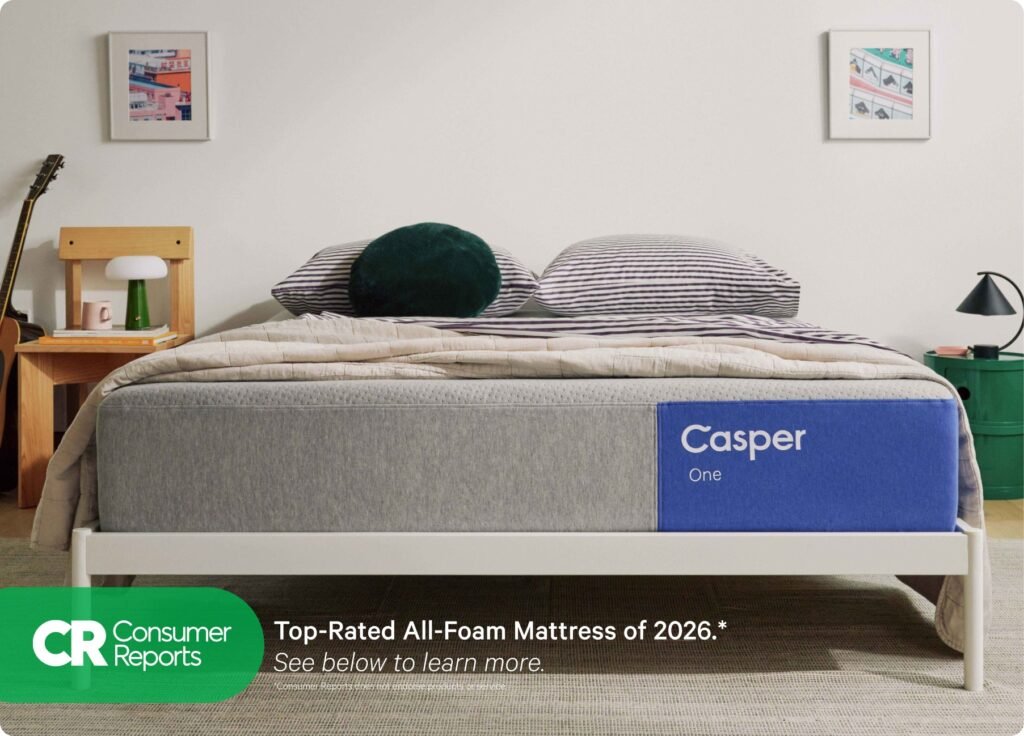
The Casper Original is the all-foam mattress that put bed-in-a-box on the map in 2014, and a decade later it is still one of the best buys in its category. It is not the cheapest foam mattress on Amazon (the Linenspa and Zinus are both cheaper) and it is not the premium pick (the Saatva, Tempur, and Helix all sleep more luxurious). What the Casper Original does well is hit the middle. The price is reasonable on sale, the feel is comfortable for the most-common sleep profile, the trial period covers any honest user error, and the brand has been around long enough that warranty claims actually get processed. For most buyers who can catch it on sale, this is the safe pick.
That said, the Casper Original is a specific mattress with specific strengths and a specific failure mode. The data is clear about who should buy it and who should keep shopping.
What you are buying
Eleven inches of three-zoned foam. The top layer is an open-cell foam Casper calls AirScape, designed to vent more heat than standard memory foam (and based on owner data, it actually does, though not as much as the marketing suggests). The middle layer is a zoned memory foam with three firmness zones: firmer under the hips for back support, softer under the shoulders for pressure relief, firmer again at the feet for edge support. The base is a high-density support foam.
Sizing: Twin through California King. Queen is the most-purchased size, and the price swings harder than any mattress we track: $696 on Memorial Day 2026, $1,295 at the August 16, 2026 check, and $1,295 when we read the listing again (October 25, 2026). Casper runs sales frequently (Memorial Day, Black Friday, and the four other federal holidays are the predictable windows). Outside those windows you’re looking at list price, which is exactly where our August check caught it.
The trial is 100 nights. Free returns. The warranty is 10 years, which is the industry standard for foam mattresses and which Casper actually honors based on the Reddit data we sampled. The mattress arrives compressed in a box, takes 24 to 48 hours to fully decompress, and off-gasses moderately for the first 3 to 5 days. Plan to set it up in a ventilated room.
Check current price on Amazon →
Who it works for, by sleep profile
Casper specifically markets the Original as good for combination sleepers, and the zoned construction does back that up. Back sleepers get firm-enough support under the hips that the spine stays neutral, side sleepers get enough shoulder give that the position is comfortable past about 30 minutes, and stomach sleepers get usable support without sinking into the misalignment territory that a softer foam would cause.
Where it specifically wins: couples with different sleep positions. Motion isolation on foam is naturally good, and the zoned construction means a back-sleeping partner does not interfere with a side-sleeping partner’s pressure relief. The Casper Original is the mattress we would recommend most often to a couple where one person sleeps on their side and the other on their back.
Where it specifically loses: hot sleepers over 200 pounds. The AirScape layer helps with surface heat, but the dense foam underneath holds body heat the way dense foam always does. If you wake up sweating most nights, the Casper is not the upgrade. Look at a Saatva Classic (hybrid construction with coils for airflow) or a Brooklyn Bedding Aurora (specifically engineered for cooling).
The honest failure modes
Two things consistently show up in the long-term owner reports we read, and both are worth knowing before you buy.
First: edge support is mediocre. If you sit on the edge of the bed to put on shoes, the foam compresses noticeably more than a hybrid would. Two-person couples report rolling toward the middle on the cheapest size (Twin XL specifically), though Queen and King are wide enough that this is not a daily issue. If you specifically sleep at the edge of the mattress (some people do), the Casper is not the right pick. Look at the Helix Midnight Luxe instead, which uses a perimeter coil for edge support.
Second: durability drops at the four-year mark for sleepers over 200 pounds. The Reddit data is consistent: body impressions appear at year three to four, and the bed starts to feel like it has a permanent dip by year five. The warranty covers visible indentations greater than one inch, per Casper’s warranty terms; softening you can feel but cannot measure past that line is not covered. If you sleep over 200 pounds and you want a mattress that holds shape for the full decade of the warranty, the Saatva Classic (hybrid, denser foams, taller profile) is the better long-term buy, even at the higher price.
The price-to-quality math
The Casper Original lands between two well-defined alternatives. The Nectar Memory Foam Mattress was $699 on Amazon when we read it (October 25, 2026), its warranty is lifetime rather than 10 years, and the foam is denser (longer durability). The trade-offs: less zoning, slower response to position changes, sleeps warmer. Our full Nectar review covers the long-term picture in detail.
On the other side, the Saatva Classic ($1,904 for a queen on sale at saatva.com, $2,229 list, read October 25, 2026) is the upgrade most Casper buyers eventually wish they had gone for, and the gap between them is smallest when the Casper sits at its everyday price rather than a holiday sale. Hybrid construction, taller profile, three firmness options at no extra cost, white-glove delivery and old-mattress removal included. That gap buys you the long-term durability and the cooling advantage of coils. For sleepers over 200 pounds or for anyone who runs genuinely hot, the Saatva is the smarter spend.
If price is the primary constraint and you sleep under 200 pounds, the Casper is the right buy. If durability or cooling is the primary constraint, look up.
Setup, off-gassing, and the first week
The Casper arrives compressed in a box. Two-person lift up the stairs is realistic; one person can do it if the stairs are wide. The decompression window is 24 to 48 hours, and we would not judge comfort until day 3 at the earliest. Most owners report the off-gassing smell fades within the first week. A small fraction (under 5%) report the smell persisting longer, usually correlating with poor airflow in the room.
The first two weeks of sleep on any new foam mattress are weird. Your body has to adjust to a different surface, and that adjustment period reliably produces a 50% return-this-thing instinct in the first week that resolves on its own by week 3 or 4. The 100-night trial exists exactly for this reason. If you are 14 days in and considering a return, wait two more weeks. If you are 35 days in and still uncomfortable, return it.
Pros and cons at a glance
- Zoned construction holds back, side, and combination sleepers in neutral alignment
- Excellent motion isolation, especially good for couples with different positions
- Open-cell AirScape foam vents more heat than standard memory foam
- Generous 100-night trial and 10-year warranty that the company actually honors
- CertiPUR-US certified foam, made in the USA
- Mediocre edge support, noticeable on the Twin XL size specifically
- Durability drops at year four for sleepers over 200 pounds
- Sleeps warm for hot sleepers (the AirScape claim is partial, not full)
- Less plush than the Saatva or Tempur, which both cost more
Bottom line
The Casper Original is the right buy if you sleep under 200 pounds, you are a back or combination sleeper or part of a couple with mixed positions, and you want a reliable foam mattress without stepping up to the premium tier (buy it on sale; our mattress sales tracker shows how far the price swings). The 100-night trial covers the first-month weirdness. The 10-year warranty covers the long-term concerns. The brand has been around long enough that the warranty process is actually predictable.
The Casper Original is not the right buy if you sleep over 200 pounds and want the mattress to last the full decade, you run genuinely hot at night, you want premium edge support, or you specifically want the white-glove delivery experience that Saatva includes free. In those cases, the Saatva Classic is the better buy, every time; at Casper’s holiday sale price that upgrade costs over a thousand dollars more, and at its everyday price it costs several hundred.
If you want to see how the Casper stacks up against everything else in the under-$1,500 tier, our full mattress comparison guide covers five picks at this price point ranked by use case.
If you’re deciding between the two, see how the Nectar and Casper compare directly.