Honest reviews, every week. Subscribe →
Coop Sleep Goods

Coop Eden Adjustable Pillow Review (2026)

8.7 / 10 Editor's rating

An adjustable shredded-foam-and-microfiber pillow that genuinely works for side and combo sleepers, with a 100-night trial and 5-year warranty. Off-gassing is real on day one, and it runs warm-to-neutral rather than cool. The right pick for sleepers who want to fine-tune loft; skip if you need active cooling or zero fiddling.

$109 $139
Check price on Amazon

Pros

  • Adjustable fill genuinely customizes loft and firmness
  • Fully washable cover and inner liner
  • Cross-cut foam holds shape better than standard shredded foam
  • 100-night trial and 5-year warranty are unusually generous
  • CertiPUR-US and GREENGUARD Gold certified

Cons

  • Strong off-gassing smell for the first 24 to 72 hours
  • Sleeps warm-to-neutral despite cooling marketing
  • Heavier than down or down-alternative pillows
  • Takes a couple of nights of fiddling to dial in
Best for Side sleepers who need precise loft Combo sleepers switching between side and back Buyers who want a washable foam pillow Shoppers who value a long trial and warranty
Skip if Hot sleepers needing active cooling Strict stomach sleepers wanting ultra-low loft Set-it-and-forget-it buyers who don't want to adjust fill

Some links on this page are affiliate links. If you buy through them, we may earn a commission at no extra cost to you. We only recommend products we’d actually sleep on.

The Coop Eden is the rare pillow where the viral hype mostly holds up, an adjustable shredded-foam-and-microfiber blend that lets you dial in loft and firmness across nearly any sleep position, backed by a 100-night trial and a 5-year warranty. Off-gassing on day one is real, and it’s not the coolest pillow in the category, but for most sleepers willing to spend ten minutes fluffing and adjusting, it’s a low-risk pick.

What it is

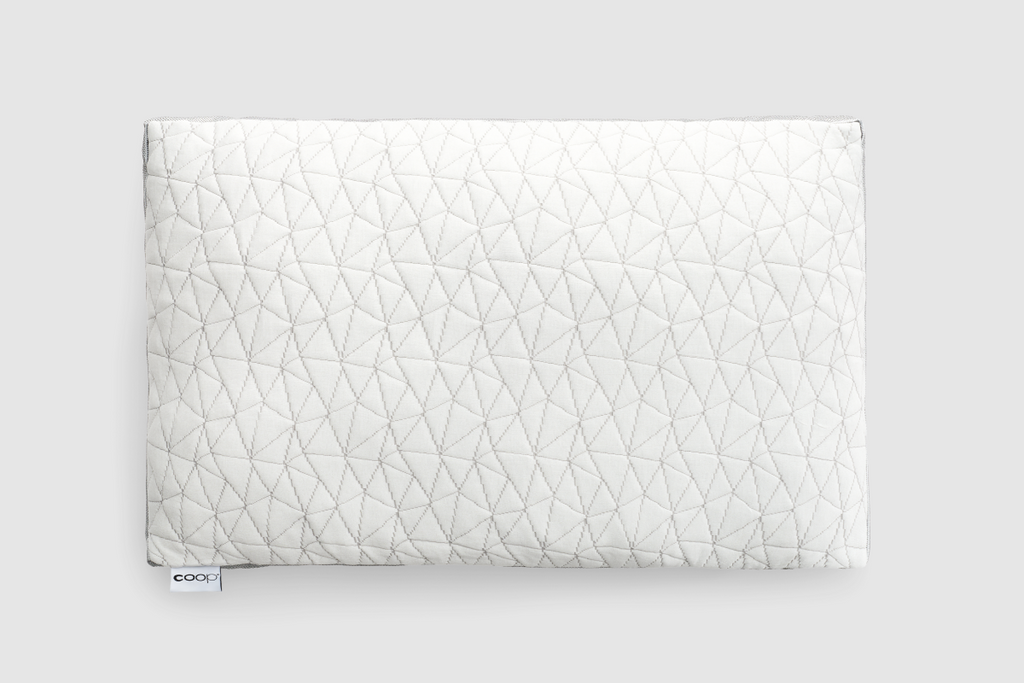
The Coop Eden Adjustable Pillow is a shredded-fill bed pillow built around a blend Coop calls its signature mix: cross-cut, gel-infused memory foam pieces combined with silky microfiber. The two materials are tossed together and packed into an inner liner, then wrapped in Coop’s Lulltra cover. A polyester-and-viscose blend that feels closer to soft jersey than the slick polyester you find on most foam pillows. Both the cover and the inner liner unzip, so you can reach the fill directly.

That access is the whole point. Every Eden ships with an extra half-pound to one pound of loose fill in a separate bag, so you can add or remove material until the loft and firmness match your body and your usual sleep position. Want a thin, soft pillow for stomach sleeping? Pull a third of the fill out. Want a tall, firm support for side sleeping? Top it up. The pillow is gusseted, which keeps the edges from collapsing once you’ve shaped it.

Sizing is straightforward: Standard (20 by 26 inches), Queen (20 by 30 inches), and King (20 by 36 inches). Coop also sells a slightly cooler-running variant called the EdenCool+, which adds a phase-change cover layer at a higher price. This review covers the standard Eden, which is the version most people are actually shopping for.

On the certification side, the Eden is both CertiPUR-US and GREENGUARD Gold certified, which are independent tests for restricted chemicals in the foam and for low chemical emissions in the finished product. Useful context if anyone in the household is sensitive to off-gassing, though as I’ll cover, the initial smell is still real even with those certifications.

What owners consistently mention

Read enough verified Amazon reviews, third-party testing pieces, and long-running Reddit threads, and the same handful of patterns surface again and again.

The adjustability genuinely works. The single most common piece of praise (across testers and owners alike) is that the ability to add and remove fill makes the pillow feel custom in a way that fixed-loft pillows simply can’t match. Side sleepers who normally double up pillows describe finally landing on a single one that holds their head in spinal alignment. Stomach sleepers who almost never find a pillow they like report removing roughly a third of the fill and finally getting a flat, soft option that doesn’t crank their neck up. Back sleepers settle somewhere in the middle. The trade-off is that getting it right takes a couple of nights of fiddling, which a small minority of buyers find frustrating rather than fun.

The cover feels nicer than expected. Coop’s Lulltra fabric draws consistent positive comments, soft, breathable, and machine-washable. The whole pillow assembly (cover plus inner liner) is washable, which is unusual at this price point and a meaningful plus for anyone managing allergies, pets on the bed, or kids.

It holds its shape better than typical shredded foam. Cross-cut foam pieces don’t compact the way standard shredded foam does, and long-term owners (six months to a year in) routinely report the pillow still has the same loft and bounce as it did at the start, with only occasional fluffing required. This is one of the clearer durability signals in the category.

The complaints are real and worth taking seriously. Off-gassing is the single most common one. Out of the box, the pillow has a strong chemical smell that most owners describe as taking 24 to 72 hours to dissipate fully, even after airing out or tumbling on low heat. The CertiPUR-US and GREENGUARD certifications mean the emissions are within safety standards, but standards don’t tell your nose how it feels. If you’re chemically sensitive or buying this as a guest pillow you need ready by tomorrow, plan for that window.

It runs warm-to-neutral, not cool. Despite the gel infusion and the “cooling” marketing language, the standard Eden is not the right pick if you’re a genuinely hot sleeper. The shredded-foam fill traps more body heat than latex, buckwheat, or down alternative, and several testing pieces explicitly note that hot sleepers should look at the pricier EdenCool+ or a different category entirely. For neutral-temperature sleepers, the Eden is fine. For night sweats or perimenopausal hot flashes, look elsewhere.

It’s heavy. The Queen weighs in around three to four pounds with full fill, significantly heavier than a down or down-alternative pillow. Most people don’t notice once it’s on the bed, but readers who like to hug or tuck a pillow under their arm will feel the difference, and pulling a fitted pillowcase on takes a bit more effort.

If the adjustability angle is what you’ve been chasing, it’s worth checking the current price, Coop discounts the Eden frequently. Check price on Amazon →

Who it’s for, and who should skip it

Buy this pillow if: you’re a side sleeper or a combo sleeper who switches between side and back through the night and have struggled to find one pillow that works for both positions; you’ve never been satisfied with off-the-shelf loft and want the option to dial it in; you want a fully washable foam pillow rather than a spot-clean-only one; you appreciate a longer warranty (5 years) and a real risk-free trial window (100 nights).

Skip this pillow if: you sleep meaningfully hot and need active cooling. The standard Eden is not built for that and the marketing slightly overpromises; you’re a strict stomach sleeper who needs ultra-low loft and don’t want to remove fill (a dedicated thin pillow will frustrate you less); you want a set-it-and-forget-it pillow with no fiddling; you’re chemically sensitive and can’t accommodate two to three days of off-gassing before first use.

How it compares

vs. Tempur-Pedic Tempur-Cloud Adjustable Pillow (~$169 Queen): Tempur’s adjustable option uses a single solid foam core with removable inserts rather than a fully loose shredded fill. That makes it easier to set up and a bit more uniform in feel, but it also means less granular control. You’re picking from a few pre-made loft levels rather than dialing in any height you want. Tempur foam runs slightly warmer and significantly heavier than Coop’s, and the cover isn’t as soft. The Eden wins on customization and price; the Tempur-Cloud wins on out-of-the-box simplicity and brand familiarity.

vs. Saatva Latex Pillow (~$165 Queen): The Saatva Latex is a layered pillow built around shredded natural latex wrapped in an organic-cotton cover. It sleeps notably cooler than the Eden, has a bouncier, more responsive feel that springs back rather than slowly conforming, and uses materials with a stronger sustainability story. It’s also not adjustable in the same hands-on way, you pick a loft (plush or high) when you order, and that’s the loft you’ve got. If cooling and natural materials matter more than fine-tuned customization, the Saatva is the stronger pick. If you’d rather pay less and tune it yourself, the Eden wins.

vs. Purple Harmony (~$199 Queen): Purple’s Harmony pairs a Talalay latex core with the brand’s signature gel grid on top. It’s the coolest of these four pillows by a clear margin and has a uniquely springy, bouncy feel that some sleepers love and others find too active. It’s not adjustable, costs the most, and the feel is polarizing, a lot of buyers either become evangelists or return it inside the trial window. The Eden is the safer, cheaper pick. The Harmony is the upgrade if you’ve decided cooling is the actual problem you need to solve.

Care and longevity

Both the Lulltra cover and the inner liner are machine-washable on cold, delicate cycle, and tumble-dry low. Coop recommends washing the cover every two to four weeks and the full pillow assembly every two to four months, more often if pets share the bed. Throw a couple of dryer balls in to redistribute the fill and keep the pillow from drying in clumps.

On lifespan: cross-cut shredded foam is more compression-resistant than standard shredded foam, and most owners report the Eden holding its shape and loft for two to four years of nightly use. When the fill eventually starts to flatten, Coop sells half-pound bags of replacement fill for under $20, a small additional purchase that effectively resets the pillow rather than forcing a full replacement. That replenishment option is one of the quieter long-term value arguments for the brand.

Two practical tips that come up across owner threads: give the pillow a couple of days to fully off-gas in a well-ventilated room before the first use, and resist the urge to add all the extra fill on day one. Most people end up with a slightly less stuffed pillow than they started with. It’s easier to add fill back later than to figure out where to store the half pound you removed.

Where to buy and price context

The Eden in Queen lists at $139 MSRP on coopsleepgoods.com and is regularly discounted to roughly $109 to $119 with sitewide promos that run most weeks of the year. The Standard runs about $20 less and the King about $20 more. Coop’s discounts are persistent enough that the discounted price should be considered the realistic price. I have not seen the Queen sit at full $139 for any meaningful stretch.

Amazon carries the same pillow with Prime shipping and pricing that often matches or slightly undercuts the direct site, depending on the week. Direct from Coop gets you the cleanest path to the 100-night trial and warranty registration. Amazon is faster to ship and easier to return inside Amazon’s standard window, though you’ll typically be returning to Coop’s fulfillment partner regardless.

The deepest discounts show up around Memorial Day, Fourth of July, Amazon Prime Day, Labor Day, Black Friday, and the post-holiday January reset. Outside those windows, the standing 15 to 20 percent discount is roughly the floor.

Final verdict

The Coop Eden is the most-recommended adjustable pillow in the category for a reason: the customization actually works, the build quality is solid, and the 100-night trial plus 5-year warranty mean almost no real downside risk if it turns out not to be your pillow. For side sleepers and combo sleepers especially, it’s the one I’d suggest trying first.

What it isn’t is a true cooling pillow, despite the gel-infused fill. Hot sleepers will be happier with a latex pillow like the Saatva or Purple Harmony, or with the pricier EdenCool+ variant. And the off-gassing on day one is more noticeable than CertiPUR-US and GREENGUARD certifications might suggest. Plan for a couple of days of airing out before first use.

For the right buyer (someone who wants to fine-tune loft, doesn’t mind a few minutes of fluffing, and values a long warranty and washable construction). This is a strong, well-supported pick at the discounted price. For everyone else, the comparison section above points to the better alternatives.

Overall rating: 8.7 / 10. Check price on Amazon →

Last updated: May 3, 2026. Pricing, sizing, and availability can change. Verify current details on the retailer’s site before you buy.