Some links on this page are affiliate links. If you buy through them, we may earn a commission at no extra cost to you. This guide is researched, not tested: nobody at Nest N Thrive has used a product named here. Sources: the CDC, the EPA, PNNL‘s Building America program, a 2019 meta-analysis and the Sleep Foundation, all read on November 10, 2026.
If your bedroom runs hot and you have no air conditioning, skip the gadgets and do the free moves first: close the blinds on sun-facing windows all day, open windows for cooler night air when it is cooler outside than in, and aim a fan at your body, not the room. Add a warm shower one to two hours before bed. And if indoor air passes 90 F, the CDC says fans stop being the answer.
Why the order of operations matters
Hot-night advice from many sources arrives as a pile of tricks with no ranking. The useful split is between tactics that remove heat from the room and tactics that only change how the heat feels on your skin. Without a thermostat, that split matters more than the gadget budget.
The body side explains why. The Sleep Foundation says the circadian clock sends a signal to increase blood flow to the extremities, which moves heat from the core outward before sleep. Warm hands and feet at bedtime can be that process working. It also reports that a higher core body temperature has been associated with less restorative slow-wave sleep, and that excessively hot ambient temperatures appear to lessen the time spent in REM sleep. During REM, the same source says, the body ceases most temperature-regulation behaviors such as sweating or shivering, so a hot room hits that stage hardest.
The Sleep Foundation puts the best sleeping temperature at approximately 65 F, and says most doctors recommend a thermostat between 65 and 68 F. No renter trick reliably reaches that in a heat wave, so treat it as a direction to move toward. Our bedroom temperature guide covers the number itself. The steps below cover how to get closer to it.
Step 1: Keep the heat out during the day
The Sleep Foundation’s cool-bedroom list opens with closing the blinds to reduce heat build-up during the day, ahead of any product. Heat that never enters the room is heat you do not fight at 3 a.m.
For a cleaner version than closed blinds, our blackout curtains for renters roundup covers options that suit a lease. We found no measured figure for how many degrees window blocking removes, so we will not promise one.
Step 2: Flush the room with night air, if your climate allows
The Sleep Foundation lists opening the windows to promote ventilation. PNNL whole-house fan guide gives the rule: only operate a whole-house fan when the temperature outside is cooler than the temperature inside. PNNL credits that kind of ventilation with exhausting hot air, pre-cooling the thermal mass of the house and adding airflow across the skin.
PNNL also gives the climate test. Night flushing suits cooling-season lows below about 67 F, ideally with day-to-night swings of about 25 F or more. For humid climates, PNNL’s guidance points to a gap of at least 10 F between night air and the daytime indoor temperature. The reason is that PNNL warns warm, humid air pulled in by a fan can condense on cooled surfaces and grow mold.
Open windows also bring in pollen, dust, smoke or pollution, per PNNL, and they are a security trade. A permanent whole-house fan, rated roughly 1,000 to 10,000 CFM, is a landlord conversation, not a renter project. PNNL notes such a fan can quickly depressurize a house if too few windows are open.
Step 3: Point a fan at the person, and watch the humidity
A fan works on you, not on the room, so aim it at the bed. The EPA says a relative humidity of 30 to 50 percent is generally recommended for homes. We found no source that measures how much humidity weakens a bedroom fan, so take this as our reasoning, not a finding: on a muggy night, expect less from the fan and more from the steps around it.
Then there is the ceiling. CDC heat guidance says to use fans only if indoor temperatures are less than 90 F. Above that, a fan can increase body temperature. The CDC’s stated alternative is to use air conditioning or find a location that has one by dialing 2-1-1, or to contact the local health department.
Step 4: Fix the bed surface, and distrust the cooling labels
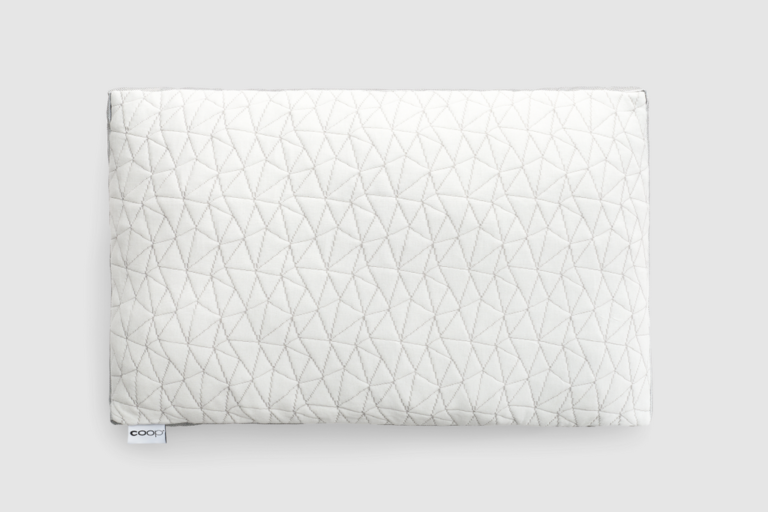
We found no formal testing of cooling pillows or gel toppers in the sources we read, so we cannot tell you they work or that they fade. That is why they sit at step 4 and not step 1. Anything that changes the bed surface only changes how heat feels on your skin. It does not remove heat from the room, which is the split the first steps are built on.
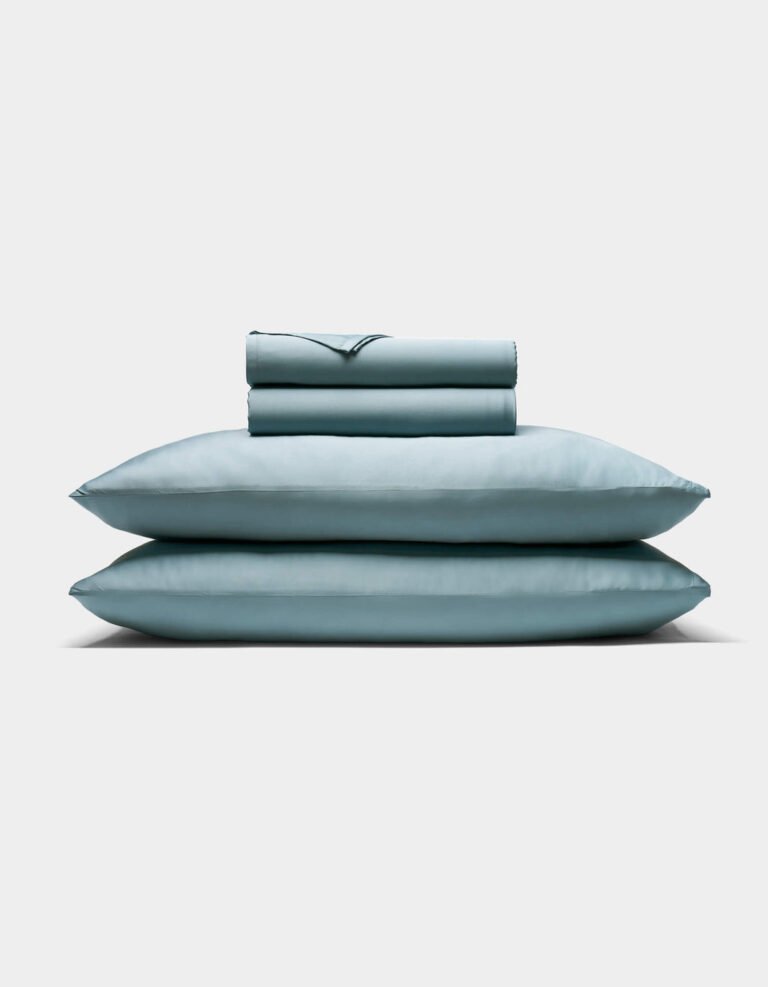
If you still want to shop, start with the layers that touch you all night. Our bedding for hot sleepers list and the cooling pillows roundup sort those choices.
Step 5: Use a warm shower to trigger the body’s cool-down
It sounds backwards, but a 2019 meta-analysis of warm shower and bath studies (PubMed 31102877) found the habit backed by measured outcomes. In the pooled data, warm water scheduled one to two hours before bedtime, for as little as 10 minutes, shortened the time taken to fall asleep, though the authors say timing and duration need more research. The paper attributes this to blood flow to the palms and soles, which steepens the skin temperature gradient and lets the body shed heat faster. Water of 40 to 42.5 C was associated with better self-rated sleep quality. The Sleep Foundation‘s list also includes a warm bath an hour or two before bed for the same cool-down effect.
Timing is the point. Treat this as a pre-bed routine that works one to two hours ahead of lights-out.
The tactics side by side
| Tactic | What it does | Limit, per the sources |
|---|---|---|
| Close blinds on sun-facing windows | Keeps daytime heat out of the room | Sleep Foundation lists it; we found no measured figure |
| Night flush with open windows | Swaps hot indoor air for cooler outdoor air | Needs lows under about 67 F; humid air can condense and grow mold (PNNL) |
| Fan aimed at you | Moves air across skin | Use only below 90 F indoors (CDC) |
| Humidity at 30 to 50 percent | Lets sweat evaporate | EPA range for homes |
| Warm shower 1 to 2 hours before bed | Speeds the body’s own heat dump | Shortened sleep-onset time in pooled studies (PubMed) |
| Cooling pillow or gel topper | Cool contact surface at first | No formal testing found in our sources |
When to stop optimizing
If the apartment sits above 90 F, the CDC guidance applies and fans are no longer a safe strategy. Babies are a separate case. The Sleep Foundation says a bedroom that is too warm may increase the risk of sudden infant death syndrome, which is why infant guidance tops out around 69 F. If you wake hot at night even in a mild room, our guide to waking up hot at 3 a.m. is the next read, and no-drill bedroom upgrades covers lease-friendly changes.
Frequently asked questions
Does sleeping with a fan on all night help, or can it make things worse? Use fans only if indoor temperatures are less than 90 F, per the CDC. Above that, a fan can increase body temperature, and the CDC points to air conditioning or a cooled public location instead.
If your bedroom sits around 78 degrees overnight, what changes that number the most? Keeping daytime sun out and flushing with outdoor air when it is cooler outside than in are the moves that keep heat out or remove it. PNNL’s night-flush test looks for lows under about 67 F. Fans and warm showers change how the heat feels and how your body sheds it.
Are cooling pillows and gel toppers worth buying? We found no formal testing of them in the sources we read, so we cannot say. They change the bed surface, not the room, which is why they come after the free steps.
Should I shower before bed in summer? Yes, if you time it. A 2019 meta-analysis found warm water scheduled one to two hours before bed, for as little as 10 minutes, shortened the time to fall asleep. The studies measured warm water well ahead of bed, not a shower right at lights-out.
Is a whole-house fan a realistic option for renters? Usually not without the landlord’s say. PNNL says it suits cooling-season lows under about 67 F and day-to-night swings of about 25 F or more. It is a permanent installation, and fans of 1,000 to 10,000 CFM need enough open windows to avoid depressurizing the house.
Frequently asked questions
Does sleeping with a fan on all night help, or can it make things worse?
Use fans only if indoor temperatures are less than 90 F, per the CDC. Above that, a fan can increase body temperature, and the CDC points to air conditioning or a cooled public location instead.
If your bedroom sits around 78 degrees overnight, what changes that number the most?
Keeping daytime sun out and flushing with outdoor air when it is cooler outside than in are the moves that keep heat out or remove it. PNNL's night-flush test looks for lows under about 67 F. Fans and warm showers change how the heat feels and how your body sheds it.
Are cooling pillows and gel toppers worth buying?
We found no formal testing of them in the sources we read, so we cannot say. They change the bed surface, not the room, which is why they come after the free steps.
Should I shower before bed in summer?
Yes, if you time it. A 2019 meta-analysis found warm water scheduled one to two hours before bed, for as little as 10 minutes, shortened the time to fall asleep. The studies measured warm water well ahead of bed, not a shower right at lights-out.
Is a whole-house fan a realistic option for renters?
Usually not without the landlord's say. PNNL says it suits cooling-season lows under about 67 F and day-to-night swings of about 25 F or more. It is a permanent installation, and fans of 1,000 to 10,000 CFM need enough open windows to avoid depressurizing the house.