About this guide: this is an editorial buying guide, not a product roundup. We synthesize peer-reviewed sleep research, third-party lab testing (Sleep Foundation, Wirecutter, Consumer Reports, Mattress Clarity), and aggregated owner feedback to explain how the category actually works. No affiliate links appear below, for our hands-on product takes, see the linked reviews near the end.
TL;DR: Most buyers do best with a medium-firm mattress, a trial period of at least 100 nights, and a build chosen for their actual sleep position rather than what felt best for ten minutes in a showroom. If you rent, prioritize bed-in-a-box delivery, white-glove return logistics, and a frame you can actually move. The mattress is only half the decision.
Why This Guide Is Renter-Friendly
Most mattress guides are written for homeowners with a garage, a truck, and a guest room to absorb a return. We write for the rest of us, apartments with narrow stairwells, third-floor walk-ups, and building elevators that need reservations.
Three things matter more for renters than the average buyer. First, trial periods (you need to know how the brand handles a return before you order. Second, delivery format). Bed-in-a-box ships compressed in a manageable carton, while white-glove delivery requires building access and a time window. Third, return logistics, some brands send a courier to pick up the mattress; others ask you to donate it locally and email a receipt, which is a real problem in cities with limited charity pickup. We flag these tradeoffs throughout.
The 4 Mattress Types You’ll See
Memory Foam
Memory foam contours to the body slowly, distributing weight evenly across the surface. The classic feel is a deep hug. You sink in rather than rest on top. Modern foams respond faster than the original 1990s formulations, but the underlying behavior is the same: pressure-activated, slow to rebound, excellent at isolating motion.
Durability for a quality memory foam mattress runs 7 to 10 years before noticeable sagging, with the comfort layer softening before the support core does. The honest weakness is heat, closed-cell foam traps body heat against the sleeper, which is why nearly every foam mattress now includes some cooling treatment (gel infusion, copper, phase-change cover). These help, but a foam mattress will run warmer than any hybrid.
Best for: side sleepers, couples with mismatched sleep schedules, anyone who wakes from a partner’s movement, buyers who want the lowest motion transfer in the category.
Hybrid (Innerspring + Foam)
A hybrid combines a coil support system (usually individually pocketed coils), with one or more comfort layers of foam, latex, or fiber on top. You get the contouring of foam where you touch the bed and the airflow, bounce, and edge support of coils underneath. Pocketed coils move independently, which keeps motion transfer manageable.
Hybrids are the most versatile category. They sleep cooler than all-foam, support a wider range of body weights, and last 8 to 10 years on average. They are also the heaviest and most expensive build. A Queen hybrid can weigh 100 pounds and start above $1,000 for anything well-made.
Best for: hot sleepers, heavier sleepers (over 230 pounds), couples who want sit-friendly edges, buyers who want one mattress that suits multiple sleep positions.
Latex
Latex mattresses use natural or synthetic rubber foam, usually built with the Dunlop or Talalay process. The feel is responsive and buoyant: contouring without the slow sink of memory foam, with noticeable bounce. Natural latex is the most durable material in the category, with quality builds lasting 12 to 15 years.
The catch is price and weight. An all-latex Queen starts around $1,500 and runs above $2,500 for a fully natural build, and the mattresses are heavy, often the hardest to maneuver up apartment stairs. Latex also has a faint rubbery smell out of the box that fades over a few days.
Best for: buyers prioritizing longevity and natural materials, sleepers with latex-friendly allergy profiles (true latex allergies are rare but real), people who like a responsive feel without the foam hug.
Innerspring
Traditional innerspring mattresses use a coil support system with minimal padding above, usually a thin fiber or foam layer and a quilted cover. The feel is firm and bouncy, with maximum airflow. Direct-to-consumer brands rarely sell true innersprings; the category has been largely absorbed into hybrids, leaving mostly budget-tier and orthopedic options.
Durability depends almost entirely on coil gauge and count. A well-built innerspring lasts 7 to 10 years; a budget one shows sagging within 2 to 3. Pressure relief is the weakest of the four categories. Coils alone do not contour, so side sleepers often find them uncomfortable at the shoulder and hip.
Best for: stomach sleepers who want firm, flat support; buyers on tight budgets who prioritize airflow over contouring; people replacing an existing innerspring with the same feel.
Firmness Explained
The industry uses a 1-to-10 firmness scale where 1 is a marshmallow and 10 is a hardwood floor. In practice, almost no mattress sold to consumers falls below a 3 or above an 8. Most beds cluster between 5 and 7, the medium to medium-firm range where the average sleeper is most comfortable. Sleep position is the strongest predictor of what firmness will work for you:
- Side sleepers generally do best at 4 to 6. Soft enough to let the shoulder and hip sink in and keep the spine straight from neck to tailbone.
- Back sleepers generally do best at 5 to 7. Firm enough to hold the lumbar curve, soft enough to keep the shoulders comfortable.
- Stomach sleepers generally do best at 6 to 8, firm enough to keep the hips from sinking out of line with the shoulders, which is the position that most often causes lower back pain.
- Combination sleepers who change position through the night should target 5 to 6 as the safest compromise.
Body weight shifts the scale. Sleepers under 130 pounds will perceive any mattress as firmer than the labeled rating. Less weight means less compression. Sleepers over 230 pounds will perceive the same mattress as softer, and should generally size up one step on the firmness scale and prioritize hybrid construction for the additional support coils provide.
What “Sleeps Cool” Actually Means
Cooling is the most-marketed and most-misleading claim in the category. The physics is straightforward: your body produces heat at night, and the mattress either lets that heat dissipate or traps it. The factors that actually move the needle, in order of impact:
- Construction. Hybrids and innersprings sleep cooler than all-foam, full stop. The coil layer creates airflow under the comfort layer that no foam can match. Latex sleeps cooler than memory foam because of its open-cell structure.
- Cover material. A cotton or Tencel cover dissipates heat better than a polyester knit. Phase-change covers (PCM) feel cool to the touch and absorb a small amount of heat, but the effect is short-lived.
- Foam treatment. Gel infusion and copper add modest cooling to memory foam, helpful but not transformative. They mitigate heat retention rather than eliminate it.
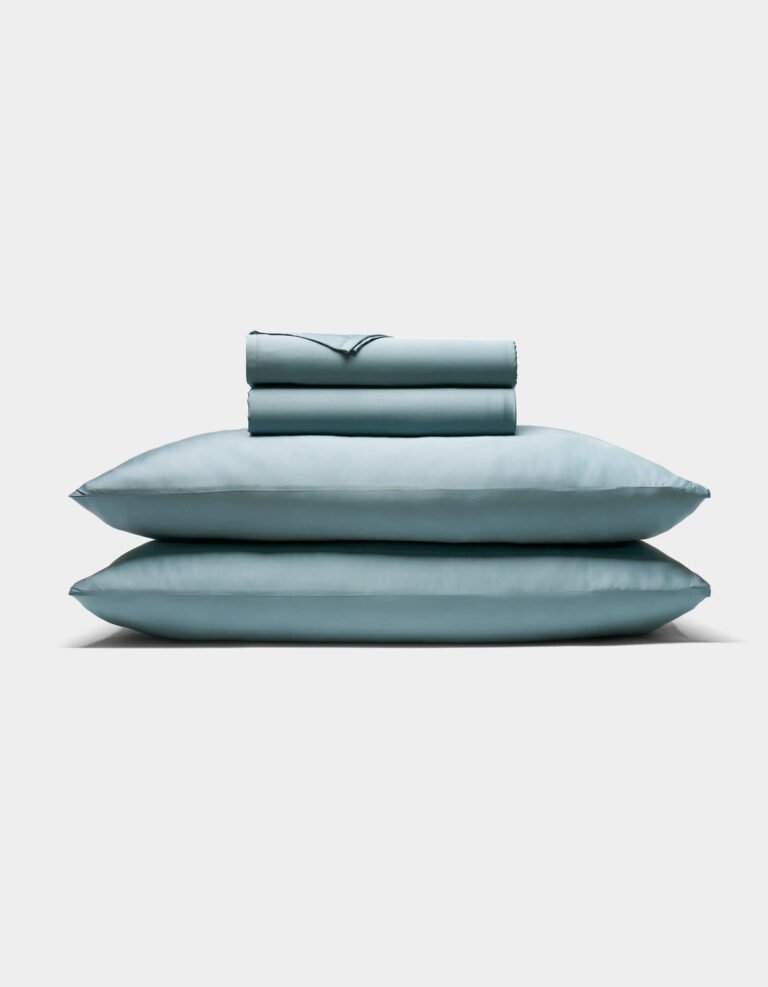
- Your sheets. Often the largest single variable. Percale cotton or linen sheets sleep markedly cooler than sateen or microfiber. If you are running hot on a current mattress, swap the sheets before swapping the bed.
The honest summary: if you sleep hot, buy a hybrid with a breathable cover and pair it with percale cotton sheets. No amount of cooling marketing on an all-foam mattress will outperform that combination.
Trial Periods and Return Policies
A mattress takes 30 days of consistent use to break in and at least one full seasonal cycle to evaluate fairly. That makes the trial period one of the most important specs to compare, and one of the most often glossed over. What to look for:
- Minimum 100 nights. Anything shorter is not enough time to assess a mattress through a single season. The category standard is 100 nights for budget brands, 365 nights for premium direct-to-consumer brands.
- Required break-in window. Most brands require you to sleep on the mattress for 30 nights before initiating a return. This protects them from impulse returns and is reasonable, but it means the practical trial window is the advertised length minus 30.
- Return logistics. The two models are courier pickup (the brand sends a service to remove the mattress at no cost, the easier option for renters) and donation-and-receipt (you arrange local donation and email proof). The second model is a real obstacle in cities with limited charity pickup; verify your zip code before you buy.
- Restocking or pickup fees. Most reputable brands waive these. A handful charge $99 to $199 for return processing. Read the fine print before assuming a return is free.
- Refund timeline. Plan on 2 to 4 weeks from pickup to refund. The mattress generally has to be physically removed before the credit posts.
Edge Support and Motion Isolation
These two specs sound technical, but they translate directly into daily comfort.
Edge support is how firm the perimeter of the mattress feels relative to the center. Strong edges let you sit on the side of the bed without rolling toward the floor, sleep close to the edge without feeling like you are about to fall out, and use the full surface of a Queen when you share it with a partner. Hybrids with reinforced perimeter coils win this category by a wide margin; all-foam mattresses give the softest edges, which can shrink the usable surface of a Queen by several inches per side.
Motion isolation is how well the mattress contains movement on one side from reaching the other. If you share a bed with a partner who gets up early, comes home late, or simply moves a lot in their sleep, motion isolation determines whether you wake up with them. Memory foam wins this category outright. A partner climbing in registers as a faint shift rather than a bounce. Hybrids and innersprings transfer motion more, with the amount depending on coil count and pocketing.
The two specs trade off against each other. If both matter, a hybrid with high-density foam comfort layers over pocketed coils is the best compromise, not the best at either, but acceptable at both.
Off-Gassing. How Long Is It Real
Bed-in-a-box mattresses arrive vacuum-sealed in plastic, and when you cut them open they release a chemical smell from the foam manufacturing process. This is called off-gassing, and the smell is real but generally short-lived. What to expect, by mattress type:
- All-foam mattresses off-gas the most, with smell typically peaking in the first 24 hours and dissipating within 48 to 72 hours of unboxing in a ventilated room.
- Hybrids off-gas noticeably less because there is less foam in the build, usually clear within 24 to 48 hours.
- Latex has a faint rubbery smell rather than a chemical one; it fades over several days but is rarely strong enough to require ventilating.
- Innersprings rarely off-gas at all, since they contain little or no foam.
Look for CertiPUR-US or GREENGUARD Gold certification on any foam mattress, these certify low VOC emissions and the absence of specific harmful chemicals. They do not eliminate off-gassing entirely, but they cap it at levels considered safe by the EPA. If you have chemical sensitivities, plan to set the mattress up in a room you can ventilate and sleep elsewhere for the first night.
Mattress Prices: What You Actually Get at Each Tier
Mattress pricing is opaque, but the category breaks into predictable tiers. All prices below are for a Queen on a typical sale week, mattress brands run sales nearly continuously, and MSRP is rarely the right reference point.
Under $500. Budget all-foam, mostly sold on Amazon. Variable build quality, thin comfort layers, durability 3 to 5 years. Acceptable for a guest room or short-term rental; not a long-term primary bed.
$500 to $1,000. Where most direct-to-consumer foam mattresses live. Thicker comfort layers, denser support cores, longer trial periods, warranties of 10 years or more. Best value tier for an all-foam primary bed.
$1,000 to $2,000. Where well-built hybrids start and premium foam mattresses peak. Pocketed coils, zoned support, real edge support, longer warranties. Best value tier for a hybrid primary bed.
$2,000 and up. Premium hybrids, latex builds, and luxury mattresses with handmade construction or certified-natural materials. Diminishing returns set in for most buyers. You are paying for materials and craftsmanship rather than meaningfully better sleep. Worth it if longevity (12+ years) or natural materials matter to you.
Mistakes to Avoid
Buying for a partner without testing together. Couples with different sleep positions or body weights often need a different mattress than either would pick alone. Both partners should sleep on the trial mattress before the return window closes. The firmness that works for a 140-pound side sleeper is rarely the firmness that works for a 220-pound back sleeper.
Choosing firmness based on the floor model. A showroom floor model has been compressed by hundreds of bodies. It will feel softer than the new one shipped to your door. Use floor models to compare relative firmness across brands, not to predict how your specific mattress will feel.
Ignoring trial period fine print. The 30-night break-in requirement, the courier-versus-donation return model, restocking fees, and refund timeline all matter. Read the return policy before you order, not when you decide to send the mattress back.
Skipping the foundation. Most modern mattresses require a flat, supportive foundation, a platform bed or a slatted frame with slats no more than 3 inches apart. Putting a foam mattress on widely-spaced slats voids most warranties and causes premature sagging. A $200 foundation pairing with a $1,000 mattress is normal; a $1,000 mattress on a $40 frame from a previous apartment is a common mistake.
Confusing comfort with the right mattress. A mattress that feels great on the first night may feel wrong after three weeks of break-in, or vice versa. Use the trial. The decision after 30 nights of consistent sleep is more reliable than the decision after one.
Where to Read Our Hands-On Takes
Once you know what type and firmness fits your sleep, our individual reviews compare specific models on the specs that matter:
- Nectar Memory Foam review, our top all-foam pick under $1,000.
- Saatva Classic review, our premium hybrid pick for buyers who want white-glove delivery and real edge support.
- Casper Original review, our balanced pick for couples with mismatched sleep schedules.
- Best mattresses under $1,500 in 2026. The full ranked roundup with pricing, trial terms, and side-by-side comparison.
- Sleep pillar, bedding, sleep tech, recovery tools, and the rest of our coverage.
How long should a mattress last?
A quality mattress should last 7 to 10 years for foam and hybrid builds, and 12 to 15 years for natural latex. Budget mattresses under $500 typically show meaningful sagging within 3 to 5 years. The clearest signs it is time to replace: visible sagging deeper than 1.5 inches, waking up with new aches that were not there a year ago, or no longer feeling rested after a full night.
Can I use my old box spring?
Usually no, especially if you are switching mattress types. Modern foam and hybrid mattresses are designed for flat foundations, either a platform bed or a slatted frame with slats spaced no more than 3 inches apart. A traditional box spring (a wooden frame with springs inside) does not provide the flat support these mattresses need, and using one almost always voids the warranty. If you want the height a box spring provides, look for a low-profile foundation or a bunkie board on top of an existing frame.
Do I need a mattress topper?
Not on a new mattress. A topper is a tool for adjusting an existing mattress that no longer fits your sleep. Usually softening one that has become too firm, or extending the life of one with mild surface wear. Buying a new mattress and a topper at the same time usually means you bought the wrong mattress; use the trial period to exchange it for the right firmness instead. Toppers do make sense for guest rooms, RVs, and short-term rentals where you do not control the existing bed.
What about used mattresses?
We do not recommend used mattresses for a primary bed. Hygiene aside, you cannot verify the support core’s condition, the original purchase date, or the warranty status, and most warranties are non-transferable. If budget is the constraint, a new sub-$500 mattress will almost always serve you better than a used premium one. The exception is a recent floor model from a reputable retailer with a clear return history; some of these are sold at meaningful discounts and remain under the original warranty.
Are bed-in-a-box mattresses really worth it?
For renters, almost always yes. The compressed carton fits in apartment elevators and stairwells where a traditional mattress will not, the price is typically lower than equivalent in-store builds because there is no showroom overhead, and the trial periods tend to be longer. The honest tradeoffs are off-gassing in the first 48 hours and the lack of an in-person feel test before buying. Both manageable if the brand offers a generous trial.
Is firmer always better for back pain?
No. The long-running advice that back pain calls for the firmest mattress possible is outdated. A 2003 study in The Lancet found that medium-firm mattresses produced better outcomes for chronic lower back pain than firm ones, and subsequent research has reinforced the point. The right firmness depends on sleep position and body weight, not on whether you have back pain. If you have a specific orthopedic issue, the more useful conversation is with a physical therapist about sleep posture rather than mattress firmness alone.
How long does it take to break in a new mattress?
Plan on 30 nights of consistent sleep before judging the mattress fairly. The foam softens slightly with use, your body adjusts to the new feel, and the contouring relationship between you and the surface settles. Most reputable brands require this 30-night break-in before they will process a return, and the requirement is reasonable. The mattress that feels wrong on night three frequently feels right on night thirty.
Last updated: May 2026. Mattress pricing, trial terms, and warranty details change frequently. Verify current details on the manufacturer’s site before you buy.
Frequently asked questions
How long should a mattress last?
A quality mattress should last 7 to 10 years for foam and hybrid builds, and 12 to 15 years for natural latex. Budget mattresses under $500 typically show meaningful sagging within 3 to 5 years. The clearest signs it is time to replace: visible sagging deeper than 1.5 inches, waking up with new aches that were not there a year ago, or no longer feeling rested after a full night.
Can I use my old box spring?
Usually no, especially if you are switching mattress types. Modern foam and hybrid mattresses are designed for flat foundations, either a platform bed or a slatted frame with slats spaced no more than 3 inches apart. A traditional box spring does not provide the flat support these mattresses need, and using one almost always voids the warranty. If you want the height a box spring provides, look for a low-profile foundation or a bunkie board on top of an existing frame.
Do I need a mattress topper?
Not on a new mattress. A topper is a tool for adjusting an existing mattress that no longer fits your sleep. Usually softening one that has become too firm, or extending the life of one with mild surface wear. Buying a new mattress and a topper at the same time usually means you bought the wrong mattress; use the trial period to exchange it for the right firmness instead. Toppers do make sense for guest rooms, RVs, and short-term rentals where you do not control the existing bed.
What about used mattresses?
We do not recommend used mattresses for a primary bed. Hygiene aside, you cannot verify the support core's condition, the original purchase date, or the warranty status, and most warranties are non-transferable. If budget is the constraint, a new sub-$500 mattress will almost always serve you better than a used premium one. The exception is a recent floor model from a reputable retailer with a clear return history; some of these are sold at meaningful discounts and remain under the original warranty.
Are bed-in-a-box mattresses really worth it?
For renters, almost always yes. The compressed carton fits in apartment elevators and stairwells where a traditional mattress will not, the price is typically lower than equivalent in-store builds because there is no showroom overhead, and the trial periods tend to be longer. The honest tradeoffs are off-gassing in the first 48 hours and the lack of an in-person feel test before buying. Both manageable if the brand offers a generous trial.
Is firmer always better for back pain?
No. The long-running advice that back pain calls for the firmest mattress possible is outdated. A 2003 study in The Lancet found that medium-firm mattresses produced better outcomes for chronic lower back pain than firm ones, and subsequent research has reinforced the point. The right firmness depends on sleep position and body weight, not on whether you have back pain. If you have a specific orthopedic issue, the more useful conversation is with a physical therapist about sleep posture rather than mattress firmness alone.
How long does it take to break in a new mattress?
Plan on 30 nights of consistent sleep before judging the mattress fairly. The foam softens slightly with use, your body adjusts to the new feel, and the contouring relationship between you and the surface settles. Most reputable brands require this 30-night break-in before they will process a return, and the requirement is reasonable. The mattress that feels wrong on night three frequently feels right on night thirty.