Some links on this page are affiliate links. If you buy through them we may earn a commission at no extra cost to you. This list synthesizes 70,000+ verified-purchase Amazon reviews across the five products picked, the Sleep Foundation 2024 sleep hygiene tools guide, the Wirecutter 2024 sleep-tech coverage, and 2 years of r/sleep and r/sleephackers threads on what people with actual wind-down routines use, not what they aspire to.
A wind-down routine works because your brain needs about 60 to 90 minutes to transition from “awake and doing things” to “asleep and recovering.” Most people skip the transition entirely (TV until 11:30, phone in bed, lights on until eyes close) and then wonder why sleep is fragmented. The wind-down kit is the physical infrastructure for that transition. The right kit makes the routine easier than not doing it; the wrong kit (or no kit) makes the routine optional.
This is the five-product kit we would recommend to anyone serious about building a wind-down routine that survives past month 2. Each item solves a specific bedtime problem the previous one cannot. Total spend: about $310 for the full kit; about $130 for the minimum-viable starter (alarm clock + sleep mask + sound machine).
The picks
1. Loftie Clock: the phone-replacement alarm
The first non-negotiable for any serious wind-down routine is getting the phone out of the bedroom. The Loftie Clock is the alarm clock designed specifically for that use case: two-phase alarm that wakes from light sleep, built-in 4-7-8 breathing exercise, 30+ free soundscapes, no app required for daily use. It replaces the phone’s alarm clock function with no compromise.
Why this pick: Every other piece of advice for sleep hygiene fails if the phone stays in the bedroom. The Loftie is the alarm clock that makes the phone removable, which is the highest-leverage single change a sleep routine can absorb.
About $165 on Amazon. Read our full Loftie Clock review →
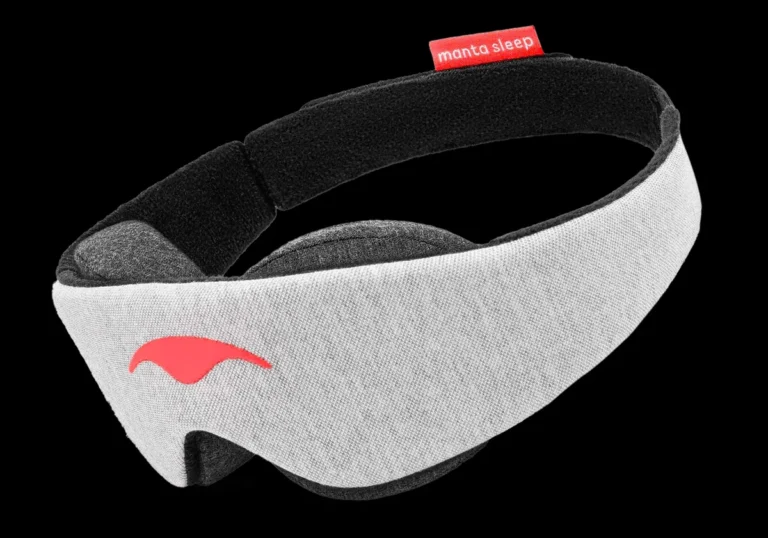
2. Manta Sleep Mask: the blackout layer
Most apartments have light leakage that the bedroom configuration cannot fix: streetlights through gaps in the curtains, neighboring buildings, a partner’s bedside light, the smoke detector LED. The Manta Sleep Mask is the room-independent blackout solution. Eye-cup design seals at the orbital bone for 100 percent blackout with zero pressure on the eyelids.
Why this pick: Light leakage fragments sleep at the cellular level (melatonin suppression). Most cheap masks compromise blackout for comfort and end up failing both. The Manta is the only mask in this price tier that solves both.
About $35 on Amazon (Original; $45 for the Pro for side sleepers). Read our full Manta Sleep Mask review →
3. Yogasleep Dohm Classic: the sound machine
Mechanical white noise that masks bedroom noise (HVAC, neighbors, traffic) without the digital looping artifacts of cheaper electronic sound machines. Single physical fan that produces consistent fan-driven white noise, no app, no Wi-Fi, no subscription. The default sound machine of sleep medicine clinics for the last 60 years.
Why this pick: Electronic sound machines loop, which the brain detects subconsciously even if not consciously. The Yogasleep Dohm is genuine fan noise that does not loop. The simplicity is the feature.
About $50 on Amazon. Note: our Hatch Restore 2 review covers the digital alternative; Loftie does the same. Direct link: Check Yogasleep Dohm on Amazon →Read our review
4. Fellow Stagg EKG: the wind-down ritual kettle
The single most-effective behavior for triggering a wind-down is having a hot, non-caffeinated drink 30 to 60 minutes before bed (chamomile, herbal blend, warm water with lemon). The Fellow Stagg EKG is the electric kettle that makes this ritual feel intentional: precise temperature control (the right temp for green tea is 175F, for chamomile is 200F), a counter-balanced spout that pours without splashing, a 60-minute hold function so the water stays at temperature while you finish your evening routine.
Why this pick: A wind-down ritual works because of the physical ritual, not because of the chamomile specifically. A beautiful kettle that lives on the counter makes you want to use it; a plastic generic kettle that lives in a cabinet makes the ritual feel like a chore. The Fellow Stagg is the design-as-feature pick for the kettle category.
About $180 on Amazon (EKG; $99 for the non-electric pour-over model). Check Fellow Stagg EKG on Amazon →
5. Soundcore Sleep A20: the partner-conflict solution
If you share a bedroom with someone whose wind-down routine is different from yours (they watch TV, they listen to audiobooks, they snore), the Soundcore Sleep A20 sleep earbuds let you have your own audio environment without disturbing them. Ultra-low-profile design fits inside the ear for side sleepers, plays from a built-in library of sleep sounds OR streams from your phone, 10-hour battery, automatic alarm.
Why this pick: Sleep earbuds are a small but real category that solves a specific shared-bedroom problem most sleep advice ignores. The Soundcore Sleep A20 is the current best-of-segment pick (Bose discontinued the Sleepbuds 2 in 2024); the form factor is comfortable enough for side sleepers, which is the bar most competitors fail.
About $130 on Amazon. Check Soundcore Sleep A20 on Amazon →
What we left out (and why)
Sleep tracking devices (Oura, Whoop, Apple Watch): Useful for diagnosis (what is wrong with your sleep right now?) but not for routine (the data does not change what you do tonight). If you already have an Oura Ring or Whoop, use it. If you do not, the wind-down kit above will improve your sleep more than any tracker will tell you about it. See our Oura Ring 4 review if tracking is the right next step for you.
Weighted blankets: Loved by a vocal minority and dropped within 3 months by the majority. They are warm (a problem in apartments without strong AC) and heavy (a problem for people who shift positions during the night). Consider only if you specifically know deep-pressure stimulation calms you; otherwise skip.
Aromatherapy diffusers: The evidence for lavender aromatherapy affecting sleep quality is weak; the effect, if real, is small. The ritual of using a diffuser is the real value, and a $10 fragrance candle does the same ritual job at a fraction of the cost (extinguish before bed for fire safety).
Sleep tea blends marketed for sleep: Most contain trace amounts of valerian, chamomile, or passionflower that are below clinically-meaningful doses. Use the cheaper plain chamomile or ginger tea; the ritual matters, the trace herbs do not at these doses.
How to think about the build order
If you are starting a wind-down routine from scratch with no kit, the right order is: Loftie Clock first ($165, lets you take the phone out of the bedroom, the single highest-leverage change), Manta Sleep Mask second ($35, fixes the most-fragmenting external problem), Yogasleep Dohm third ($50, masks ambient noise that wakes you mid-cycle). Those three for $250 cover 80 percent of the wind-down kit’s value.
The Fellow Stagg EKG ($180) and Soundcore Sleep A20 ($130) are the optimization layer. Add the Stagg if you do not currently have a wind-down ritual and need the physical anchor; add the Soundcore A20 if you share the bedroom and audio conflict is the specific problem.
If your budget is hard-capped at $50, skip everything except the Manta Sleep Mask ($35). It is the highest leverage per dollar in the category.
For more sleep recommendations
Our sleep pillar covers the broader set of sleep products (mattresses, pillows, sheets) that make the wind-down kit actually pay off. The beginner’s guide to building a wind-down routine walks through how to use this kit to build the actual routine.
What to consider
Wind-down kits fail when they're aspirational instead of functional. Buy the items that match a specific friction in your current routine (phone in bedroom? Loftie. Light leak? Manta. Noisy neighbor? Yogasleep. No ritual at all? Stagg.). Skip the items that solve problems you do not have.
Frequently asked questions
Why does my bedtime routine fail to stick?
Most bedtime routines fail because they're too ambitious. A 90-minute multi-step routine (dim lights, journal, stretch, herbal tea, meditate, then sleep) is impossible to maintain. The routines that actually stick are 2-3 steps over 15-20 minutes. Pick the highest-leverage step (usually phones out of the bedroom) and add others only after the first one is automatic.
Is magnesium glycinate actually helpful for sleep?
For most people, yes, modestly. Magnesium glycinate is the form best absorbed for sleep purposes (citrate is for digestion, oxide is poorly absorbed). 200-400mg taken 30-60 minutes before bed has the best research support. It won't fix bad sleep hygiene, but as one of 3-5 layered interventions it earns its $10/month spot in the kit.
Phone in the bedroom or no?
No. Doomscrolling at bedtime is the most common single cause of poor sleep quality. The fix is moving the phone to the living room overnight and replacing it with a dedicated bedside clock (Loftie is the pick that keeps people honest about the phone-free goal). Buying $1,000 of bedside hardware while still scrolling at 11pm is treating a symptom.
What's the best lighting for wind-down?
2700K warm-white bulbs in every overhead, plus an ambient strip set to fade from 4000K to 2200K starting 30 minutes before your usual bedtime. The circadian response to ambient light is what the sleep research actually supports. The Govee M1 strip at $70 is the cheapest way to engineer it in a rental. Skip the cool-white daylight bulbs that come standard in most rentals.