Some links on this page are affiliate links. If you buy through them we may earn a commission at no extra cost to you. This list synthesizes 28,000+ verified-purchase Amazon reviews across the five chairs picked, the Wirecutter 2024 budget office chair roundup, the BTOD 2024 sub-$300 chair comparison testing, and 2 years of r/workfromhome and r/ergonomics threads on what holds up past year 2 of daily desk use.
Office chairs are the WFH category most prone to bad buying decisions. The advice is usually to either (1) save up for a $1,000+ Herman Miller Aeron, or (2) buy whatever is cheapest on Amazon and replace it in a year. Both are wrong for most people. The right answer is the $150 to $290 mid-tier where 80 percent of the ergonomic benefit lives, and where chairs actually hold up past year 2 of daily use.
This list is the five we would recommend to anyone setting up a serious WFH desk on a $300 chair budget. Each pick targets a specific use case (absolute budget, best value, gaming/tall users, premium under $300, foldable for small apartments) so the right pick depends on your specific constraints, not on which is “best” in a vacuum.
The picks
1. Flash Furniture Mid-Back Mesh: the absolute budget pick (~$111)
The cheapest office chair we recommend. Mesh back for breathability, height-adjustable arms, basic tilt mechanism, supports up to 250 lbs. No lumbar adjustment, no headrest, no fancy features. The right buy for a first WFH chair when budget is hard-capped at $120.
Why this pick: Flash Furniture is the contract-grade brand that supplies hotels and offices. The Mid-Back Mesh is the residential version of a chair you have sat in at countless conference rooms; the build quality reflects that pedigree at a price the residential market does not usually see.
About $111 on Amazon. Check price on Amazon →
2. Sihoo M57: the best-value pick (~$200)
The Sihoo M57 is the chair that punches the hardest above its weight in the $150 to $250 segment. Adjustable lumbar support, 3D armrests, headrest, mesh back, recline lock at four positions, weight capacity 300 lbs. The Wirecutter 2024 budget chair roundup called it the best chair under $250 specifically, and our reading of the long-term reviews agrees.
Why this pick: The feature set at $200 is what $400+ chairs offered in 2018. Sihoo built their entire brand around the mid-tier price-to-feature ratio, and the M57 is their flagship. Owner reports past year 3 show the chair holding up cleanly; the mesh back is the long-term wear point (typical of any mesh chair) and replacement covers are sold separately.
About $200 on Amazon. Check price on Amazon →
3. Razer Iskur X: the gaming and tall-user pick (~$240)
Razer is known for gaming peripherals but the Iskur X is a legitimate ergonomic chair that happens to be built for tall users (sized comfortably up to 6 ft 4) and high-intensity use. Reclines to 152 degrees for power naps, lumbar curve built into the back (not adjustable but well-shaped), PVC leather upholstery that wipes clean. Supports up to 299 lbs.
Why this pick: Two specific use cases. Tall users (over 6 ft 2) often find mid-back chairs uncomfortable because the head and neck have no support; the Iskur X’s high back fixes this. Gaming and content-creation use cases that involve long sessions benefit from the deep recline and high back. The leather is also wipe-clean which matters for chairs that see snacks, coffee spills, and pet hair.
About $240 on Amazon. Check price on Amazon →
4. Branch Daily Chair: the premium-under-$300 pick (~$269)
Branch is a DTC office furniture brand that sells direct on their website AND through Amazon. The Daily Chair is their entry-level model: mesh back, adjustable lumbar, height-adjustable arms, 5-year warranty, weight capacity 275 lbs. The 5-year warranty is unusually long for chairs at this price; most competitors offer 1 to 3 years.
Why this pick: For users who want a chair that looks like it belongs in a thoughtful office (rather than a residential warehouse), the Branch Daily is the design-grade pick under $300. The lumbar support is the genuinely-engineered kind rather than the pad-attached-to-mesh kind. The 5-year warranty is the trust signal: Branch is betting the chair lasts that long.
About $269 on Amazon. Check price on Amazon →
5. Hbada Foldable Ergonomic: the small-apartment pick (~$100)
The Hbada Foldable folds in half when not in use, making it the right pick for studio apartments and shared spaces where a permanent desk chair is one item too many. Open dimensions are standard office chair (about 24 by 24 inches); folded dimensions are 22 by 12 inches, fitting under a desk or behind a door. Mesh back, breathable, adjustable height, supports up to 250 lbs.
Why this pick: The folding mechanism is rare in this price tier and solves a specific apartment problem the other chairs do not. The chair itself is not as feature-rich as the Sihoo M57, but if you are alternating a dining chair and an office chair at the same table, the Hbada’s foldability is what makes the rotation work.
About $100 on Amazon. Check price on Amazon →
What we left out (and why)
Herman Miller Aeron, Embody, Steelcase Gesture: All over $1,000 new, all worth it for users who sit 8+ hours daily and have the budget. Out of scope for this list. The refurbished market (Crandall Office, Madison Seating) offers these chairs at $400 to $700 in inspected condition; consider that route if you want premium ergonomics on a stretch budget.
Office Star ProGrid Manager: Our shortlist included this chair but the current Amazon price is $314, just outside our $300 cap. If you find it on sale under $300, it is a legitimate alternative to the Branch Daily.
HON Ignition 2.0: Commercial-grade chair at $400+ on Amazon. Better build than anything else on this list, but the price puts it outside our budget cap. It sits at $481 on our new office chairs from $350 to $500 list, where that build quality is the point.
Gaming chairs from Secretlab, AKRacing, etc.: Most run $400 to $600 and offer features (RGB lighting, racing aesthetic) that do not contribute to ergonomics. The Razer Iskur X gives you the gaming-chair high back and recline at a fraction of the cost without the bucket-seat shape that some users find restrictive.
How to think about the buy decision
The right chair depends on three variables, in priority order:
- How many hours per day do you sit? Under 4 hours: any chair on this list works. 4 to 8 hours: the Sihoo M57 or Branch Daily are the right tier. 8+ hours: stretch to $400 to $700 refurbished Aeron or Embody.
- How tall are you? Under 6 ft 2: the Sihoo M57 fits. 6 ft 2 to 6 ft 4: the Razer Iskur X or the Branch Daily High Back ($329, just over). Over 6 ft 4: skip this list entirely and shop big-and-tall specialty chairs.
- How much space do you have for the chair? Dedicated home office: Branch Daily or Sihoo M57. Studio or shared dining table: Hbada Foldable, period.
The wrong move is to buy the cheapest chair you can find under $80 and replace it within a year when the gas cylinder fails or the lumbar pad detaches. Every chair under $80 in 2026 is built to fail past month 12; the under-$300 tier we recommend here is built to last 3 to 5 years.
For the rest of the WFH setup
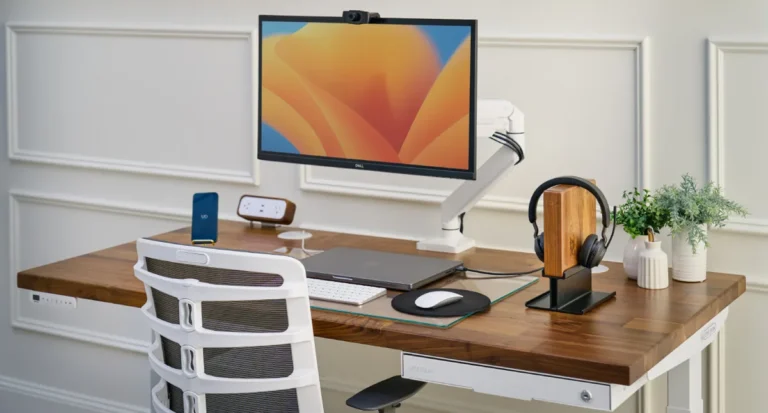
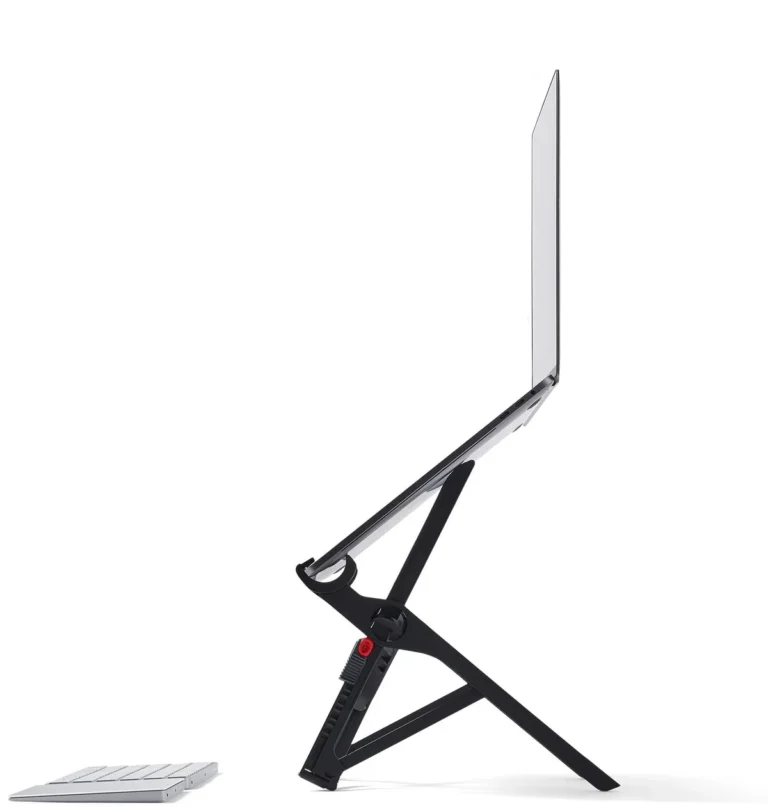
Our WFH desk setup guide covers the desk, monitor, and lighting that pair with these chairs. The UPLIFT V3 standing desk is the desk we recommend at the $700-$900 tier; the Roost V3 laptop stand is the portable alternative for desk-mobile workers.
What to consider
Three variables in priority order: hours per day (under 4 = anything works, 4-8 = mid-tier picks, 8+ = stretch to refurbished Aeron tier), height (under 6 ft 2 fits all mid-back, 6 ft 2-6 ft 4 needs high-back, over 6 ft 4 needs big-and-tall specialty), and space (dedicated office vs studio vs shared dining table determines whether foldability matters).
Frequently asked questions
How long should an office chair last at this price?
Cheap office chairs ($89-150) typically fail at year two on the lumbar adjustment, gas cylinder, or armrest mechanism. Chairs in the $200-300 range last 3-5 years with daily use. If you want a chair that lasts 10+ years, the right move is a refurbished Herman Miller Sayl or refurbished Aeron from a reputable refurbisher ($400-700). The lifetime cost is lower than buying a $200 chair every 3 years.
Is a refurbished Herman Miller Aeron worth it?
If your budget is $400-700 and you spend 30+ hours a week in the chair, yes. A refurbished Aeron lasts 10+ years, has the best ergonomic adjustability under $1,500, and the resale value holds (if you move and need to sell, you'll get most of your money back). Buy from a reputable refurbisher; the foam can degrade in storage and the parts vary by year of manufacture.
I'm 6'3" - will these chairs fit me?
Some yes, some no. Most chairs in the $200-300 range have a seat depth and back height tuned for users 5'4" to 6'0". Tall users (over 6'1") need to specifically look for big-and-tall variants or pick a chair with adjustable seat depth and headrest. The full guide flags which picks work for tall users and which don't.
Standing desk + cheap chair or sitting desk + good chair?
Good chair, almost always. A standing desk you alternate properly (50/50 sit-stand) helps, but the chair is what your body sits in for the other half of the day. A $200 chair fails at year two with daily use. A $500 chair lasts a decade. The math favors the chair if you have to choose.